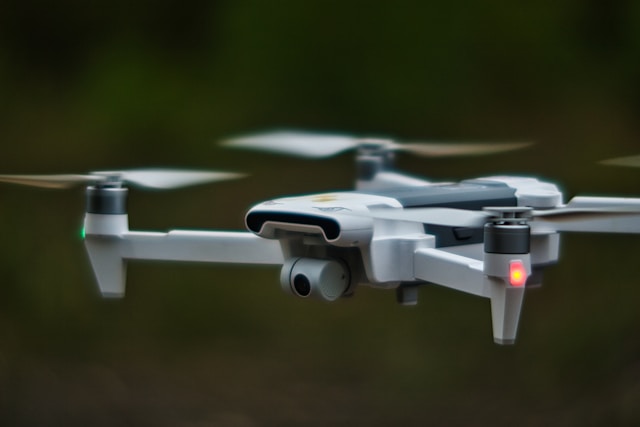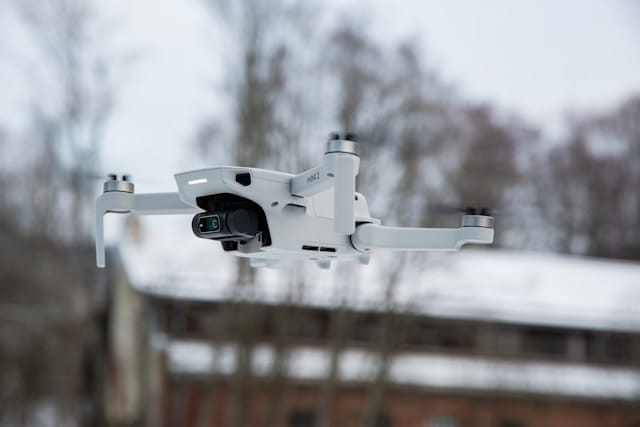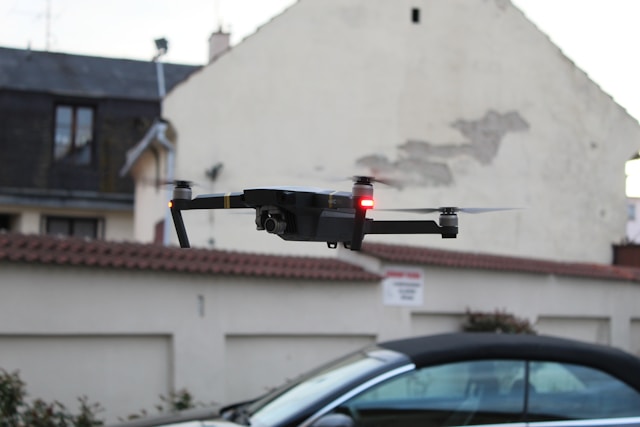
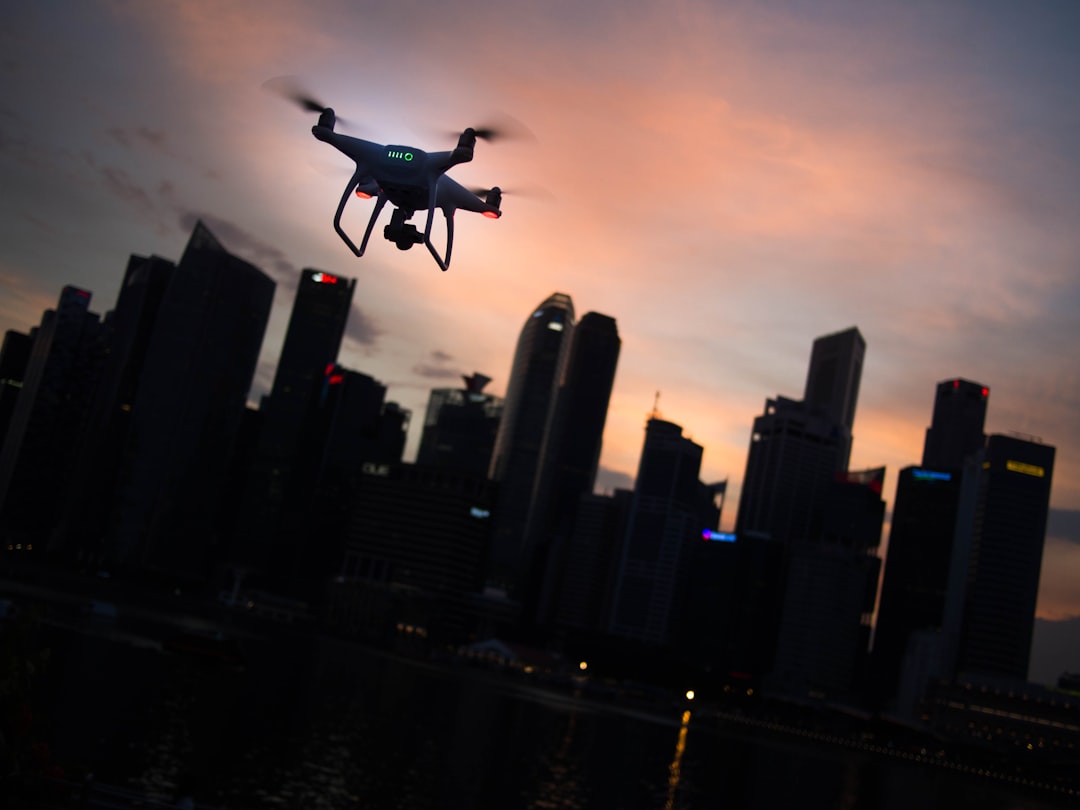
Drones for first responders are small unmanned aircraft operated by police, fire, EMS and search and rescue agencies to reach an incident before ground units do. Most US agencies now fly them under a Part 91 public aircraft Certificate of Waiver rather than the older COA system, and a working program costs roughly $60,000 to $180,000 in its first year once aircraft, training, software and staff time are counted.
That first paragraph is already out of step with most of what you will read on this topic. Almost every guide ranking for drones for first responders still tells agencies to "apply for a COA." The blanket and jurisdictional COAs those guides describe were retired in 2025. If you build a program around advice written before April 2025, you will submit paperwork the FAA no longer accepts.
This guide covers what actually changed, what a program costs, what happens to the footage afterward, and the unglamorous operational work that keeps a fleet legal once the launch-day press release is old news.
Table of contents
- What drones for first responders actually do
- The regulatory path changed in 2025: COAs are gone
- Part 107 or Part 91: which rules does your agency fly under
- The public aircraft eligibility trap
- What a first responder drone program actually costs
- Records, retention and public disclosure
- Procurement under the foreign drone restrictions
- Running the program: the operational layer nobody sells you
- A realistic 90-day standup sequence
- What Part 108 could change for DFR
- Frequently asked questions
What drones for first responders actually do
Drones for first responders perform four core jobs: arriving at a scene ahead of ground units to give dispatchers live video, searching terrain or structures with thermal sensors, documenting incidents for later review, and providing overhead awareness during a tactical or fire event. The mission mix differs sharply by discipline.
Law enforcement uses drone as first responder (DFR) deployments launched directly from a 911 call. Chula Vista Police Department, which started the first US DFR program, passed 25,000 missions in May 2026. On 17,170 of those calls the aircraft arrived before any ground unit, averaging just under 97 seconds. On 4,629 calls no patrol officer needed to respond at all because the drone confirmed there was nothing to respond to. That last number is the one that persuades city councils: roughly one mission in five returned patrol hours to the department.
Fire departments fly a different profile. Fewer, longer flights over an active scene, heavy use of thermal for hotspot identification and roof integrity, and frequent hovering in one place for incident command rather than transiting across a city. A thermal drone with a radiometric sensor is the core tool here, not a fast transit airframe.
Search and rescue teams need endurance and coverage. A thermal-equipped aircraft can sweep an acre in minutes, but a night search over unfamiliar terrain still needs a real airspace check and a documented flight plan.
EMS and emergency management use drones for scene sizing, hazmat standoff assessment, flood and storm damage mapping, and post-event documentation for federal reimbursement claims.
The overlap with private-sector work is smaller than people expect. Commercial operators plan a mission days ahead. First responders launch on a dispatch tone. That difference drives almost every regulatory and operational decision that follows.
The regulatory path changed in 2025: COAs are gone
In April 2025 the FAA replaced its patchwork of public safety drone authorizations with a single streamlined Part 91.113 Certificate of Waiver. The Tactical BVLOS COA, the First Responder BVLOS COA, the Blanket COA and the Jurisdictional COA were all retired, and they are not available even for renewal.
This is the most important fact in this article and the one competing guides consistently get wrong.
| Retired authorization | Status | Replacement |
|---|---|---|
| Blanket COA | No longer issued or renewed | Part 91.113 Certificate of Waiver |
| Jurisdictional COA | No longer issued or renewed | Part 91.113 Certificate of Waiver |
| Tactical BVLOS COA | Folded into the new waiver | Shielded Operations waiver (200 ft) |
| First Responder BVLOS COA | Folded into the new waiver | Shielded or non-shielded waiver depending on equipage |
| Existing 91.113 waivers | Valid until expiry, no renewal | Reapply under the new checklist process |
The new waiver comes in two tiers, and the tier you qualify for is decided by what your aircraft can detect, not by how well you write a safety case.
Tier 1, obstruction-shielded operations, 200 ft. In Class G you may operate at 200 ft AGL or 100 ft above a nearby obstruction, capped at 400 ft. In controlled airspace you are held to 200 ft AGL or the UAS Facility Map ceiling, whichever is lower. This tier relies on shielding: flying close enough to buildings, towers and terrain that crewed aircraft are unlikely to be there.
Tier 2, detect-and-avoid equipped, 400 ft. With non-cooperative DAA technology in place you can request 400 ft AGL in Class G or 400 ft in controlled airspace subject to the facility map.
Both tiers authorize night operations, beyond visual line of sight flight, operations over people and operations over moving vehicles, nationwide, with a validity period of 48 months. Core equipage requirements include an aircraft under 55 lbs, ADS-B In, standard Remote ID, anti-collision lighting for night work, a maximum speed of 87 knots and pre-programmed return-to-home. Operations over people additionally require a Part 107 Category-compliant aircraft or a parachute or prop-guard mitigation meeting ASTM F3322-18.
The application itself is deliberately mundane. You email the FAA's 91.113 waiver team for the packet, submit Form 7711-2 with an agency certification letter and a concept of operations, and attach DAA documentation if you are seeking Tier 2. The checklists and the public FAQ live in the FAA public safety toolkit. Agencies completing the checklist correctly have seen shielded waivers issued in one to two weeks, against the months a bespoke COA safety case used to take.
The volume tells the story. Over 1,000 public safety agencies received these waivers between April 2025 and February 2026, more than the FAA issued in the previous seven years combined. The FAA's Part 91.113 waivers issued page publishes the list.
If you are coming from the commercial side, note that this is a different animal from the Part 107 waiver process and from a standard BVLOS waiver. Same agency, different rulebook.
Part 107 or Part 91: which rules does your agency fly under
A public safety agency can fly under Part 107, under Part 91 as a public aircraft operator, or under both. Most established programs run both, and they do it for a specific reason.
Part 107 is fast. Your pilots take the knowledge test, hold a remote pilot certificate, and you are flying legally within weeks. It is the right starting point for a two-drone department that mostly documents crash scenes in daylight. The full ruleset is in 14 CFR Part 107, and our Part 107 guide covers certification for individual pilots.
Part 91 public aircraft operations trade speed for authority. Your agency self-certifies airworthiness and pilot qualification, and in exchange the waiver can grant relief that Part 107 does not offer at all, including routine BVLOS and nationwide operations over people.
Here is the practical split most programs land on:
- Routine, planned, daylight, visual line of sight work runs under Part 107. Scene documentation, training flights, community events, pre-planned overwatch.
- Dispatch-driven DFR launches, night search, BVLOS transit run under the Part 91 Certificate of Waiver.
- Every remote pilot holds a Part 107 certificate regardless, because it standardizes airspace knowledge and because the agency will inevitably do something that falls outside the waiver.
That last point matters more than it sounds. When your crew flies under two rulesets on the same shift, the compliance question is no longer "are we allowed to do this" but "which authority were we operating under at 02:14 on that specific flight, and can we prove it." Your flight logs need to answer that question without anyone reconstructing it from memory.
One more distinction that trips up new programs: a public aircraft waiver does not remove the need for airspace coordination. Controlled airspace still needs authorization, and LAANC remains the fastest route for Part 107 flights. Temporary flight restrictions over an active incident still require a NOTAM check before launch.
The public aircraft eligibility trap
Not every organization that responds to emergencies qualifies as a public aircraft operator, and this catches volunteer agencies and nonprofit teams every year.
To fly under Part 91 as a public aircraft operator, the entity must be a government body (federal, state, local, tribal or territorial) conducting an official governmental function, and the aircraft must be used exclusively for that purpose. The statutory definition sits in 49 USC 44806 and the related public aircraft provisions. The FAA's streamlined waiver adds a second filter on top: the applicant must also meet the definition of a Public Safety Organization, meaning an entity primarily engaged in activities related to public safety and wellbeing.
Where this breaks down:
- A 501(c)(3) search and rescue team performs an unambiguously public mission and still typically fails the public aircraft test. Doing public good is not the same as being a government entity.
- A volunteer fire department may or may not qualify depending on how it is chartered under state law. Some are municipal subdivisions and qualify cleanly. Others are private nonprofit corporations under contract and do not.
- A private contractor flying for a fire district does not become a public aircraft operator by association. That operator flies under Part 107 and needs its own commercial insurance.
- Any operation involving commercial reimbursement generally disqualifies the flight from public aircraft status even if the operator is a government body.
If your organization falls outside public aircraft eligibility, Part 107 plus targeted waivers is your path, not a shortcut through the DFR checklist.
There is one useful carve-out worth knowing. The FAA Reauthorization Act of 2024 codified relief for actively tethered UAS used by public safety organizations, which can be flown without a COA or Part 107 certificate under conditions including a 150 ft AGL ceiling, no flight over non-participants, and keeping the aircraft in sight. The FAA publishes a checklist for tethered public safety operations. For a volunteer fire department that mainly needs elevated scene lighting and overhead video at a structure fire, a tethered aircraft can deliver most of the value with a fraction of the regulatory overhead.
What a first responder drone program actually costs
A functioning first responder drone program costs roughly $60,000 to $180,000 in year one for a mid-size agency, and $40,000 to $175,000 annually thereafter. Published guides almost never give numbers, so here are ranges drawn from actual municipal budgets.
| Line item | Typical range | Notes |
|---|---|---|
| Response-capable aircraft with thermal | $10,000-$20,000 each | A standard police or fire package with thermal and spare batteries averages around $18,000 |
| DFR dock or nest infrastructure | $25,000-$60,000 per site | Site prep, power, connectivity and permits are often excluded from vendor quotes |
| Part 107 certification per pilot | $150-$300 | $175 knowledge test plus study materials |
| Initial and recurrent training | $2,000-$5,000 per pilot | Type-specific and tactical training beyond the certificate |
| Operations and compliance software | $1,800-$12,000 per year | Flight logging, maintenance, certification tracking |
| Vendor DFR service contracts | $78,000-$200,000 over 2-5 years | Bundled hardware, software and support offerings |
| Insurance | $1,500-$8,000 per year | Varies heavily by fleet size and public entity coverage |
| Staff time | The largest hidden cost | Pilot hours, program coordinator, records staff |
Real budget examples give useful anchors. Yonkers, NY budgeted about $100,000 for a DFR pilot program. Sterling Heights, MI committed $678,822 over five years. Tempe PD spends roughly $175,000 annually covering training, maintenance and software. Maricopa County agencies have pushed individual drone line items past $100,000.
The line item that surprises finance departments is not hardware. It is people. A program that flies 1,500 missions a year generates 1,500 flight records, a maintenance obligation on every airframe and battery, currency requirements on every remote pilot, and a public records queue. Agencies that budget for aircraft and forget to budget for the administrative load end up with a sworn officer doing data entry at overtime rates.
That is the same trap commercial fleets fall into, and the arithmetic is covered in our breakdown of drone operations software versus spreadsheets. Public agencies have it worse, because their records are discoverable.
Records, retention and public disclosure
Every flight your agency conducts creates records that are presumptively subject to public disclosure, and most programs discover this after their first records request rather than before. This is the single largest operational gap in published DFR guidance.
Three separate obligations stack on top of each other.
Aviation records. The FAA can request your flight logs, pilot qualifications and maintenance records. Under a Part 91 Certificate of Waiver you also carry incident reporting obligations to the NTSB and FAA. Waivers run 48 months, which means the records you generate in month three need to still be retrievable in month forty-seven.
Evidentiary records. Footage from a criminal incident is evidence. It needs chain of custody, timestamps, an identified pilot, and a defensible link between the video file and the flight that produced it. If your log lives in one system and your video lives in another with no shared identifier, defense counsel will find that seam.
Public records. In most states, drone footage held by a government agency is a public record subject to disclosure unless a specific exemption applies. So are flight logs, mission counts, and the metadata about where and when you flew. Agencies that publish a mission map proactively, as Chula Vista does, spend less time fighting requests than agencies that do not.
Retention policy is where these three collide. Aviation records argue for keeping everything for years. Privacy policy argues for deleting non-evidentiary footage quickly, often within 30 to 60 days. A workable policy separates the two: retain flight records and telemetry long-term, purge non-evidentiary video on a short automated schedule, and flag evidentiary media for indefinite hold. Write that down before launch, not after.
Procurement transparency is a related requirement in some jurisdictions. California's AB 481 classifies law enforcement drones as military equipment, which means an agency must get a use policy approved by its governing body before acquiring or operating them, publish annual reports, and consider alternatives. San Francisco PD was found to have acquired drones without completing that process. Agencies in AB 481 states that treat the FAA waiver as the only approval they need are missing half the compliance picture.
Civil liberties groups have been pointed about the rest. The Electronic Frontier Foundation has documented that DFR aircraft routinely capture backyards, rooftops and windows that a patrol officer would never see from the street, and that a large share of deployments involve low-risk calls rather than the violent-crime scenarios used to justify programs. Whether or not you agree with the conclusion, the underlying data comes from agency records. Programs that can produce clean, accurate deployment statistics on demand control that conversation. Programs that cannot, do not.
Our guides on surveillance drones and privacy law and on how police drones operate at night go deeper on the legal boundaries.
Procurement under the foreign drone restrictions
Aircraft selection for first responders is now a procurement compliance question as much as a capability question. The technically best aircraft for your mission may be one your agency is not permitted to buy.
The American Security Drone Act reached full enforcement on 22 December 2025, prohibiting federal agencies from buying or operating covered foreign drones with appropriated funds. That restriction reaches further than it first appears, because programs funded through federal grants inherit it. A DHS or DOJ grant used to buy aircraft brings the federal restriction with the money.
State law adds another layer. Florida, Arkansas, Mississippi and Nevada have all enacted restrictions on covered foreign manufacturers for public entities, and Florida's rules forced a wholesale fleet transition for agencies that had standardized on a single manufacturer. Other states are considering similar measures.
The practical guidance:
- Confirm the funding source before the aircraft. Federal grant money constrains your options in ways local general funds do not.
- Check the Blue UAS Cleared List for approved alternatives if you are constrained.
- Plan for mixed fleets. Most agencies mid-transition are running two manufacturers with different controllers, different log formats and different maintenance intervals. Assume this, do not wish it away.
- Budget for retraining. A fleet transition is a training cost, not just a capital cost.
We track the policy detail in the DJI ban explained and the US foreign drone ban and fleet strategy.
Running the program: the operational layer nobody sells you
The hardest part of a first responder drone program is not the launch. It is month fourteen, when you have six aircraft, eleven part-time pilots, a 48-month waiver with reporting obligations and no single place that knows the current state of any of it.
Five things quietly break in the same order in almost every program.
Pilot currency drifts. Part 107 certificates require recurrent training every 24 months. Agency-specific type currency, night currency and DFR-specific qualification all run on separate clocks. With eleven pilots on shift rotations you cannot track this in a shared spreadsheet, and the failure mode is a pilot flying a mission they are no longer current for. Automated pilot certification tracking exists precisely for this.
Flight hours stop being logged. After a call, nobody wants to fill in a form. But your waiver reporting, your recurrent training thresholds and your budget justification all depend on accurate flight time. Pulling telemetry from the controller automatically rather than asking a pilot to retype it is the only approach that survives contact with a busy shift. See tracking drone pilot flight hours.
Maintenance goes reactive. Airframes accumulate hours faster in a DFR program than in almost any commercial operation. Propellers, motors and batteries need cycle-based replacement, not vibes-based replacement. A structured approach to fleet maintenance turns this into scheduled downtime instead of a grounded aircraft during a callout.
Incidents get handled informally. A hard landing, a lost link, a flyaway, a near miss with a medical helicopter. Each of these needs a written record, a root cause, and a corrective action, both for FAA obligations and because the pattern across incidents is where the real safety signal lives. Structured incident reporting and a documented risk assessment process turn one-off events into program improvements.
Multi-agency coordination stays on the phone. Mutual aid means another agency's crew is flying in your area, or yours in theirs. Without shared situational awareness, deconfliction is a radio call and a hope. Live tracking of aircraft and crews, plus controlled cross-agency access to mission records, replaces the hope.
Underneath all five is the same requirement: one operational record per mission, created automatically, that ties the pilot, the aircraft, the authority you flew under, the weather at launch, the telemetry and the resulting media together. DroneBundle's public safety and emergency services workflow is built around exactly that record, with pre-defined emergency mission profiles for rapid dispatch, automatic log capture with 3D replay, timestamped exports for legal submission, and role-based access so a neighboring agency sees the mission it needs and nothing else.
One habit worth building in early: run a pre-flight checklist even under time pressure, because that is exactly when items get skipped, and a DFR launch into 30-knot gusts is a different risk calculation than a scheduled survey.
A realistic 90-day standup sequence
Most agencies can move from decision to first operational flight in about 90 days if the sequence is right. The common failure is buying aircraft first.
Days 1-30: authority and policy. Determine public aircraft eligibility. Draft the use policy and get governing-body approval if your state requires it (AB 481 states, budget four to eight weeks for this alone). Write the retention and disclosure policy. Identify your program coordinator. Request the 91.113 waiver packet from the FAA if you qualify.
Days 31-60: people and paperwork. Get every intended pilot through Part 107. Submit Form 7711-2 with your concept of operations. Select aircraft against your procurement constraints, not just your capability wish list. Stand up the operations platform and configure mission templates, checklists and maintenance schedules before aircraft arrive, not after.
Days 61-90: proving flights and integration. Fly training missions under Part 107 while the waiver processes. Test dispatch integration. Run a tabletop for a mutual aid scenario. Verify that a complete mission record, from dispatch to exported report, can be produced in under five minutes by someone who was not on shift.
That last test is the one to insist on. If it takes an hour to assemble the record of a single flight, your program will not survive its first serious records request or its first litigated incident.
For agencies scaling past a handful of aircraft, the discipline is the same one commercial operators use. See multi-drone operations management and our complete guide to drone fleet management software for the platform-level view.
What Part 108 could change for DFR
Part 108, the FAA's proposed rule to normalize BVLOS operations, was published as an NPRM on 7 August 2025 and has not been finalized as of August 2026. Nothing in it is binding on your program today, and any guide claiming otherwise is wrong.
When it lands, it will matter. The proposal creates two approval levels (Permitted Operations and an Operational Certificate), five risk categories tied to population density, operational area approvals that replace per-flight waivers, and new crew roles including Operations Supervisor and Flight Coordinator. Detect-and-avoid, Remote ID and continuous position tracking become technical requirements rather than waiver conditions.
The public safety concern is real and worth watching. Irving Police Department told the FAA in its comments that Part 108 as drafted could ground its existing DFR program, and a recurring theme across public safety comments was that the proposal is shaped around commercial delivery and autonomous fleets rather than dispatch-driven emergency response. The primary source is the Federal Register NPRM.
Practical advice for now: your 48-month Certificate of Waiver is the operating authority to build around, and you should assume a transition rather than a cliff. Agencies whose flight records, maintenance history and pilot qualifications are already in structured form will re-certify under a new framework in weeks. Agencies with four years of records scattered across drives and spreadsheets will not. Our Part 108 overview and Part 108 versus Part 107 comparison track the rule as it develops.
For peer-level intelligence rather than vendor material, DRONERESPONDERS is the public safety UAS community organization most agencies use, and the FAA's public safety and government users page is the authoritative starting point for authorizations.
Frequently asked questions
Do first responders need a Part 107 license to fly drones?
It depends on the authority they operate under. Under Part 107, yes, every remote pilot in command needs a remote pilot certificate. Under a Part 91 public aircraft Certificate of Waiver, the agency self-certifies pilot qualification and Part 107 is not strictly required. In practice nearly every agency requires Part 107 for all pilots anyway, because it standardizes airspace knowledge and covers flights that fall outside the waiver. Actively tethered public safety operations under 49 USC 44806 are the one genuine exception, requiring neither Part 107 nor a COA.
How fast do drone as first responder programs actually respond?
Prepositioned DFR aircraft typically reach a scene in 90 seconds to two and a half minutes, against a common municipal patrol target of around seven minutes. Chula Vista PD's published figures show an average of just under 97 seconds across 17,170 calls where the drone arrived first. Response times depend heavily on nest density: one launch site covers a limited radius, and coverage is what drives infrastructure cost.
Can a volunteer fire department or nonprofit SAR team get a DFR waiver?
Usually not. The streamlined 91.113 waiver requires the applicant to be both a Public Aircraft Operator and a Public Safety Organization. Nonprofit corporations, 501(c)(3) search and rescue teams and private contractors supporting public agencies generally fail the public aircraft test even though their mission is unquestionably public. Those organizations fly under Part 107 with targeted waivers, or use the actively tethered UAS provision, which was written partly with volunteer departments in mind.
Is drone footage from a police drone a public record?
In most US states, yes, footage and flight records held by a government agency are presumptively public records unless a specific exemption applies, such as an active investigation. Agencies should set a written retention schedule that separates evidentiary media (held indefinitely) from routine non-evidentiary footage (purged on a short automated cycle), and keep flight logs and telemetry long enough to satisfy the 48-month waiver period. Some jurisdictions add procurement transparency requirements on top, such as California's AB 481.
Build the program on records you can produce on demand
The agencies whose drone programs survive their third year are not the ones with the best aircraft. They are the ones that can answer, in minutes, what flew, who flew it, under which authority, in what conditions, and where the resulting footage is.
That is a records problem, and it starts on day one.
DroneBundle gives public safety teams pre-filled emergency mission templates for rapid dispatch, automatic flight log capture with 3D replay, certification and currency tracking across every pilot, maintenance scheduling per airframe and battery, weather and airspace go/no-go checks before launch, and timestamped exports built for legal and post-incident review. Access is role-based, so mutual aid partners see the mission record they need and nothing more.
Start a free trial and configure your mission templates and compliance tracking before your first aircraft arrives, or book a live demo and we will walk through a DFR workflow end to end using your own operating profile. If you want to see how the pieces fit together first, the public safety and emergency services overview is the fastest tour.