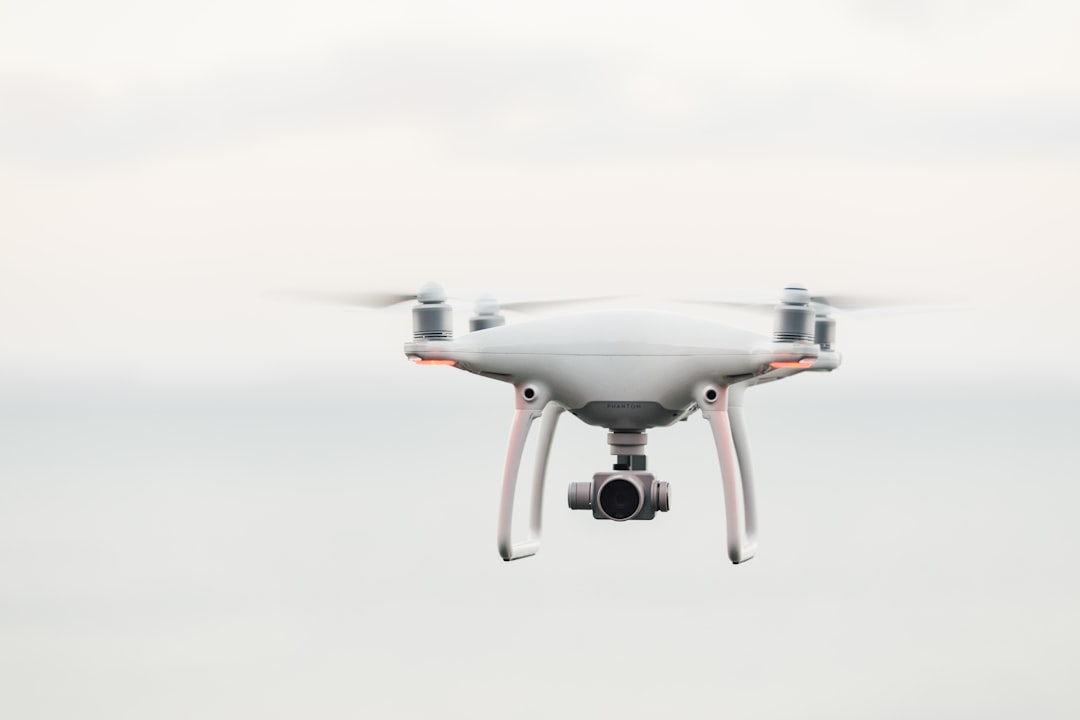
An FAA drone waiver grants commercial operators permission to fly outside the standard Part 107 rules. If your operation requires flying beyond visual line of sight, operating multiple drones simultaneously, or exceeding altitude limits, you need one of these waivers before you launch.
The waiver process is free. But free does not mean easy. The FAA reports that many applications are "two sentences or less" and get denied for insufficient information. Meanwhile, operators who understand what the FAA actually evaluates in a Waiver Safety Explanation get approvals in weeks, not months.
This guide covers every waivable Part 107 regulation, walks through the application step by step, and shares the practical details that separate approved applications from rejected ones.
Table of contents
- What is an FAA drone waiver?
- Which Part 107 rules can be waived?
- FAA drone waiver application process
- Writing a Waiver Safety Explanation that gets approved
- Common denial reasons and how to avoid them
- Waiver approval rates by type
- Managing waiver compliance after approval
- 2026 regulatory changes affecting FAA drone waivers
- FAQ
What is an FAA drone waiver?
An FAA drone waiver is an official document that authorizes specific drone operations outside the standard limitations of 14 CFR Part 107. The FAA issues these waivers when an applicant demonstrates they can conduct the proposed operation safely using alternative methods or mitigations.
This is different from an airspace authorization. Authorizations (typically obtained through LAANC) grant permission to fly in controlled airspace. Waivers allow you to deviate from the operational rules themselves.
A few things worth knowing upfront. Waivers are operation-specific, not blanket permissions. They come with conditions you must follow on every flight. They have expiration dates, typically two to four years. And violating waiver conditions carries the same penalties as violating Part 107 rules directly, including certificate suspension.
Which Part 107 rules can be waived?
The FAA allows waivers for eight specific sections of Part 107. Not every rule is waivable, so check this list before you start an application.
| Section | Rule | What the Waiver Allows |
|---|---|---|
| §107.25 | Moving vehicle operations | Operating from a moving vehicle or aircraft |
| §107.29 | Anti-collision lighting | Modified lighting requirements during civil twilight or night |
| §107.31 | Visual line of sight | BVLOS operations without direct visual contact |
| §107.33 | Visual observer | Operating without a dedicated visual observer |
| §107.35 | Multiple small UAS | One pilot controlling multiple drones simultaneously |
| §107.39 | Operations over people | Flying over non-participants without sheltering |
| §107.51 | Operating limitations | Exceeding altitude (400 ft), speed (100 mph), or minimum visibility (3 SM) limits |
| §107.145 | Operations over moving vehicles | Flying over moving vehicles with passengers |
Note that night operations no longer require a waiver. The FAA's January 2021 rule update permits routine night flying under Part 107 as long as the drone has anti-collision lighting visible for 3 statute miles. All existing night waivers were cancelled on May 17, 2021. If you only need to fly at night, you just need the updated Part 107 training.
Also notable: §107.37(a) (yielding right of way to manned aircraft) and §107.41 (operations in certain airspace) are sometimes listed as waivable, but these are typically handled through airspace authorizations rather than operational waivers.
FAA drone waiver application process
Submitting a Part 107 waiver application costs nothing and is done entirely online through the FAA's Aviation Safety Hub portal. The process has four main phases.
Step 1: Identify the regulations you need waived
Before touching the application, determine exactly which Part 107 sections your operation violates. Some operations require waivers to multiple sections simultaneously. A BVLOS inspection mission, for example, might need waivers to both §107.31 (visual line of sight) and §107.33 (visual observer).
Review the FAA's section-specific evaluation guidance for each regulation you plan to request. This document tells you exactly what the FAA evaluates. Most applicants skip it. Do not be most applicants.
Step 2: Prepare your documentation
Gather the following before starting the application:
- Operation details: GPS coordinates, altitude range, airspace class, population density, dates, and times
- Aircraft specifications: Model, weight, max speed, flight time, Remote ID compliance, and any modifications
- Personnel qualifications: Pilot certifications, training records, and experience with the proposed operation type
- Risk assessment: Every hazard you have identified and specific mitigations for each one (more on this below)
Step 3: Submit through the Aviation Safety Hub
Create an account or log in at the FAA Aviation Safety Hub. The application requires:
- Responsible Party information: This is the official waiver holder, not necessarily the pilot. Include mailing address, phone number, and Remote Pilot Certificate number if applicable.
- Regulation selection: Choose which Part 107 sections you need waived.
- Waiver Safety Explanation: This is the core of your application. It requires a full description of your operation and an explanation of how you will maintain safety. This section makes or breaks your approval.
Step 4: Wait (and stay available)
The FAA targets a 90-day review window. Processing times vary based on complexity and application completeness. If the FAA requests additional information, you have 30 days to respond. Miss that window and your application gets cancelled; you will have to start over.
A practical tip: submit at least 90 days before your intended operation date. If possible, submit 120 days out. This gives you a buffer for information requests without missing your client deadline.
Writing a Waiver Safety Explanation that gets approved
The Waiver Safety Explanation is where most applications fail. The FAA has publicly stated that many submissions are "brief, two sentences or less" and provide inadequate information for safety assessment. Here is what a strong submission actually looks like.
Describe the operation in specific detail
Vague descriptions get denied. Instead of "we will fly a drone for inspection purposes," write something like: "We will operate a DJI Matrice 350 RTK (24.7 lbs) at altitudes between 200 and 350 feet AGL along a 2.3-mile segment of 138kV transmission line in rural Montgomery County, VA (coordinates: 37.1234, -80.5678). Population density within the operational area is fewer than 25 people per square mile. Operations will occur between 0800 and 1600 local time on weekdays."
That level of specificity signals competence. It also makes the FAA reviewer's job easier, which matters.
Map every hazard to a specific mitigation
Do not list generic risks. Tie each hazard directly to your operation and propose a concrete countermeasure.
Weak example: "Risk: loss of control. Mitigation: pilot is experienced."
Strong example: "Risk: loss of GPS signal during BVLOS operations in mountainous terrain near mile marker 4.2 where tree canopy creates signal masking. Mitigation: aircraft will use dual-band RTK GPS with automatic ATTI mode reversion. A geofence boundary set 500 feet inside the operational area ensures the aircraft remains within approved limits during GPS degradation. Pilot will practice GPS-denied flight scenarios monthly as documented in training records."
The FAA wants to see that you have actually thought about what could go wrong in your specific environment, not that you copied mitigations from someone else's approved waiver.
Include your training protocol
Describe how pilots will be trained and maintained as proficient for the waived operation. Include training frequency, assessment methods, and record-keeping practices. This connects directly to the pilot certification tracking that commercial operators should already have in place.
Common denial reasons and how to avoid them
The FAA does not publish comprehensive denial statistics, but patterns emerge from the available data and industry experience.
Insufficient risk analysis. This is the number one killer. Applications that describe the operation but skip the hazard identification and mitigation details will be denied. The FAA cannot approve what it cannot evaluate.
Generic or copied mitigations. The FAA reviews thousands of applications. Reviewers recognize boilerplate language and mitigations that do not match the actual operating environment. Tailor everything to your specific operation.
Missing operational boundaries. Your application needs clear geographic, temporal, and altitude boundaries. "Various locations in Texas" is not acceptable. Provide specific coordinates, altitude ranges, and time windows.
Incomplete personnel qualifications. If you do not explain who will be operating, what training they have received, and how you maintain proficiency, expect a denial or at minimum an information request that adds weeks to your timeline.
No contingency procedures. What happens when the drone loses communication? When weather changes mid-flight? When an emergency aircraft enters the area? The FAA wants documented procedures for every reasonably foreseeable abnormal situation. Good pre-flight planning habits help here.
Waiver approval rates by type
Not all FAA drone waiver types are equally difficult to obtain. The FAA has issued approximately 1,936 active waivers, with approval rates varying significantly by category.
| Waiver Type | Approvals (est.) | Relative Difficulty |
|---|---|---|
| BVLOS (§107.31) | ~284 | Moderate to High |
| Multiple UAS (§107.35) | ~145 | Moderate |
| Reduced visibility (§107.51(c)) | ~127 | Moderate |
| Altitude limits (§107.51(b)) | ~127 | Low to Moderate |
| Visual observer (§107.33) | ~121 | Moderate |
| Over people (§107.39) | ~37 | High |
| Speed limits (§107.51(a)) | ~12 | Low |
| Moving vehicle (§107.25) | ~9 | Moderate |
According to FAA waiver trend data, BVLOS waivers have seen the fastest growth, jumping from 14 approvals in 2020 to over 170 in 2024 alone. This reflects the FAA's increasing comfort with beyond visual line of sight operations as detect-and-avoid technology improves.
Operations over people (§107.39) remain the hardest to obtain. Historically, these had rejection rates approaching 99%. Parachute recovery systems from manufacturers like ParaZero have improved approval odds in recent years, but the documentation requirements remain extensive.
If you are running a drone inspection business, BVLOS and altitude waivers are the most operationally relevant. For public safety operations, the multi-UAS waivers have become increasingly important.
Managing waiver compliance after approval
Getting the waiver is only half the battle. Every approved waiver includes specific conditions that must be followed on every flight. Violating these conditions carries real consequences, from waiver revocation to certificate action.
Track waiver conditions alongside flight operations
Each waiver specifies geographic boundaries, altitude limits, time restrictions, personnel requirements, and equipment standards. These conditions must be verified before every flight that operates under the waiver. This is where a structured compliance tracking system pays for itself.
For operators managing multiple waivers across different locations and pilot teams, manual tracking breaks down fast. A spreadsheet might work for one waiver with two pilots. It falls apart when you are coordinating five waivers across a dozen team members and three operational areas.
Document everything
The FAA can audit your waiver compliance at any time. Maintain records of:
- Every flight conducted under the waiver, including date, time, location, pilot, and aircraft
- Training records showing pilot proficiency for waived operations
- Any deviations from waiver conditions and corrective actions taken
- Equipment maintenance logs for aircraft used in waiver operations
DroneBundle's compliance tracking features automate much of this documentation. Flight logs automatically capture the data points the FAA requires, pilot certification status is tracked with expiration alerts, and equipment records stay linked to specific operations. For teams juggling multiple waivers, this kind of systematic approach prevents the compliance gaps that lead to enforcement action.
Monitor expiration dates and renewal requirements
Waivers expire. Typical durations range from two to four years. Plan your renewal submission well before expiration, ideally six months ahead. The FAA does not send renewal reminders.
A waiver renewal is essentially a new application. If your operations have changed, your renewal documentation must reflect current procedures, not what you submitted years ago. Keeping flight data organized makes renewal documentation much simpler.
2026 regulatory changes affecting FAA drone waivers
Several major developments are reshaping the waiver landscape this year.
Part 108 BVLOS rulemaking. The FAA has been directed to finalize Part 108 rules, which will create a standardized framework for beyond visual line of sight operations. Once Part 108 takes effect, many operators currently flying under BVLOS waivers will transition to type certificates and operational approvals instead. This does not eliminate waivers entirely, but it will reduce the need for individual BVLOS waiver applications significantly.
AI-assisted waiver evaluation. The FAA has been directed to use AI-based tools to help evaluate Part 107 waiver applications. This could speed up processing times and improve consistency in how applications are reviewed. It also means your application documentation needs to be clear and well-structured, because automated analysis tools parse structured information more effectively than rambling narratives.
Multi-drone operations expansion. In March 2026, Skydio received FAA approval for single-pilot, four-drone simultaneous operations under BVLOS conditions. Twelve public safety agencies, including NYPD and SFPD, are already using this framework. This signals growing FAA comfort with multi-drone operations and may lead to more streamlined §107.35 waiver pathways.
Near-Term Approval Process (NTAP). The FAA's NTAP has accelerated BVLOS approvals considerably, with 410 waivers approved in just the first two months of the updated process. If your operation qualifies for NTAP, use it rather than the standard waiver pathway.
For operators building long-term operational capacity, the strategic question is whether to invest in a Part 107 waiver now or wait for Part 108. The practical answer for most commercial operators: apply for the waiver now to generate revenue today, and plan your Part 108 transition in parallel. Revenue today beats perfect regulatory timing tomorrow.
FAQ
How long does it take to get an FAA drone waiver approved?
The FAA targets a 90-day review period from submission, but actual processing times vary. Simple waiver requests with thorough documentation may be approved faster. Complex applications or those requiring additional information can take longer. Submit at least 90 to 120 days before your planned operation.
Does an FAA drone waiver cost anything to apply for?
No. The Part 107 waiver application is free. You submit it through the FAA's Aviation Safety Hub portal at no cost. However, preparing a strong application requires significant time investment in documentation, risk assessment, and safety planning.
Can I fly at night without a waiver?
Yes. Since the FAA's January 2021 rule update, night operations are permitted under standard Part 107 rules without a waiver. Your drone must have anti-collision lighting visible for 3 statute miles, and you must complete updated Part 107 training that includes night operations content. All previous night waivers were cancelled effective May 17, 2021.
What happens if I violate my waiver conditions?
Violating waiver conditions is treated the same as violating Part 107 regulations. Consequences can include waiver revocation, pilot certificate suspension or revocation, civil penalties up to $27,500 per violation, and in severe cases, criminal prosecution. The FAA takes waiver compliance seriously because waivers represent an agreement that you will maintain specific safety standards.
Managing FAA drone waivers alongside daily operations is one of the biggest compliance challenges for growing drone businesses. DroneBundle helps commercial operators track waiver conditions, pilot certifications, and flight documentation in one platform, so nothing slips through the cracks as your operation scales.
Start your free trial to see how automated compliance tracking works, or book a live demo to walk through the waiver management workflow with our team.