What is Multi-Drone Operations Management?
Multi-drone operations management is the systematic coordination of multiple unmanned aircraft systems operating simultaneously or in rapid succession, encompassing flight scheduling, pilot assignment, airspace deconfliction, equipment allocation, and real-time monitoring to maximize operational efficiency while maintaining safety and regulatory compliance across distributed teams.
Commercial drone programs increasingly require the ability to coordinate multiple aircraft operating simultaneously across different locations. Whether surveying large construction sites, inspecting utility corridors, or responding to emergencies, professional operations must scale beyond single-pilot, single-aircraft limitations. Effective multi-drone operations management transforms this complexity into a strategic advantage.
The challenge extends beyond simply having more aircraft available. Teams must coordinate pilot schedules, manage equipment across locations, deconflict airspace when operations overlap, and maintain visibility into all active flights. Without systematic approaches, multi-drone programs quickly become overwhelming, leading to scheduling conflicts, safety risks, and inefficient resource utilization.
Modern drone fleet management platforms address these challenges through centralized dashboards, automated scheduling, and real-time coordination tools. Understanding how to leverage these capabilities determines whether organizations can scale their drone programs effectively or struggle with operational chaos.
Understanding multi-drone operation types
Multi-drone operations take several distinct forms, each requiring different management approaches and coordination strategies.
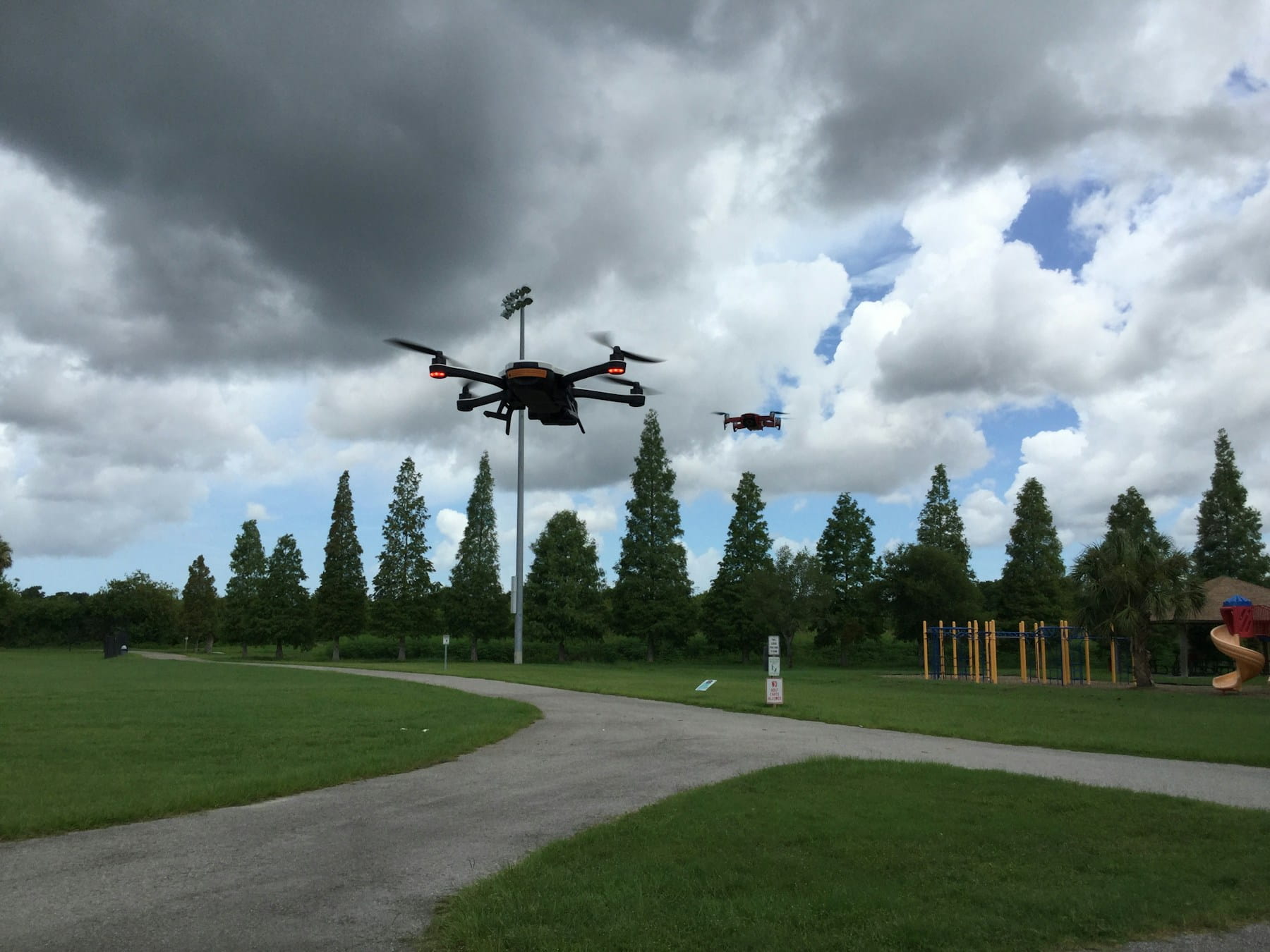
Distributed operations involve multiple aircraft operating at different locations simultaneously. A survey company might have crews working at three construction sites across a metropolitan area, each operating independently but sharing equipment pools and administrative resources. This model requires scheduling coordination and resource allocation but minimal real-time flight deconfliction.
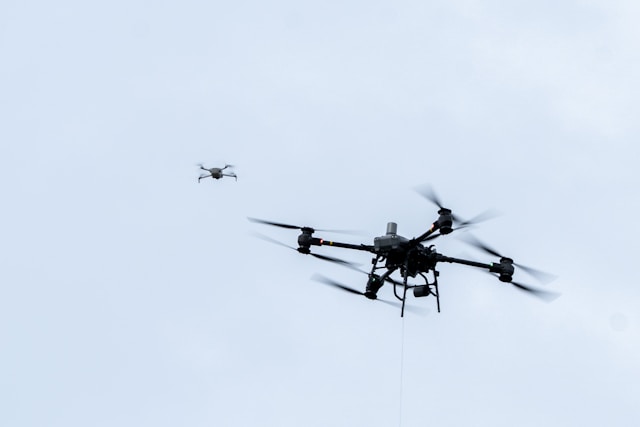
Parallel operations occur when multiple aircraft operate at the same location on different mission profiles. An infrastructure inspection might deploy one drone for visual documentation while another captures thermal imagery. These operations require careful airspace coordination and clear communication protocols.
Sequential operations involve rapid deployment of multiple aircraft at a single location, where one aircraft lands as another launches. This approach maximizes site coverage while maintaining single-aircraft operational simplicity at any given moment.
Professional flight planning becomes critical regardless of operation type. Each mission requires individual planning while fitting into broader operational schedules. Understanding which operation type applies helps determine appropriate management strategies.
Regulatory framework for simultaneous operations
Current FAA regulations under Part 107 establish clear limitations on multi-drone operations that shape management requirements.
Section 107.35 prohibits a single person from simultaneously controlling multiple aircraft or serving as pilot-in-command for more than one UAS at a time. This means true swarm operations require waivers, while distributed operations with separate pilots for each aircraft can proceed under standard rules.
The FAA has indicated that swarm technology introduces additional risks because a single control system failure could affect multiple aircraft simultaneously. Waiver applications for multi-aircraft operations require demonstrating that safety can be maintained despite these risks.
Emerging BVLOS regulations and the FAA's Drone Integration Concept of Operations outline future frameworks that may enable more scalable multi-drone operations. The proposed Part 108 rules include provisions for UAS Traffic Management systems designed specifically for coordinating multiple unmanned aircraft in shared airspace.
Remote ID requirements apply to each aircraft in multi-drone operations, providing identification and location data that supports airspace awareness. Compliance systems must track Remote ID status across all fleet aircraft.
Understanding these regulatory constraints helps organizations design compliant multi-drone programs. Operations within current rules can scale significantly through distributed models without waiver requirements, while organizations pursuing true simultaneous control must navigate the waiver process.
Coordinating pilots and crews
Multi-drone operations multiply the complexity of pilot coordination. Each aircraft requires a qualified pilot-in-command, and operations may need visual observers depending on airspace and visibility conditions.
Pilot certification tracking becomes essential when coordinating multiple crew members. Systems must verify that assigned pilots hold current Part 107 certifications, required endorsements, and appropriate experience levels for specific mission types. Assignment errors that place unqualified pilots on flights create serious compliance risks.
Crew scheduling must balance workload distribution, travel logistics, and pilot availability. Professional training programs ensure consistent skill levels across teams, but scheduling systems must still match pilot capabilities to mission requirements.
Communication protocols require clear definition for multi-crew operations. Teams need standardized radio procedures, check-in schedules, and emergency communication plans. When multiple flights operate simultaneously, communication channels must prevent confusion while enabling rapid coordination.
Shift management and fatigue tracking gain importance in sustained multi-drone programs. Extended operations require crew rotation schedules that prevent pilot fatigue while maintaining operational continuity. Systems should track duty times and flag potential fatigue risks.
Equipment allocation and logistics
Managing equipment across multi-drone operations requires systematic allocation and tracking approaches that scale with fleet size.
Equipment management systems must track individual aircraft availability, maintenance status, and current assignments. When multiple teams draw from shared equipment pools, real-time visibility prevents double-booking conflicts and ensures properly maintained aircraft reach each mission.
Battery logistics become particularly complex in multi-drone operations. Each active flight consumes batteries, requiring systematic charging schedules and distribution to ensure adequate power availability. Field operations may need portable charging solutions or battery rotation strategies.
Payload allocation requires matching specialized sensors to mission requirements. Not every aircraft carries every sensor type, so equipment management systems must track payload compatibility and availability alongside airframe status.
Transportation and staging logistics scale with operation scope. Equipment must reach correct locations at correct times, requiring coordination between warehouse operations, vehicle dispatch, and field crews. Geographic distribution of professional operations adds complexity.
Spare parts and emergency equipment should be positioned for rapid response. When operations run simultaneously across multiple locations, equipment failures require local resolution options rather than waiting for central support.
Flight scheduling and deconfliction
Flight scheduling forms the operational backbone of multi-drone programs. Effective scheduling maximizes aircraft utilization while preventing conflicts and maintaining safety margins.
Scheduling systems must account for multiple constraint types: pilot availability, equipment availability, airspace authorization windows, weather conditions, and client requirements. Mission planning workflows should integrate scheduling constraints to prevent unexecutable plans.
Airspace deconfliction prevents unsafe proximity between simultaneous operations. When multiple flights operate in nearby areas, scheduling must ensure adequate separation or establish coordination procedures for shared airspace. Unmanned traffic management concepts provide frameworks for systematic deconfliction.
Authorization windows from LAANC or other airspace access systems create scheduling constraints. Multiple operations may need access to controlled airspace during overlapping periods, requiring coordination with air traffic control or staggered scheduling.
Buffer time between sequential operations allows for delays, weather holds, and equipment issues. Overly aggressive scheduling leads to cascading delays when problems occur. Realistic time allocations maintain schedule integrity.
Calendar integration helps pilots and coordinators maintain awareness of multi-operation schedules. Mobile access enables field personnel to check assignments and report status without returning to offices.
Real-time monitoring and communication
Situational awareness across all active operations requires centralized monitoring capabilities that aggregate status information from distributed flights.
Real-time tracking dashboards display active aircraft positions, flight status, and telemetry data. Operators need immediate visibility when problems develop, enabling rapid response to equipment failures, weather changes, or airspace conflicts.
Flight data monitoring captures detailed telemetry from each operation. Battery levels, altitude, ground speed, and position data help identify developing issues before they become emergencies. Automated alerts flag anomalies requiring attention.
Communication systems must connect central coordination with field crews across all active operations. Radio systems, cellular communications, and satellite options each have roles depending on operation geography and infrastructure availability.
Status reporting protocols establish regular check-in requirements and exception reporting procedures. Field crews should report significant events promptly while routine updates follow scheduled intervals to prevent communication overload.
Emergency procedures must address multi-operation scenarios. When incidents occur, protocols should define notification sequences, resource reallocation procedures, and coordination with relevant authorities. Construction and infrastructure operations often require site-specific emergency coordination.
Data management across multiple flights
Multi-drone operations generate substantial data volumes requiring systematic management approaches.
Data collection workflows must track which aircraft captured which data at which locations. When multiple flights contribute to single deliverables, post-processing requires clear data provenance. Standardized file naming and folder structures support efficient data organization.
RTK positioning systems ensure consistent accuracy across flights contributing to unified datasets. When multiple aircraft collect survey data for combined processing, positional accuracy requirements apply to all contributing flights.
Storage infrastructure must accommodate data volumes from parallel operations. Cloud-based systems scale more readily than local storage, though bandwidth limitations may require hybrid approaches with field storage and batch uploads.
Processing queues should prioritize data based on client timelines and operational requirements. When multiple flights complete simultaneously, processing workflows need systematic prioritization rather than first-in processing that might delay urgent deliverables.
Quality control across multi-source data requires consistent standards and verification procedures. Automated quality checks can flag potential issues, but human review remains important for critical deliverables.
Scaling multi-drone programs
Growth from occasional multi-drone operations to sustained parallel programs requires deliberate capability building.
Scalable drone operations demand systems that accommodate growth without requiring fundamental redesign. Platforms should handle increasing aircraft counts, pilot rosters, and operation volumes without performance degradation.
Organizational structures should clarify roles as complexity increases. Small programs may have pilots handling coordination duties, while larger operations benefit from dedicated scheduling and dispatch functions. Utilities and energy sector operations often reach scales requiring specialized coordination roles.
Training programs should prepare personnel for multi-operation environments. Pilots accustomed to single-aircraft operations need exposure to coordination requirements, communication protocols, and scheduling system usage. Coordinators need understanding of operational constraints that affect scheduling feasibility.
Technology investment should precede scaling rather than follow it. Implementing management platforms before growth pressure creates time for proper configuration, training, and process refinement. Reactive implementation during rapid growth often leads to workarounds that persist as technical debt.
Performance metrics should track multi-operation efficiency separately from individual flight performance. Schedule adherence, resource utilization, and coordination effectiveness provide insights into program maturity. Case studies like Mobilysis demonstrate how professional teams achieve operational efficiency through systematic approaches.
Frequently Asked Questions
Can one pilot legally operate multiple drones simultaneously?
Under current FAA Part 107 regulations, a single person cannot simultaneously manipulate flight controls or act as pilot-in-command for more than one unmanned aircraft. However, organizations can operate multiple drones simultaneously by assigning separate pilots to each aircraft. True swarm operations with single-pilot control require an FAA waiver demonstrating that safety can be maintained despite the additional complexity.
What software features are essential for multi-drone operations?
Effective multi-drone operations require drone operations software with centralized scheduling, real-time fleet tracking, pilot certification management, and equipment allocation tools. Key capabilities include calendar integration for coordinating multiple pilots, comprehensive feature sets showing all active flights, automated compliance tracking, and communication tools connecting coordinators with field crews.
How do teams prevent airspace conflicts between simultaneous flights?
Airspace deconfliction starts with systematic flight scheduling that maintains geographic or temporal separation between operations. When flights must operate in proximity, teams establish altitude assignments, communication protocols, and visual separation procedures. Proper airspace awareness with mapped boundaries helps pilots maintain awareness of other operations, while centralized monitoring enables real-time coordination adjustments.
What maintenance considerations apply to multi-drone operations?
Multi-drone programs require systematic maintenance scheduling that tracks each aircraft independently while coordinating service intervals with operational demands. Pre-flight checklists must be completed for every aircraft on every flight. Programs should maintain spare aircraft availability to cover maintenance periods without disrupting scheduled operations.
Implementation considerations
Organizations building multi-drone capabilities should start with clear operational requirements. Understanding target operation types, geographic scope, and scaling projections helps define system requirements and investment priorities.
Current operations provide implementation foundations. Teams already managing multiple aircraft informally can formalize coordination procedures before adopting dedicated platforms. Process definition before technology implementation ensures systems support actual workflows rather than theoretical ideals.
Pilot team readiness affects implementation timelines. Multi-operation coordination requires skills beyond individual flight proficiency. Training investments should accompany platform deployments to ensure personnel can leverage new capabilities effectively.
Integration with existing systems determines implementation complexity. Drone management platforms should connect with client management, invoicing, and reporting systems to prevent data silos and duplicate entry.
In summary
Multi-drone operations management transforms the complexity of coordinating simultaneous aircraft into systematic, scalable workflows. Success requires integrated approaches addressing regulatory compliance, pilot coordination, equipment logistics, flight scheduling, and real-time monitoring.
Organizations that master multi-drone coordination gain significant competitive advantages. The ability to deploy parallel operations increases capacity without proportional overhead growth. Systematic approaches reduce the coordination burden that otherwise limits scaling.
As regulations evolve to enable more sophisticated multi-drone operations, organizations with strong management foundations will be positioned to adopt new capabilities quickly. Building these systems now prepares teams for expanding operational possibilities while improving current program efficiency.
Ready to Coordinate Your Multi-Drone Operations?
Professional drone programs require management platforms designed for the complexity of multi-aircraft operations. From scheduling and pilot coordination to real-time monitoring and compliance tracking, systematic approaches transform operational chaos into scalable efficiency.
Start your free trial today - no credit card required.
Or book a demo to see how DroneBundle helps teams coordinate inspection workflows and client portals across multi-drone programs.