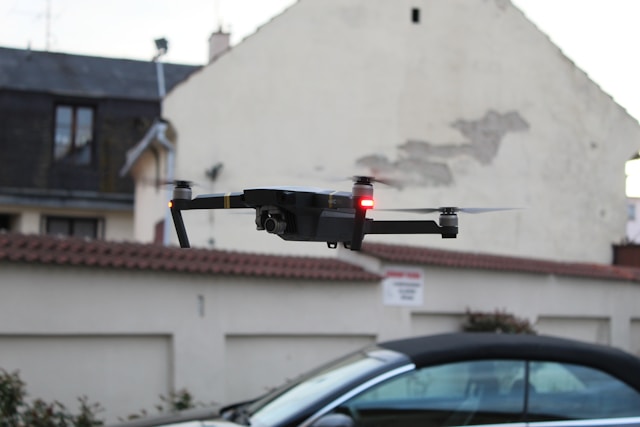
What Are Police Drones at Night?
Police drones at night are law enforcement unmanned aerial vehicles conducting operations after dark, equipped with anti-collision lights, thermal cameras, and spotlights for surveillance, search and rescue, emergency response, and suspect tracking. They typically display red and blue strobe lights similar to patrol vehicles and follow deliberate flight patterns that distinguish them from recreational drones.
Seeing unusual lights in the night sky increasingly means you may be observing police drones at night conducting law enforcement operations. As drone technology advances and adoption expands, understanding how to identify these aircraft and knowing their capabilities has become relevant for communities across the country.
Law enforcement agencies deployed drones for over 10,000 missions in major metropolitan areas during 2025, with projections reaching 20,000 annual missions in 2026 according to figures compiled by UAV Coach. These "drone as first responder" programs dispatch unmanned aircraft to emergency calls, often arriving minutes before ground units.
This guide explains how to identify police drones at night, what they can do, the regulations governing their operation, and how they differ from other aircraft you might observe after dark.
How to identify police drones at night
Identifying police drones at night requires observing multiple characteristics. No single feature confirms law enforcement operation, but combinations of lights, sounds, and behaviors create recognizable patterns.
Visual identification
Police drones typically appear as a compact cluster of lights moving through the sky. Unlike aircraft with navigation lights spread across wide wingspans, drone lights concentrate tightly around a small airframe. This compact grouping creates a distinctive appearance visible from ground level. Drones flown at night under Part 107 must also carry anti-collision lighting visible for at least 3 statute miles, as set out in 14 CFR 107.29.
Look for these visual indicators:
- Tight cluster of lights rather than spread-apart aircraft lighting
- Bright white strobe flashing at regular intervals
- Red and blue lights indicating law enforcement operation
- Deliberate movement patterns rather than random wandering
- Hovering capability that aircraft cannot match
The strobe flash rate typically falls between 40-100 cycles per minute, creating a distinctive pulse pattern. Consumer drones may have similar strobes, but the red and blue coloring specifically indicates emergency services.
Sound identification
Despite their small size, police drones at night produce audible sounds detectable in quiet environments. The characteristic buzzing comes from multiple rotors spinning at high speed, creating a distinct acoustic signature.
The sound resembles a swarm of bees or a small electric motor and differs noticeably from helicopter or aircraft noise. Range depends on ambient noise levels, but you can typically hear a nearby drone from several hundred feet away in quiet residential areas.
Sound alone cannot confirm police operation, as recreational and commercial drones produce similar noise. However, sound combined with visual characteristics strengthens identification confidence.
Remote ID detection
Federal regulations now require most drones to broadcast Remote ID signals identifying the aircraft and operator location. Smartphone apps can receive these broadcasts, potentially confirming whether a drone operates under law enforcement authority.
Several free apps detect nearby Remote ID signals, displaying the aircraft's serial number or session ID and operator location. However, law enforcement agencies may operate under exemptions that limit publicly broadcast information.
Police drone light patterns explained
Understanding standard drone lighting helps distinguish police aircraft from recreational operators flying after dark.
Standard navigation lights
All drones flying at night must display anti-collision lighting visible from at least three statute miles. Per FAA requirements, these lights must strobe and be visible to prevent collisions with other aircraft.
Standard navigation light positioning follows aviation conventions:
- Red light: Left (port) side of aircraft
- Green light: Right (starboard) side
- White light: Rear orientation indicator
These colors help observers determine aircraft heading and orientation even in darkness.
Police-specific lighting
Law enforcement drones add emergency lighting similar to ground patrol vehicles. The most distinctive feature is blue and red strobe lights that set them apart from civilian aircraft.
Police drone light configurations typically include:
- Red and blue alternating strobes
- Standard white anti-collision strobe
- Additional spotlights or illuminators for ground operations
- Infrared emitters invisible to naked eye but functional for cameras
From a distance, you may see only one side of the aircraft, making the drone appear to have single-color emergency lights. Closer observation reveals the alternating pattern across the airframe.
Thermal and infrared equipment
Many police drones carry thermal imaging cameras that detect heat signatures. These sensors do not produce visible light but may include small indicator LEDs showing operational status.
Some thermal systems emit faint infrared illumination to enhance imaging capability. While invisible to human eyes, this illumination can appear on cameras sensitive to near-infrared wavelengths.
Flight behavior differences
Police drone flight patterns differ markedly from recreational flying, providing additional identification cues beyond lighting.
Deliberate patterns
Law enforcement drones follow mission-specific flight paths rather than the exploratory wandering typical of hobbyists. Common patterns include:
Grid search: Systematic back-and-forth coverage of an area during search operations, maintaining consistent altitude and spacing between passes.
Orbit/surveillance: Circling around a specific point of interest while maintaining camera orientation toward the target. This pattern may persist for extended periods during active incidents.
Stationary hover: Maintaining position above an incident scene for prolonged observation, sometimes for 40 minutes or longer depending on battery capacity and mission requirements.
Tracking: Following ground movement while maintaining visual line of sight between the drone and subjects.
Extended presence
Consumer drones typically fly for 20-30 minutes before requiring battery replacement. Police drones often operate from docking stations that automatically swap batteries, enabling extended deployment.
In cities with advanced drone programs, the same aircraft may patrol for hours through automated battery cycling. If you observe a drone maintaining position far longer than typical flight times allow, it likely operates from infrastructure supporting extended missions.
Response patterns
Police drones deploy in response to specific calls for service. You may notice drones appearing shortly after incidents occur in their coverage areas, arriving quickly from nearby launch points.
Drone-as-first-responder programs launch aircraft within 20 seconds of dispatch, reaching incident scenes in under 90 seconds. This rapid response capability means drones often arrive before any ground units.
Law enforcement drone capabilities
Understanding what police drones can actually do helps separate fact from speculation about surveillance technology.
Camera systems
Most police drones carry both visual and thermal cameras, allowing day and night operation. Standard capabilities include:
- High-resolution video suitable for identifying individuals
- Thermal imaging detecting body heat through darkness
- Zoom lenses providing detailed views from safe distances
- Recording capability for evidence documentation
Camera quality varies by platform, but modern systems provide clear imagery sufficient for most law enforcement purposes. The combination of visual and thermal sensors enables operation regardless of lighting conditions.
Transmission capabilities
Police drones stream live video to command centers, allowing supervisors to monitor incidents in real-time. This capability supports rapid decision-making and tactical coordination during unfolding situations.
Flight data monitoring systems track aircraft position, telemetry, and sensor status throughout operations. This data supports both real-time operations and post-incident analysis.
Limitations
Despite impressive capabilities, police drones have genuine limitations:
- Cannot see through solid walls or roofs
- Cannot hear conversations from typical operating distances
- Cannot operate effectively in heavy rain, snow, or high winds
- Battery life limits continuous observation without infrastructure support
- Require trained operators for effective deployment
Thermal cameras detect heat but cannot identify individuals by face recognition through walls. They show heat signatures, not visual details, when objects block direct line of sight.
Common police drone uses
Law enforcement agencies deploy drones for specific operational purposes that leverage their unique capabilities.
Emergency response
Drone-as-first-responder programs dispatch aircraft immediately when 911 calls come in. The drone arrives first, providing situational awareness before ground units reach the scene.
This capability helps dispatchers and responding officers understand what they will encounter. Is the incident active? How many people are involved? Are there visible weapons? Early information improves response planning and officer safety. These programs represent one application within broader public safety and emergency drone deployments.
Search and rescue
Thermal cameras excel at locating missing persons in darkness. A single drone can search areas that would require dozens of ground personnel hours to cover on foot.
Lost children, Alzheimer's patients who have wandered, and hikers in distress all benefit from rapid aerial search. The thermal signature of a human body contrasts clearly against natural backgrounds, making detection straightforward even in dense vegetation. Specialized thermal imaging equipment enables these life-saving operations.
Pursuit support
When suspects flee on foot, drones provide continuous overhead tracking without the dangers of vehicle pursuits. Officers can follow at safe distances while the drone maintains visual contact.
This capability reduces high-speed chases through residential areas and helps coordinate containment when suspects attempt to hide. The aerial perspective shows escape routes and hiding spots invisible from ground level.
Crime scene documentation
Drones capture comprehensive photographic and video evidence of crime scenes before investigation disturbs the area. This documentation supplements traditional ground-level photography.
The aerial perspective provides context showing spatial relationships between evidence locations. These images support investigators, prosecutors, and eventually juries in understanding incident scenes.
Traffic incident management
Major accidents require rapid scene documentation for investigation and insurance purposes. Drones capture comprehensive imagery faster than ground photography while traffic control establishes detours. This application shares techniques with commercial construction and surveying documentation.
This application speeds scene clearance, reducing secondary accident risk and traffic delays during incident response.
Privacy considerations and regulations
Police drone operations exist within frameworks governing both aviation and law enforcement activities.
Aviation regulations
All drones, including law enforcement aircraft, must comply with FAA regulations. This includes airspace restrictions, operating rules, and in most cases Remote ID broadcast requirements.
Police departments typically operate under Part 107 certificates or government agency exemptions that permit operations beyond recreational rules. Understanding airspace regulations helps contextualize where these operations occur. These frameworks allow nighttime flying, extended range, and other capabilities restricted for recreational operators.
State and local laws
Many jurisdictions have enacted laws specifically governing police drone use. Common provisions require:
- Warrants for surveillance targeting specific individuals
- Policies prohibiting weaponization
- Data retention limits for recorded footage
- Public reporting of drone program activities
- Restrictions on facial recognition use
Check your local drone regulations to understand what rules govern law enforcement drone operations in your area. These vary significantly between jurisdictions. Our police drone guide walks through the warrant case law and compares state statutes such as Florida's and Minnesota's.
Privacy advocacy concerns
Civil liberties organizations monitor police drone programs, raising concerns about:
- Mass surveillance of public gatherings
- Data retention creating permanent records of movements
- Lack of transparency about program capabilities
- Mission creep beyond original justifications
These concerns have blocked or modified police drone programs in some cities where privacy advocates successfully demanded additional restrictions before deployment.
Distinguishing police drones from other aircraft
Several other flying objects can appear similar to police drones at night. Knowing the differences prevents misidentification.
Recreational drones
Hobbyist drones fly at night legally when equipped with anti-collision lights visible from three miles. They display white strobes but typically lack red and blue emergency lighting.
Recreational flight behavior tends toward exploration and photography rather than deliberate operational patterns. Hobbyists may fly erratically while learning or capturing creative shots, unlike the purposeful movement of law enforcement operations.
Commercial drones
Professional operators conduct inspection work, mapping, and other commercial activities at night. These drones carry standard white strobe lighting without emergency colors.
Commercial patterns depend on the work being performed. Inspection flights may hover near structures, while mapping missions follow grid patterns similar to search operations. The absence of red and blue lighting distinguishes them from police aircraft.
Aircraft and helicopters
Fixed-wing aircraft and helicopters display navigation lights spread far apart across their structures. The wide spacing differs obviously from the compact clustering of drone lights.
Aircraft also produce dramatically different sound signatures. Even small helicopters generate noise levels far exceeding any drone, making auditory identification straightforward.
Satellites and celestial objects
Satellites appear as steady points of light moving in straight lines across the sky. They do not hover, change direction sharply, or flash like drone strobes.
Planets and stars remain stationary relative to the horizon during short observation periods. Their apparent movement comes from Earth's rotation, not independent propulsion.
Frequently asked questions
Can police drones see inside my house?
Police drones cannot see through walls or closed curtains. Standard cameras work only with direct line of sight, and thermal imaging detects heat signatures but cannot see through solid structures. Thermal cameras may detect heat emanating from walls but cannot image activities inside. Windows block most thermal imaging. Warrants are typically required for police to deliberately surveil private spaces regardless of technology used.
How long can police drones stay in the air?
Individual flight times range from 30-60 minutes depending on the platform and payload. However, advanced programs use docking stations that automatically swap batteries, enabling effectively unlimited operation. Cities with drone-as-first-responder programs maintain aircraft on station continuously through automated equipment management systems that cycle batteries without human intervention.
Are police required to announce drone surveillance?
Requirements vary by jurisdiction. Some states mandate signage at drone launch sites or public notification of surveillance programs. Others have no specific disclosure requirements beyond standard public records availability. Federal law enforcement operations may not require any public notification. Check local laws to understand disclosure requirements in your area.
Can I shoot down a police drone?
Shooting down any aircraft, including drones, violates federal law and carries severe penalties including imprisonment. This applies regardless of whether the drone is recreational, commercial, or law enforcement operated. Interfering with police operations through any means may result in additional criminal charges. Legal remedies for improper surveillance exist through courts, not self-help destruction of aircraft.
Implementation considerations
Understanding police drone activity in your community requires ongoing attention to local developments and policies.
Check whether your police department operates a drone program and what policies govern its use. Understanding future drone technology trends helps anticipate how these programs may evolve. Many agencies publish operating guidelines addressing when drones may deploy, what they may record, and how data is retained.
Attend public meetings where drone programs are discussed. Budget hearings, police commission meetings, and city council sessions often address drone acquisition and deployment policies. Community input during these processes can influence how programs operate.
Review published data about drone deployments if your jurisdiction requires reporting. Understanding how many flights occur, what types of calls prompt drone response, and what areas receive coverage provides factual grounding for informed opinions.
Consider the legitimate public safety benefits alongside privacy concerns. Rapid emergency response, search and rescue capability, and officer safety improvements represent genuine value. Balanced evaluation weighs these benefits against surveillance risks. Professional features for flight logging help document operations for accountability purposes.
In summary
Police drones at night have become common in many communities as law enforcement agencies adopt unmanned aircraft for emergency response, search operations, and incident documentation. Identifying these aircraft requires observing their distinctive red and blue lighting, deliberate flight patterns, and extended operational presence.
Understanding drone capabilities separates factual concerns from speculation. These aircraft provide valuable situational awareness and search capability while operating within legal frameworks governing both aviation and law enforcement activities.
Communities can engage constructively with police drone programs through public processes that establish appropriate policies for deployment, data retention, and transparency. Informed citizens who understand both capabilities and limitations contribute more effectively to these discussions than those operating from misconceptions.
Want to stay informed about drone regulations?
Whether you are a drone operator, public safety professional, or concerned citizen, understanding drone regulations and operations helps you navigate an increasingly drone-integrated environment.
Start your free trial today - no credit card required.
Or book a demo to see how DroneBundle helps manage drone operations with integrated compliance tracking and flight documentation.