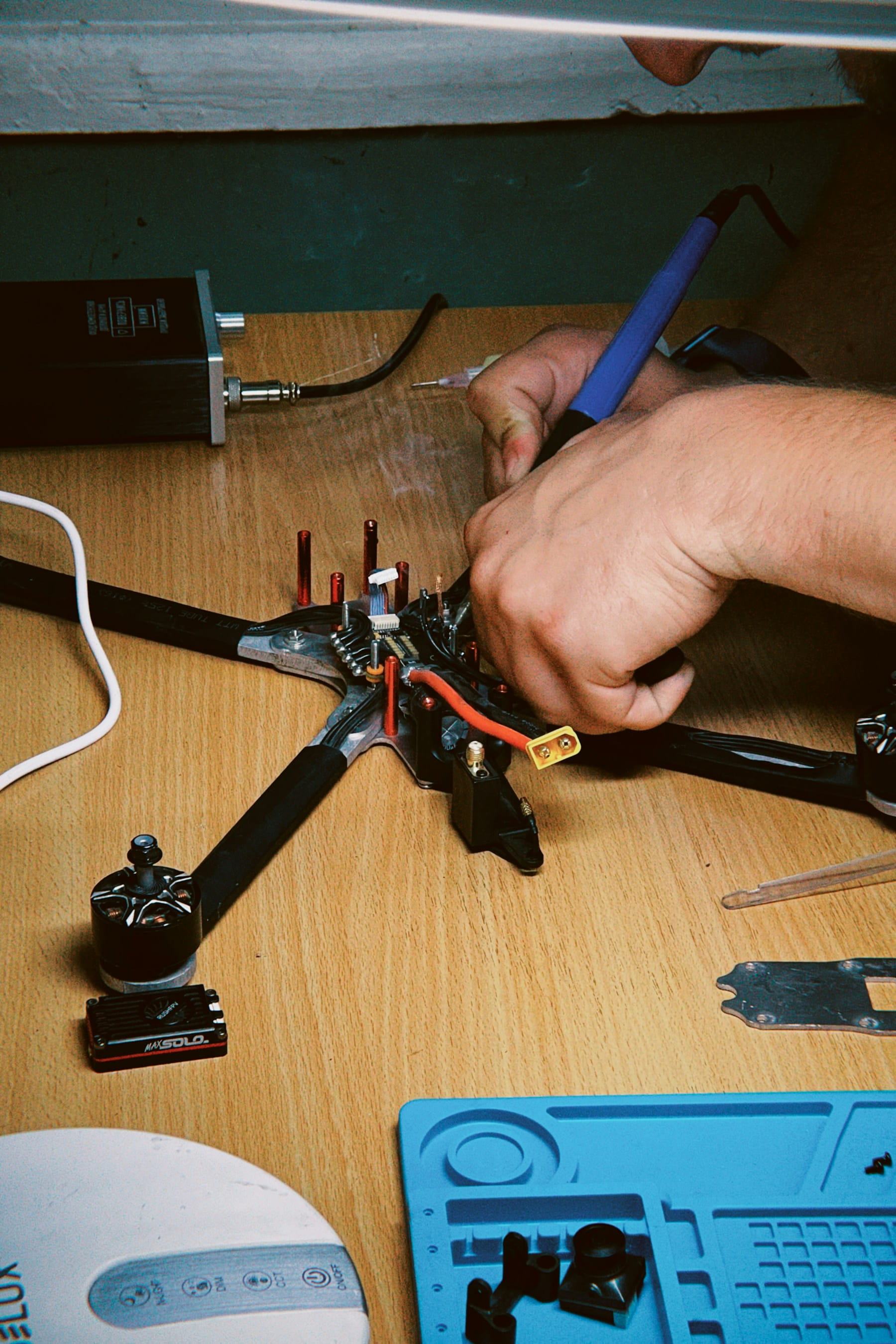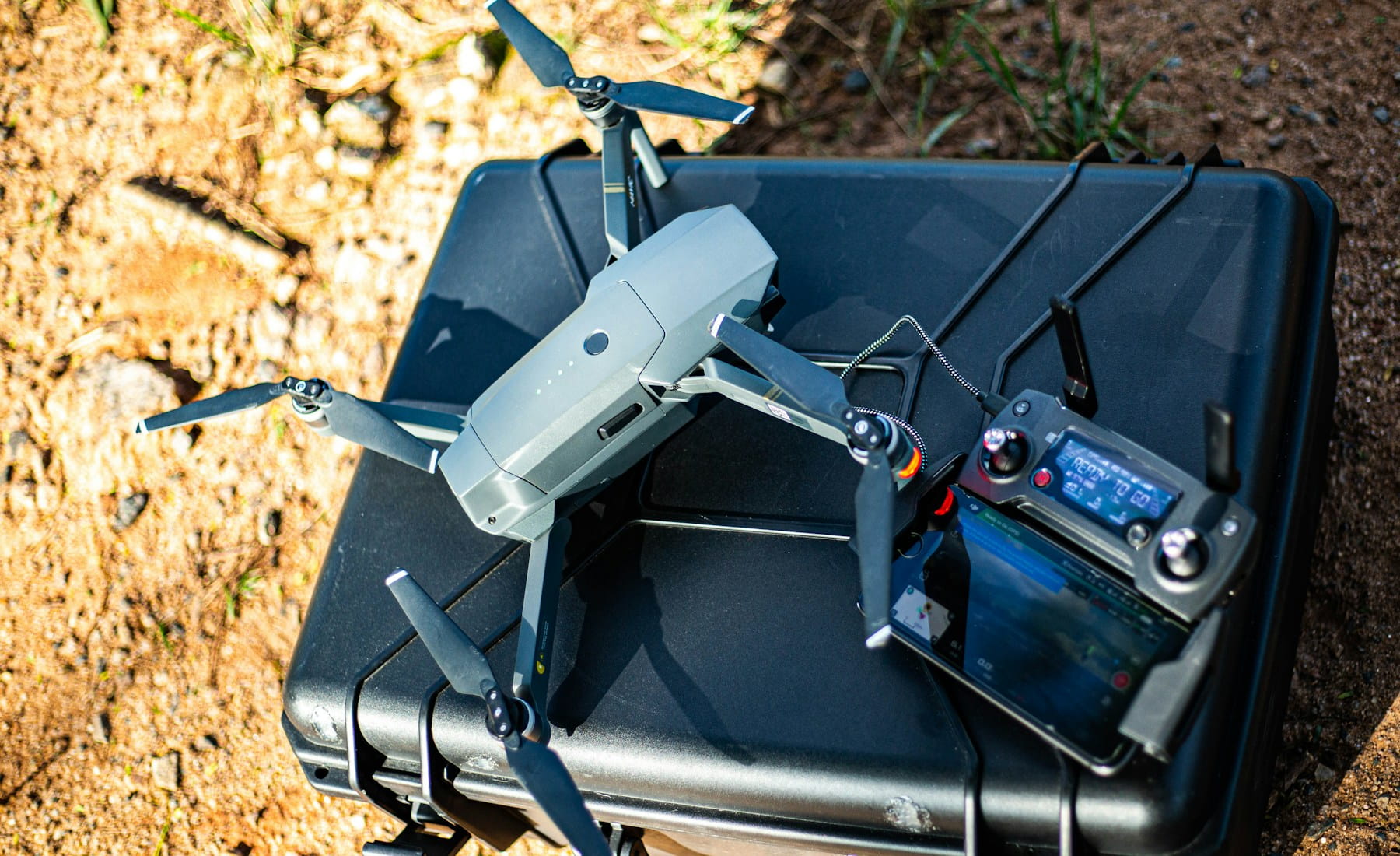
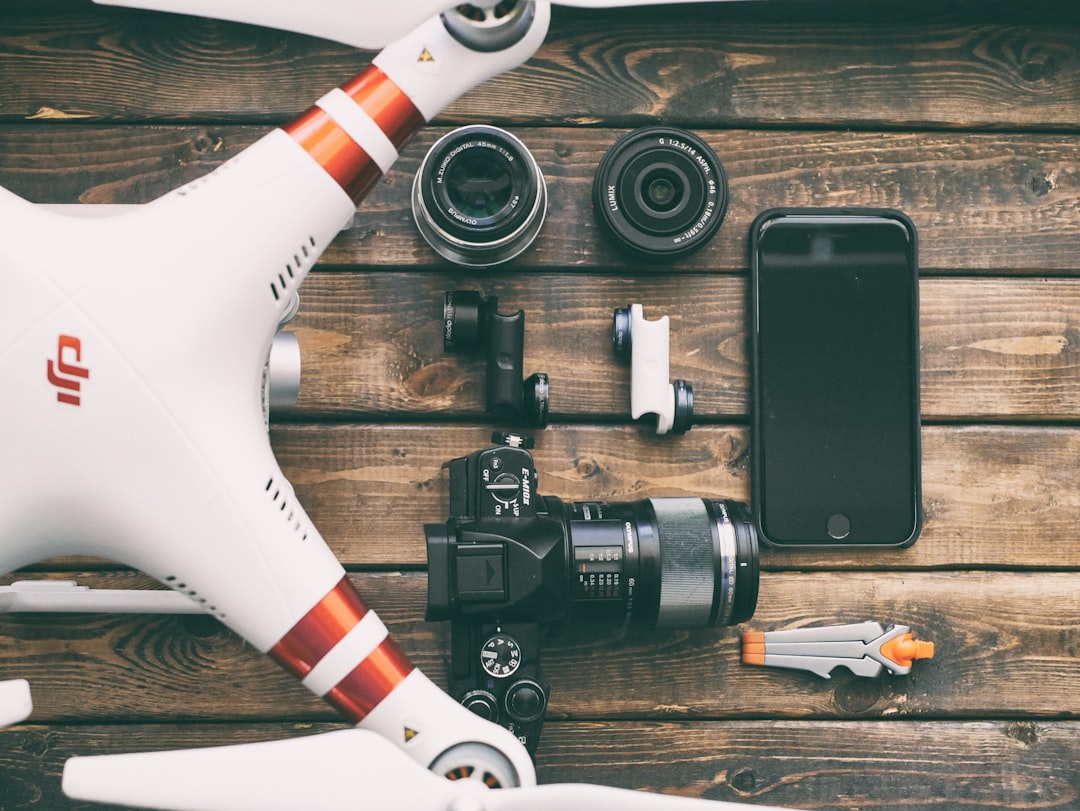
A drone maintenance log is the dated record of every repair, inspection, replacement, and firmware change performed on an aircraft and its supporting equipment. Part 107 does not mandate a format for most operations, but the FAA names exactly what a good one contains, and one category of flight makes it legally required.
Most articles about the drone maintenance log tell you to write down the date and what you fixed. That is not wrong. It is just not enough to survive an insurance claim, a warranty dispute, or an FAA request for records, which are the three moments a log actually earns its keep.
This guide covers what the regulations genuinely require versus what the internet repeats, the field list the FAA publishes and almost nobody follows, a template you can copy today, and the retention rules that decide whether your records still exist when someone asks for them.
What a drone maintenance log is, and what the FAA actually requires
A drone maintenance log is a per-aircraft service history: what was done, when, by whom, and at what time in service. Under standard Part 107 operations the FAA does not require a specific logbook format, and it does not publish an inspection schedule for small UAS the way it does for certificated manned aircraft.
What it does require is narrower and easy to miss. Section 107.15 says no person may operate a small UAS unless it is in a condition for safe operation, and the remote pilot in command must check the aircraft before each flight to determine that. Separately, section 107.7 requires you to make available, on request from the Administrator, any document, record, or report required to be kept under the regulations.
Read those two together and the practical position becomes clear. You must be able to justify the airworthiness decision you made before every flight. A log is the only realistic way to do that after the fact, which is why the FAA's own guidance leans on it so heavily without making it mandatory.
Advisory Circular 107-2A puts it plainly in paragraph 7.3.5: small UAS owners and operators "may find recordkeeping to be beneficial," and hard copy or electronic logbook formats covering all periodic inspections, maintenance, preventive maintenance, repairs, and alterations are "useful in documenting the history of the small UAS." It also notes that for operators who rapidly accumulate flight hours and cycles, recordkeeping "may provide an essential safety support."
That is advisory language. It is also the standard an FAA inspector, an underwriter, or an opposing attorney will measure you against. Our broader guide to drone maintenance intervals and inspection routines covers the schedule side; this post is about the record itself.
The one part of Part 107 that prescribes log content
There is exactly one place in Part 107 where maintenance recordkeeping stops being optional: Category 4 operations over people. Section 107.140(c) spells out what the owner or operator must keep, and it reads like a specification for a proper maintenance log.
The rule requires records of all maintenance, preventive maintenance, and alterations performed on the aircraft, documented in a manner acceptable to the Administrator, and each record must contain three things:
- A description of the work performed
- The date the work was completed
- The name of the person who performed the work
On top of that, the owner must maintain records showing the status of life-limited parts installed on the aircraft, the inspection status of the aircraft, and the status of applicable airworthiness directives including method of compliance, AD number, revision date, and the time and date of the next required action for recurring ADs.
Most operators will never fly Category 4. It still matters, for two reasons.
First, it is the FAA telling you in its own words what an acceptable sUAS maintenance record looks like. Copy that structure and you are aligned with the only published federal standard for drone maintenance logs. Second, the moment your operation moves toward operations over people or beyond visual line of sight, those requirements arrive with the approval. Building the habit late is expensive.
The proposed Part 108 BVLOS rule extends this direction of travel. The notice of proposed rulemaking published on 7 August 2025 puts maintenance controls, qualified maintenance personnel, and retained records inside the operator's accountability framework rather than leaving them to good intentions. It is still a proposal as of August 2026, with no final rule. Our Part 108 compliance checklist tracks where it stands and what changes when it lands.
The FAA's recordkeeping list covers more than the aircraft
Here is the detail almost every drone maintenance log article omits. AC 107-2A does not tell you to keep records on the drone. It tells you to keep records on the system.
Paragraph 7.3.5 states that recordkeeping "would include all components of the small UAS, including: small unmanned aircraft, CS, launch and recovery equipment, Command and Control (C2) link equipment, payload, and any other components required to safely operate the small UAS."
CS means control station. That is your controller, your tablet, your ground station laptop. C2 link equipment covers antennas, repeaters, and radio modules. Launch and recovery equipment includes catapults, nets, and landing pads. Payload means the camera, the thermal sensor, the lidar unit, the gimbal.
Ask yourself how many of those appear in your current log. For most operators the honest answer is one: the airframe, plus batteries if they are being diligent.
That gap causes real failures. A controller with a swollen internal battery or a cracked antenna base is a system-level airworthiness problem, and there is no entry anywhere saying when it was last inspected. A thermal payload that was dropped on a job in March gets quietly reinstalled in June because nothing recorded the impact. A ground station laptop that never receives firmware updates becomes the weakest link in a flight approval workflow that everyone assumes is solid.
Build your log so every serialized item in the system has a row, not just the thing with propellers on it. If you already keep a proper equipment register, you have the inventory. The log simply attaches history to each entry.
Log the component, not just the airframe
Drone components move. Batteries rotate between airframes, propellers get swapped in the field, a gimbal comes off one aircraft and goes onto another when a job cannot wait. If your maintenance history lives only against the aircraft, that history becomes fiction the moment a part changes hands.
The fix is to log against the serial number of the component, and to record the aircraft it was installed on as an attribute of the entry rather than the other way round. AC 107-2A hints at this when it recommends "recording the time-in-service for that component at the time of the maintenance procedure." Time in service belongs to the part, not the platform.
This matters most for batteries, which are the highest-failure, highest-consequence consumable in the fleet. A battery log should carry its own identifier, cumulative charge cycles, the date it entered service, any swelling or voltage-imbalance observations, and the date and reason it was retired. "Reason for removal from service" is the single field most operators skip and the one an investigator asks about first.
It matters for life-limited parts too. Manufacturer-specified propeller and motor replacement intervals are counted in flight time or cycles, and those numbers only make sense per component. A drone with 200 hours on the airframe may be carrying propellers with 12 hours on them and a gimbal with 340 hours from a previous aircraft.
Practical rule: if a part has a serial number or a replacement interval, give it its own log line and let the aircraft assignment be data on that line. Tracking flight hours per pilot and per airframe is the same discipline applied to a different asset.
Drone maintenance log template you can copy
Start with the fields the FAA names, then add the operational fields that make a log useful rather than merely compliant. These columns work as a spreadsheet, a paper logbook, or a database table.
| Field | Why it is there | Example |
|---|---|---|
| Record ID | Unique, sequential, never reused | MX-2026-0184 |
| Date completed | Required by 107.140(c)(2) | 2026-08-19 |
| Item and serial number | Aircraft, CS, payload, battery, C2 equipment | Airframe M350 / 3XZBK9C001234 |
| Time in service at work | Hours, flights, or cycles on that item | 214.6 flight hours |
| Category | Preventive, corrective, inspection, calibration, firmware, replacement | Component replacement |
| Description of work | Required by 107.140(c)(2), be specific | Replaced all four propellers, P/N 1671, 100-hour interval |
| Parts installed | Part number and serial where applicable | 4 x 1671 propellers, lot 26B |
| Reason or trigger | Scheduled interval, defect found, incident, AD or service bulletin | Scheduled 100-hour |
| Performed by | Required by 107.140(c)(2), full name not initials | M. Okonjo |
| Method or reference | Manufacturer manual section, service bulletin number | DJI M350 UM rev 3.2, sec 6.4 |
| Result and serviceability | Whether the item is returned to service or grounded | Serviceable, returned to service |
| Next due | Recurring interval, the 107.140(c)(3) idea | 314.6 hours |
| Attachments | Photos, receipts, inspection reports | 3 photos, invoice 5541 |
A worked entry, written the way it should read:
MX-2026-0184. 19 Aug 2026. Airframe M350, S/N 3XZBK9C001234, 214.6 flight hours. Scheduled 100-hour propeller replacement per DJI M350 user manual rev 3.2, section 6.4. Removed and discarded four 1671 propellers, installed four new 1671 propellers from lot 26B. Motor mounts inspected, no play or discoloration found. Aircraft returned to service by M. Okonjo, 19 Aug 2026. Next propeller replacement due 314.6 hours.
Notice what that entry does. It says what triggered the work, what standard it followed, what was replaced with what, what else was inspected while it was open, who declared the aircraft serviceable, and when it is next due. An underwriter can read it four years later without calling you.
Two more columns are worth adding if your operation crosses into inspection or survey work with client deliverables. A calibration reference field for payload work keeps sensor calibrations traceable, which supports quality assurance in drone inspections. And a linked flight or incident ID field connects unscheduled maintenance back to the flight that caused it, which is the trail an investigator follows in reverse.
For the pre-flight side of the same discipline, pair the log with a documented pre-flight checklist template so defects found on the ramp have somewhere to go.
The return-to-service entry most operators skip
In manned aviation, a maintenance record is not finished until someone approves the aircraft for return to service. Part 107 has no equivalent signature requirement for standard operations, and that absence is why so many drone logs end mid-sentence: the work is described, and nothing says the aircraft is fit to fly again.
Add the step anyway. A named person, on a named date, stating that the item is serviceable or that it remains grounded.
Three reasons this is worth the extra line. It forces a deliberate airworthiness decision rather than an assumption that fixing something means it is fixed. It gives you a clean handover point when the person who did the work is not the person who flies next, which is the normal case in any team of more than two. And it separates two things that Part 107 keeps separate: the pre-flight check under 107.15 is the pilot confirming condition on the day, not a maintenance approval.
Note that 107.140(d) says compliance with part 43 and part 91 subpart E satisfies the Category 4 maintenance requirements. In other words, the FAA's fallback standard for drone maintenance is the manned aviation standard. Borrowing its return-to-service habit costs you nothing and puts you ahead of where the rules are heading.
If a repair leaves an item outside manufacturer specification, AC 107-2A is direct: replace the component rather than fly it. Record that decision too. "Attempted repair unsuccessful, component replaced" is a stronger entry than silence.
How long to keep records, and what transfers with the aircraft
Retention is where drone maintenance log advice gets vague, so here are the actual numbers.
Under 107.140(c)(4), records of maintenance, preventive maintenance, or alterations must be retained for one year from completion, or until the maintenance is repeated or superseded. Records showing life-limited part status, airworthiness directive compliance, and inspection status have no expiry: they must be retained and transferred with the aircraft when ownership changes.
That second clause is the one nobody writes about. Sell an aircraft and its life-limited part status and inspection status go with it. Buy a used airframe with no such records and you have bought an aircraft whose remaining component life is unknowable. Ask for the log before the money moves, the same way you would for a used car.
In Europe the rule is explicit and stricter. Under UAS.SPEC.050, operators in the specific category must keep records of maintenance activities for a minimum of three years, alongside records of operations and personnel qualifications. EASA's guidance on operator responsibilities treats a maintenance programme and its records as part of the operational authorisation, not an optional extra. Our EASA compliance guide covers how that fits into the wider operations manual.
The sensible policy for a commercial fleet ignores both minimums: keep everything for the service life of the asset, plus the longest limitation period that could apply to a claim arising from a flight it performed. Storage costs nothing. A missing 2023 entry during a 2027 dispute costs a great deal. Treat retention as a document version control problem, with the current record and its history both preserved.
What your log has to survive: a claim or an investigation
A maintenance log is read in anger perhaps twice in an aircraft's life, and both readings are adversarial.
The first is an insurance claim. Hull and liability underwriters increasingly ask for maintenance history before renewing and after any loss, and the question is rarely "did you maintain it." It is "can you show the aircraft was maintained to the manufacturer's schedule on the date of the loss." A log with a two-month gap over the period an interval came due does more damage than no log at all, because it documents the omission. Our guides to drone insurance and liability for commercial drone services go deeper on what carriers request.
The second is a regulatory or safety investigation. Under 107.140(c)(5) those Category 4 records must be available on request to the FAA or an authorized representative of the NTSB, and 107.7(a)(3) reaches any record required to be kept under the regulations. If a mishap triggers an accident report under 107.9, the maintenance history becomes the evidence for whether a mechanical issue or deferred work contributed.
Which raises the question competitors never ask: how would you prove your log was not written after the event?
A spreadsheet has no answer. Any row can be edited, any date typed, and the file's own modified timestamp says only when it was last touched. A system that timestamps each entry, records who created it, and keeps a status history is not bureaucracy, it is the difference between a record and an assertion. Pair it with structured incident reporting and a live risk register, and the maintenance trail sits inside a wider safety case rather than floating on its own.
Three habits protect log integrity in practice:
- Enter the work on the day it is done. Batch entry at month end is where dates drift and details vanish.
- Never delete, always append. A correction is a new entry referencing the old one, not an overwrite.
- Log the negative findings. "Inspected, no defects found" is evidence. A blank row is not.
Running the log at fleet scale
One aircraft with a paper logbook works fine. The method breaks somewhere around the fifth airframe, because the log stops being a document and becomes a scheduling problem: every serialized item has its own clock, and someone must know which clocks are close to expiry before dispatch, not after.
That is where drone maintenance recordkeeping stops being about the log and starts being about the counters that drive it. DroneBundle's maintenance module schedules service by flight hours, flight count, calendar days, or battery charge cycles, which are precisely the time-in-service limits AC 107-2A paragraph 7.2.1 describes. Progress updates automatically from processed flight logs, so nobody types a current-hours figure and nobody guesses.
Recording the work closes the loop. Each record captures the category, priority, who performed it, notes, and attachments such as photos and receipts, and completing a record resets the schedule so the next interval counts from the right baseline. Every record keeps a status history showing when a pending job was completed and by whom, which is the audit trail a spreadsheet cannot produce. Records attach to items in the equipment register, so the control station, payload, and batteries get their own history alongside the airframe.
If you fly DJI, the counters can run without anyone touching a file: the Log Sync app uploads each flight from the controller, and DJI log processing feeds hours and charge cycles straight into the schedules. When an underwriter or a regulator asks, export the schedules, the logged work, and the per-aircraft hours and cycles as a branded PDF or spreadsheet instead of screenshots.
High-utilization operations feel this first. Legacy Technology Lab runs more than 20,000 commercial roof inspections across 1.4 billion square feet, and at that flight volume intervals arrive weekly rather than annually. It is exactly the situation AC 107-2A describes when it says recordkeeping provides essential safety support for operators who rapidly accumulate hours and cycles.
For the wider picture, see the drone fleet maintenance playbook and the guide to automated maintenance scheduling. Teams evaluating platforms should start with the complete guide to drone fleet management software. Maintenance sits on the Enterprise plan and is included in full during the 14-day trial, with tiers listed on the pricing page.
Frequently asked questions
Does the FAA require a drone maintenance log?
Not for standard Part 107 operations. There is no prescribed logbook format and no mandated inspection schedule for most small UAS. Two obligations still bite: 107.15 requires the aircraft to be in a condition for safe operation with a pre-flight check by the remote pilot, and 107.7 requires you to produce any required record on FAA request. Category 4 operations over people are the exception, where 107.140(c) makes maintenance records mandatory with prescribed content. Advisory Circular 107-2A recommends a logbook for everyone else.
What should be included in a drone maintenance log?
At minimum, the three fields the FAA prescribes for Category 4: a description of the work performed, the date it was completed, and the name of the person who performed it. A useful log adds the item and serial number, time in service at the moment of work, the trigger for the work, parts installed, the manufacturer procedure followed, whether the item was returned to service, and the next due interval. AC 107-2A extends coverage beyond the aircraft to the control station, launch and recovery equipment, C2 link equipment, and payloads.
How long do you have to keep drone maintenance records?
Under 107.140(c)(4), maintenance and alteration records are kept for one year from completion or until superseded by later work, while life-limited part status, AD compliance, and inspection status records are kept indefinitely and transferred with the aircraft on sale. In the EU specific category, UAS.SPEC.050 requires maintenance records for at least three years. For commercial fleets, keeping records for the full service life of the asset is the safer policy given insurance and litigation timelines.
Can I keep a drone maintenance log in a spreadsheet?
Legally, yes. Practically, it works up to a handful of aircraft. The limits show up in three places: nothing links entries to actual flight hours, so counters are typed by hand and drift; nothing proves when a row was written, which weakens the record in a claim or investigation; and nobody is alerted when an interval is approaching. Purpose-built maintenance tracking removes all three by tying records to the equipment register and to processed flight data.
Ready to stop rebuilding your maintenance history from memory?
If your current drone maintenance log is a spreadsheet somebody updates when they remember, the gap will surface at the worst moment: an underwriter's renewal questionnaire, a client's compliance audit, or an FAA request after an incident.
DroneBundle keeps the whole trail in one place. Schedules driven by real flight hours, flights, calendar days, and charge cycles. Service records with attachments, assignees, and a full status history against every serialized item in your fleet. Escalating alerts at 80, 90, and 100 percent of an interval. One-click exports for auditors and insurers.
Start your free 14-day trial and set up your first maintenance schedules against your own aircraft, or book a live demo to see how a fleet's maintenance history looks when it builds itself. Browse the wider feature set if you want the full picture first.