What is the Part 107 Practice Test?
A Part 107 practice test is a set of sample questions that mirror the FAA's Unmanned Aircraft General (UAG) knowledge exam, the test you pass to earn a Remote Pilot Certificate. The real exam has 60 scored questions, and since September 29, 2025 nearly half of them (48%) cover regulations. From October 26, 2026, some questions can also show images from current FAA charts that are not in the printed testing supplement.
Updated October 9, 2026: adds the free interactive practice test above, with all 60 questions, a timed exam mode and a score for each topic. Since October 7, the questions follow the FAA topic blueprint in effect since September 29, 2025, and cover the October 26, 2026 change to chart questions.
A Part 107 practice test is a quick way to find your weak spots before you pay for the real FAA exam. The knowledge test is heavy on operating rules, with the rest split across operations, airspace classifications, weather, and aircraft performance.
Take the free practice test above as a timed exam or one topic at a time. Below, this guide adds more sample questions by topic, each with an explanation and the FAA source behind the answer, and covers the current exam blueprint and the October 2026 change to chart questions. Whether you are pursuing drone pilot jobs or starting a commercial drone operation, earning a Remote Pilot Certificate is the first step toward flying commercially under Part 107.
What the Part 107 test covers
14 CFR Part 107 lists 13 knowledge areas for the exam in §107.73, from regulations and airspace to radio procedures, physiology, and night operations. The FAA groups them into five content areas, and PSI, the FAA's testing vendor, builds every exam to a fixed blueprint. The FAA announced the current blueprint in August 2025, effective September 29, 2025:
| Content area | Share of questions | About this many of 60 |
|---|---|---|
| Regulations | 48% | 29 |
| Operations | 25% | 15 |
| Airspace classification and operating requirements | 20% | 12 |
| Weather | 5% | 3 |
| Loading and performance | 2% | 1 |
The new split replaced the ranges in the Remote Pilot Airman Certification Standards (FAA-S-ACS-10B), which put operations at 35 to 45% and weather at 11 to 16%. Study material written before late 2025 may still quote those older ranges, which overweight weather and underweight regulations compared with today's exam.
Regulations
Regulations are now almost half the exam. Expect questions on Part 107 operating limits, waivers, operations over people, Remote ID requirements, registration, accident reporting, and certificate rules. You also need the visual line of sight rules and what a waiver can and cannot allow for beyond visual line of sight flights.
Operations
Operations covers emergency procedures, crew resource management, radio communication, airport operations, aeronautical decision-making, physiology, and maintenance. Topics include pre-flight checklists, lost-link planning, and how to stay clear of manned traffic near airports.
Airspace and requirements
Airspace questions test whether you can read a sectional chart and know when you need authorization. You must understand controlled and uncontrolled airspace, including Class B, C, D, E, and G. Knowing how LAANC authorization works and where no-fly zones apply matters for both the exam and real-world operations.
Weather
Weather is now about three questions. The FAA's standards for this area cover weather sources, such as METAR reports and terminal aerodrome forecasts (TAFs), and the effects of weather on a small aircraft's performance. Learn to decode a METAR quickly, but do not spend a third of your study time here.
Loading and performance
This area is about one question. It covers how loading, weight, and balance affect a small aircraft's performance and controllability.
Test format and requirements
The FAA's official name for the exam is Unmanned Aircraft General, Small (UAG). The format below comes from the FAA's testing matrix and PSI's applicant bulletin for the UAG exam, and the fee from the FAA's own FAQ.
Exam specifications
| Specification | Details |
|---|---|
| Scored questions | 60 multiple choice, three answer options each |
| Unscored questions | 5 extra validation questions that do not count toward your score |
| Time allowed | 120 minutes |
| Passing score | 70% (42 of 60 correct) |
| Minimum age to test | 14 (you must be 16 to receive the certificate) |
| Test fee | About $175, according to the FAA, paid when you book |
| Testing location | FAA-approved PSI testing centers |
| Identification | Photo ID with date of birth and signature, plus your home address (see below) |
Registration process
Before you book, create a profile in the FAA's IACRA system to get an FAA Tracking Number (FTN). Then schedule the exam with PSI. After you pass, apply for the certificate in IACRA by selecting your test record or entering the 17-digit Knowledge Test Exam ID from your test report. AC 107-2A says test results upload to IACRA immediately, while the FAA's certification page says they may take up to 48 hours to appear. The FAA's remote pilot page walks through each step.
What to bring
Your identification must show your photo, date of birth, signature, and home address, and the details can be spread across more than one document. US citizens and resident aliens can use a driver's license or permit from a US state or territory, a US government or military ID, a passport, or an alien residency card. Other non-US citizens need a passport plus a US driver's license or another government-issued ID. If your ID has no home address, PSI accepts proof such as a water, electric, or gas bill (cable bills do not count), a signed lease, or a voter registration card. An applicant under 18 without acceptable ID must be accompanied by a parent or legal guardian, who shows their own ID and attests to the applicant's identity. PSI's UAG applicant bulletin lists every accepted document.
Arrive at least 15 minutes early. The test center supplies the testing supplement book, scratch paper, and a pen. The test software has a built-in four-function calculator, and you may bring a simple calculator, plotter, or protractor if the proctor clears it. Phones, watches, bags, and your own pens stay outside the testing room.
What changes on October 26, 2026
The UAG exam already embeds some images directly in its questions, as part of the FAA's move to put test figures on screen. Starting October 26, 2026, it also includes image-based questions whose images are not in the printed Airman Knowledge Testing Supplement (FAA-CT-8080-2H, 2018 edition). The FAA's September 2026 testing advisory announces the change for the UAG and instrument rating exams together, with images from current FAA charts.
Memorizing the supplement figures is no longer enough, because a question may show a chart excerpt you have not seen before.
The FAA published two UAG examples, both cut from 2025 sectional charts:
- An excerpt around Millville Municipal Airport (MIV) asks what type of airspace surrounds the airport and whether a drone needs ATC authorization there. The answer is a Class E surface area, and authorization is required.
- An excerpt around Grand Canyon National Park Airport (GCN) asks which frequency to use as the Common Traffic Advisory Frequency when the control tower is not operating.
The printed supplement stays at test centers for now. The FAA has not set a date to remove it and says it will give public notice first. It also will not preview the images used in live questions.
The practical change is to study from real charts. The FAA publishes every current sectional chart free as a PDF. Pull up the chart for your area and practice naming the airspace, ceiling, and frequencies at each airport. Questions 6 and 7 below use dated excerpts from the Phoenix Sectional (effective 3 Sep to 29 Oct 2026) to get you started.
Free Part 107 practice test questions
The following practice questions cover the major topic areas on the Part 107 exam. Each answer includes an explanation and the FAA source it comes from, so you can read the original rule.
Airspace classification questions
Question 1: A remote pilot plans a flight toward an airport surrounded by Class D airspace. Where does the requirement for ATC authorization begin?
A) 5 nautical miles from the airport
B) At the Class D boundary shown on the sectional chart
C) Only inside the airport fence
Show Answer
Answer: B - Class D has no standard radius. It generally extends from the surface to 2,500 feet above the airport elevation, and each area is individually tailored, so the dashed blue line on the sectional chart marks where it starts. Part 107 requires prior ATC authorization before flying in Class B, C, or D airspace, or in a Class E surface area designated for an airport. Five nautical miles is the usual radius of a Class C surface area, not Class D.
Source: 14 CFR 107.41; Aeronautical Information Manual (AIM) 3-2-4 and 3-2-5.
Question 2: Which airspace class surrounds the busiest airports and extends from the surface to 10,000 feet MSL?
A) Class A
B) Class B
C) Class C
Show Answer
Answer: B - Class B airspace surrounds the nation's busiest airports and generally extends from the surface to 10,000 feet MSL, built in layers like an upside-down wedding cake. Sectional charts outline it in solid blue, and a Part 107 flight inside it needs prior ATC authorization.
Source: AIM 3-2-3; 14 CFR 107.41.
Question 3: What type of airspace begins at 14,500 feet MSL over the continental United States?
A) Class A
B) Class B
C) Class E
Show Answer
Answer: C - Unless designated at a lower altitude, Class E extends upward from 14,500 feet MSL to, but not including, 18,000 feet MSL over the 48 contiguous states, the District of Columbia, and Alaska. That band excludes the airspace below 1,500 feet above the surface (unless designated lower) and the Alaska Peninsula west of 160 degrees west longitude. Class A begins at 18,000 feet MSL.
Source: AIM 3-2-2 and 3-2-6.
Question 4: When operating near a non-towered airport, a remote pilot should:
A) Monitor the Common Traffic Advisory Frequency (CTAF)
B) Contact the tower for authorization
C) Fly only during daylight hours
Show Answer
Answer: A - The AIM encourages small drone operators to monitor local CTAF traffic when flying on or near an airport, so they know where manned aircraft are. It also says small drone operators should not contact ATC by radio or telephone for airspace access, and that a remote pilot's use of an aviation radio frequency may violate FCC rules.
Source: AIM 11-8-2; 14 CFR 107.43.
Question 5: Class G airspace extends from the surface up to:
A) 400 feet AGL everywhere
B) The base of the overlying controlled airspace
C) 10,000 feet MSL everywhere
Show Answer
Answer: B - Class G is any airspace not designated as Class A, B, C, D, or E, so it extends up to the base of whatever controlled airspace lies above it, usually Class E. The FAA's study guide notes that in most areas the Class E base is 1,200 feet AGL, and in many other areas it is the surface or 700 feet AGL.
Source: AIM 3-3-1; Remote Pilot Study Guide (FAA-G-8082-22), Chapter 2.
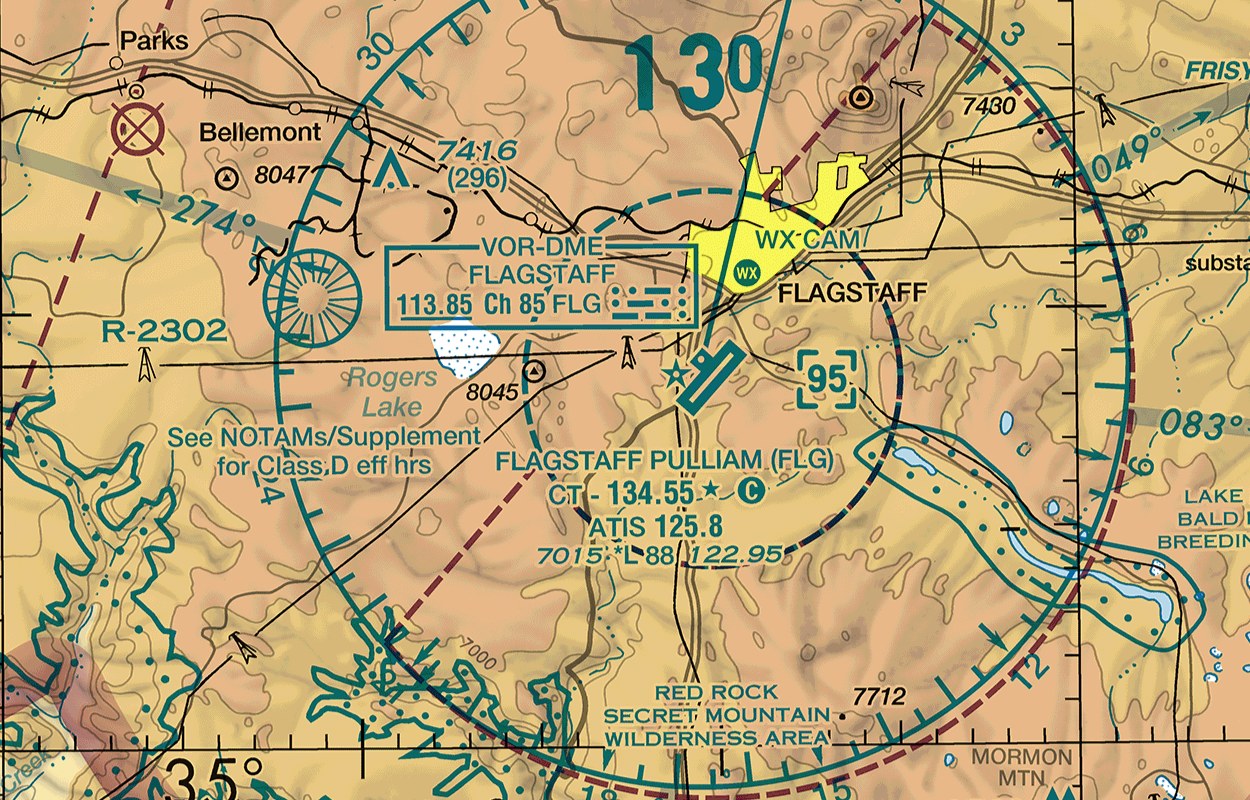
Figure 1. Flagstaff area, Phoenix Sectional, effective 3 Sep 2026 to 29 Oct 2026. FAA chart excerpt for training only, not for navigation.
Question 6: (Refer to Figure 1.) The Class D airspace around Flagstaff Pulliam (FLG) extends from the surface up to:
A) 2,500 feet MSL
B) 7,015 feet MSL
C) 9,500 feet MSL
Show Answer
Answer: C - The number in the dashed blue box, 95, is the Class D ceiling in hundreds of feet MSL: 9,500 feet. The airport elevation is 7,015 feet, so the ceiling sits about 2,500 feet above the airport.
Source: Phoenix Sectional chart; FAA Aeronautical Chart Users' Guide; AIM 3-2-5.
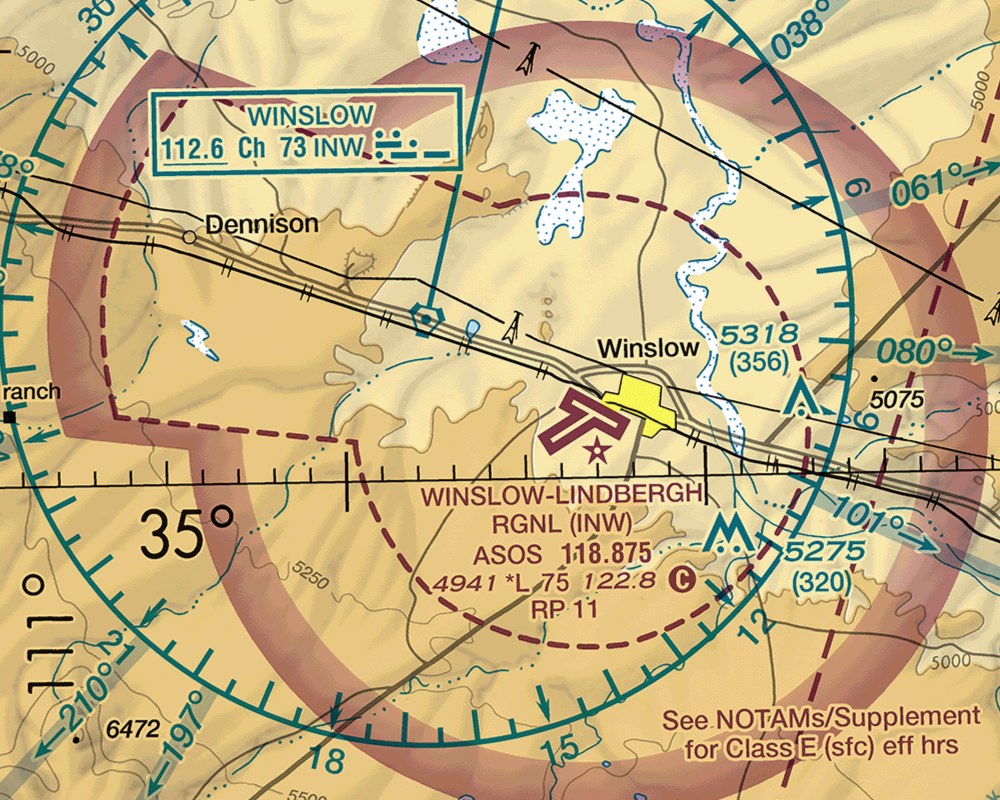
Figure 2. Winslow area, Phoenix Sectional, effective 3 Sep 2026 to 29 Oct 2026. FAA chart excerpt for training only, not for navigation.
Question 7: (Refer to Figure 2.) What type of airspace surrounds Winslow-Lindbergh Regional (INW), and does a Part 107 flight there need ATC authorization while that airspace is in effect?
A) Class E surface area designated for the airport; authorization is required
B) Class G; no authorization is needed
C) Class D; authorization is required
Show Answer
Answer: A - The dashed magenta line around the airport marks a Class E surface area, and the note says to check NOTAMs and the Chart Supplement for its effective hours. Part 107 requires prior ATC authorization within the lateral boundaries of a Class E surface area designated for an airport. The magenta airport symbol shows that INW has no control tower, and Class D would be outlined in dashed blue.
Source: Phoenix Sectional chart; FAA Aeronautical Chart Users' Guide; 14 CFR 107.41.
Weather and operations questions
Question 8: What does the abbreviation "SKC" indicate in a METAR report?
A) Sky conditions are clear
B) Smoke is present
C) Scattered clouds
Show Answer
Answer: A - SKC means sky clear, reported by a human observer when no cloud layers are present. Automated stations report CLR instead, which means no clouds below 12,000 feet.
Source: AIM 7-1-28, Key to Aerodrome Forecast (TAF) and Aviation Routine Weather Report (METAR).
Question 9: In the METAR report "METAR KORD 121755Z 32015G25KT 3SM RA OVC010", what is the wind direction and speed?
A) 32 degrees at 15 knots, gusting to 25 knots
B) 320 degrees at 25 knots
C) 320 degrees at 15 knots, gusting to 25 knots
Show Answer
Answer: C - The wind group "32015G25KT" reads as wind from 320 degrees at 15 knots, gusting to 25 knots. The first three digits are the direction in degrees true, the next two are the speed, and G marks the gusts.
Source: AIM 7-1-28.
Question 10: Under Part 107, the minimum flight visibility, as observed from the control station, is:
A) 1 statute mile
B) 2 statute miles
C) 3 statute miles
Show Answer
Answer: C - Part 107 requires at least 3 statute miles of flight visibility from the control station on every flight, in any class of airspace, unless a waiver covers it.
Source: 14 CFR 107.51(c).
Question 11: Which weather condition would most likely cause a reduction in aircraft performance?
A) High density altitude
B) Low humidity
C) Decreasing temperature
Show Answer
Answer: A - High density altitude means thin air. It results from high elevation, low pressure, high temperature, high humidity, or a mix of them, and it reduces the lift and thrust a propeller or rotor can produce.
Source: Pilot's Handbook of Aeronautical Knowledge (FAA-H-8083-25C), Chapter 4.
Question 12: What minimum distance must a small UAS maintain from clouds during flight?
A) 500 feet below clouds, 2,000 feet horizontally
B) 1,000 feet below clouds, 1 mile horizontally
C) Clear of clouds
Show Answer
Answer: A - Part 107 requires the aircraft to stay at least 500 feet below clouds and at least 2,000 feet horizontally from them.
Source: 14 CFR 107.51(d).
Regulations questions
Question 13: Without a waiver, what is the maximum altitude for a Part 107 flight that is not within 400 feet of a structure?
A) 200 feet AGL
B) 400 feet AGL
C) 500 feet AGL
Show Answer
Answer: B - The limit is 400 feet AGL. The exception is a flight within a 400-foot radius of a structure, where the aircraft may fly up to 400 feet above the structure's immediate uppermost limit.
Source: 14 CFR 107.51(b).
Question 14: What is the maximum groundspeed allowed for a small UAS under Part 107?
A) 87 knots (100 mph)
B) 100 knots (115 mph)
C) No speed limit specified
Show Answer
Answer: A - Part 107 limits groundspeed to 87 knots, which is 100 miles per hour.
Source: 14 CFR 107.51(a).
Question 15: A remote pilot experiences a flyaway that results in serious injury to a person. Within what timeframe must this be reported to the FAA?
A) Within 10 days
B) Immediately
C) Within 24 hours
Show Answer
Answer: A - The remote pilot in command must report within 10 calendar days any operation that causes serious injury, any loss of consciousness, or damage to property other than the drone that costs more than $500 to repair (or is worth more than $500 if destroyed). Reports go to the FAA through FAADroneZone or the nearest Flight Standards District Office.
Source: 14 CFR 107.9.
Question 16: Under Part 107, who is directly responsible for the safe operation of the small UAS?
A) The visual observer
B) The remote pilot in command
C) The aircraft owner
Show Answer
Answer: B - The remote pilot in command (RPIC) is directly responsible for, and is the final authority as to, the operation of the small UAS.
Source: 14 CFR 107.19(b).
Question 17: What is required before flying over people who are not directly participating in the operation and are not sheltered under a covered structure or inside a stationary vehicle?
A) Verbal consent from each person
B) A NOTAM filed 24 hours in advance
C) The operation must meet one of the four operations over people categories, or a waiver must cover it
Show Answer
Answer: C - Part 107 allows flight over a person only when that person is directly participating, is under a covered structure or inside a stationary vehicle that can provide reasonable protection from a falling drone, or when the operation meets the requirements of at least one of the four operations over people categories. The categories set requirements for the operation as well as the aircraft. The FAA can also waive the rule on flight over people.
Source: 14 CFR 107.39 and 107.205(g).
Question 18: Part 107 knowledge recency can be met by completing recurrent training within the previous:
A) 12 calendar months
B) 24 calendar months
C) 36 calendar months
Show Answer
Answer: B - The certificate itself does not expire. To act as remote pilot in command, you must have done one of these within the previous 24 calendar months: passed the initial knowledge test, completed recurrent training, or, if you hold a Part 61 pilot certificate other than a student pilot certificate and meet the flight review requirements, completed the training for pilot certificate holders. The FAA's online recurrent courses are free.
Source: 14 CFR 107.65.
Question 19: Under Part 107, a small unmanned aircraft must weigh:
A) 25 pounds or less
B) Less than 55 pounds at takeoff, including everything on board
C) 55 pounds or less
Show Answer
Answer: B - Part 107 defines a small unmanned aircraft as weighing less than 55 pounds on takeoff, including everything on board or attached. An aircraft that weighs exactly 55 pounds falls outside Part 107.
Source: 14 CFR 107.3.
Question 20: Remote ID requirements mandate that compliant drones must broadcast:
A) Pilot name and address
B) Flight plan details
C) Aircraft location, altitude, and velocity
Show Answer
Answer: C - Every Remote ID broadcast includes the drone's location, altitude, and velocity, plus an identifier and a time mark. A drone with built-in standard Remote ID also broadcasts the control station's location and altitude and an emergency status. An add-on broadcast module sends the takeoff location instead of the control station.
Source: 14 CFR 89.305 and 89.315.
Study resources and tips
Effective preparation follows the exam blueprint. Spend your time where the questions are, and read the original rule whenever a practice answer surprises you.
Official FAA resources
The FAA's free study materials include the Remote Pilot Study Guide (FAA-G-8082-22), the Remote Pilot Airman Certification Standards (FAA-S-ACS-10B), and the Pilot's Handbook of Aeronautical Knowledge. Chapter 11 of the Aeronautical Information Manual covers drone operations and is newer than the study guide, which dates from 2016. For the topic split, use PSI's UAG applicant bulletin, which replaced the percentages printed in the ACS.
Recommended study approach
Start with Part 107 itself. The rule is short, and regulations make up nearly half the test, so read every section once and learn the numbers below cold. Then move to operations and airspace, using a current sectional chart for your area. Weather and loading together are about four questions, so learn to decode a METAR and understand density altitude, then move on.
Take full practice tests to find weak areas, and read the source for every answer you miss.
Key numbers to memorize
| Rule | Number | Source |
|---|---|---|
| Maximum altitude | 400 ft AGL, or 400 ft above a structure when within 400 ft of it | §107.51(b) |
| Maximum groundspeed | 87 knots (100 mph) | §107.51(a) |
| Minimum visibility | 3 statute miles from the control station | §107.51(c) |
| Cloud clearance | 500 ft below, 2,000 ft horizontally | §107.51(d) |
| Aircraft weight | Less than 55 lb at takeoff, everything on board included | §107.3 |
| Night and civil twilight lighting | Anti-collision lights visible for 3 statute miles, with a flash rate sufficient to avoid a collision | §107.29 |
| Accident report | Within 10 calendar days of serious injury, loss of consciousness, or damage to property other than the drone that costs over $500 to repair (or is worth over $500 if destroyed) | §107.9 |
| Alcohol | Not within 8 hours of a drink, not while under the influence, and not with an alcohol concentration of 0.04 or more (grams per deciliter of blood, or per 210 liters of breath) | §107.27, §91.17 |
| Knowledge recency | Within the previous 24 calendar months: the initial knowledge test, recurrent training, or (for eligible Part 61 pilots) the training for pilot certificate holders | §107.65 |
| Change of address | After 30 days, you may not exercise certificate privileges until you notify the FAA | §107.77(c) |
| Minimum age for the certificate | 16 | §107.61 |
| Retest after failing | Wait 14 calendar days | §107.71 |
| Category 1 operations over people | 0.55 lb or less, no exposed rotating parts that could cut skin | §107.110 |
| Drone registration | Renew every 3 years | 14 CFR Part 48 |
Test-taking strategies
Read each question carefully before looking at answers. Eliminate obviously incorrect options first, then evaluate remaining choices. If uncertain, mark the question for review and continue. The 120 minutes cover all 65 questions, including the unscored ones.
Frequently asked questions
How many questions are on the Part 107 test?
The Part 107 knowledge test has 60 scored multiple-choice questions plus 5 unscored validation questions the FAA uses to trial new items, so you will see 65 on screen. You have 120 minutes and must answer at least 42 of the 60 scored questions correctly to pass.
What is the passing score for Part 107?
The passing score is 70%, meaning you must answer at least 42 of the 60 scored questions correctly. Your Airman Knowledge Test Report lists the ACS codes for every question you missed, which point you to the topics to review. Your score counts correct answers only, so a blank answer can never help. Answer every question.
How long is Part 107 certification valid?
Your Part 107 Remote Pilot Certificate does not expire, but to exercise its privileges you must have done one of these within the previous 24 calendar months: passed the initial knowledge test, completed recurrent training, or, if you hold a Part 61 pilot certificate other than a student pilot certificate and meet the flight review requirements, completed the training for pilot certificate holders. The FAA's recurrent courses are free on the FAA Safety website, with a separate version for remote pilots who also hold a Part 61 certificate and a current flight review. Track your certification status using tools designed for managing pilot certifications.
Can I retake the Part 107 test if I fail?
Yes, you can retake the exam after a 14-day waiting period. Bring the failed test report to the testing center and pay the testing fee again. Use the ACS codes on the failed report to focus your study.
Implementation considerations
Preparing for the Part 107 exam requires balancing study time with practical preparation for your intended commercial operations. Consider your career goals when prioritizing study areas. Pilots pursuing construction and infrastructure work should develop strong understanding of site operations. Those targeting surveying and inspection roles benefit from deeper knowledge of mapping concepts.
After passing, focus on building documented flight experience through flight hour tracking and maintaining compliance records. A complete flight log also gives you proof of experience when a client or employer asks for it.
In summary
The Part 107 practice test questions in this guide cover the major knowledge areas on the FAA exam, with the source for every answer. Regulations are now 48% of the test, operations 25%, and airspace 20%, so most of your study time belongs there.
Combine practice questions with the official FAA materials, and practice on current sectional charts before October 26, 2026, when some questions start using chart images that are not in the printed supplement. Use the explanations to understand the underlying rule rather than memorizing specific answers.
Passing the Part 107 exam opens opportunities across multiple industries including public safety and infrastructure inspection. The knowledge tested directly applies to safe commercial operations.
Want the full 60-question set?
The questions above are a sample. The full practice test has 60 questions aligned with the current FAA topic blueprint, including 7 questions on dated FAA sectional chart excerpts. It adds 11 bonus questions, an answer key with an explanation and FAA source for every answer (with ACS references where applicable), and a three-week study plan. It comes as a PDF you can print or keep on your phone.
After you pass, the next steps are covered in our guides to the Part 107 rules, FAA drone license requirements, and how to become a drone pilot.