What is the DJI Mavic 3 Enterprise?
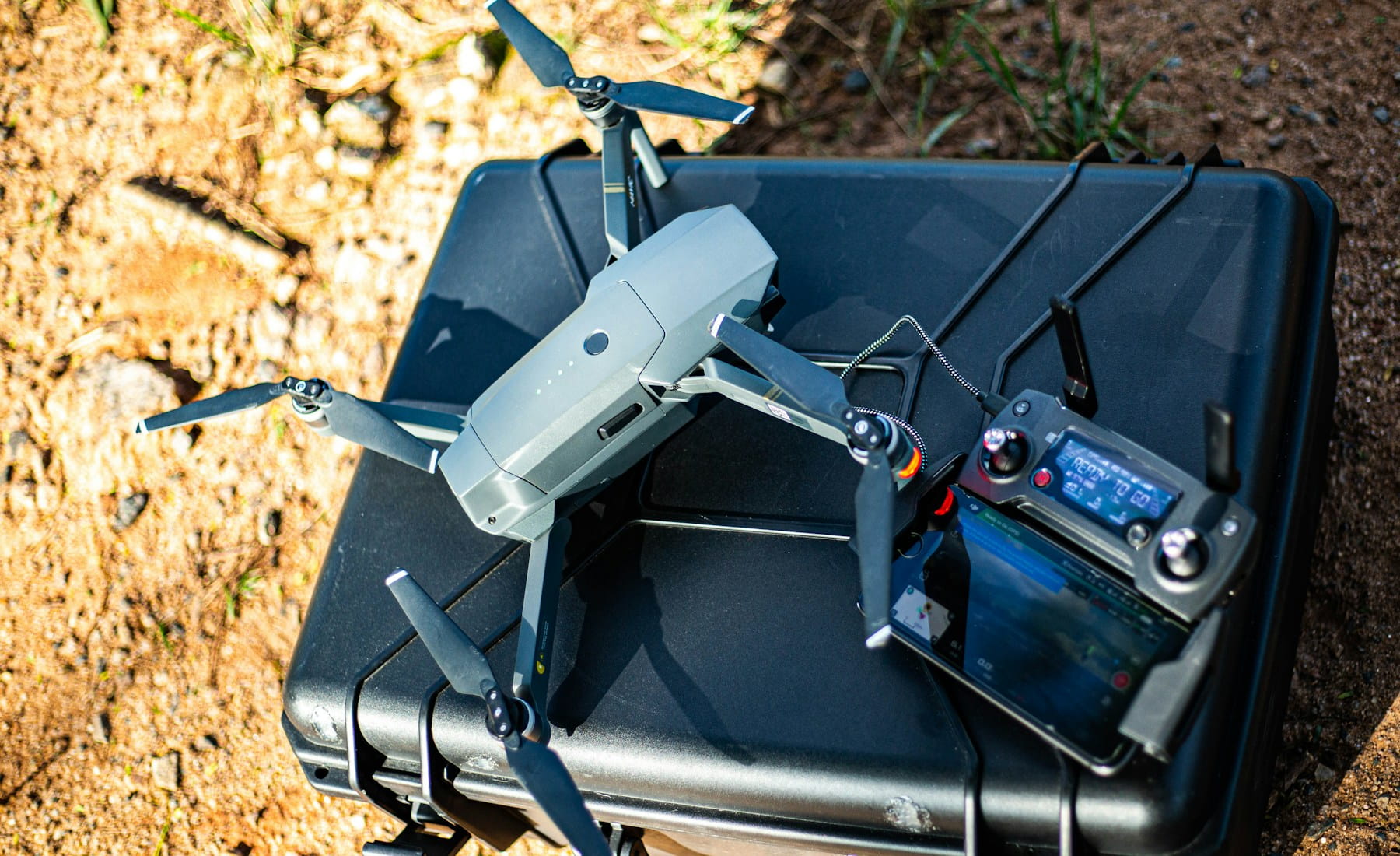
The DJI Mavic 3 Enterprise is a folding 915 g commercial drone launched in late 2022 for mapping and inspection. It pairs a 20 MP 4/3-inch wide camera with a mechanical shutter and a 12 MP, 56x hybrid zoom camera, flies up to 45 minutes, and takes an optional RTK module. The series also includes the Mavic 3T and 3TA (thermal) and the Mavic 3M (multispectral). The Matrice 4 series, launched in January 2025, succeeded the 3E and 3T, and in October 2026 the main US dealers list the 3E, 3T and 3TA as sold out.
The DJI Mavic 3 Enterprise was the default small mapping drone for a lot of survey, construction and roofing teams. It is light, folds into a backpack, and its mechanical shutter made it good for photogrammetry at a price well below the Matrice line.
It still flies, and DJI shipped new firmware for it in May 2026. But new aircraft are hard to find, the 3E and the thermal 3T now face very different US rules, and a buyer today is choosing between a used Mavic 3E and a new Matrice 4E. This guide covers what each choice involves.
The Mavic 3 Enterprise series: 3E, 3T, 3TA and 3M
The Mavic 3 Enterprise series is four aircraft on one airframe: the 3E for mapping, the 3T and 3TA for thermal work, and the 3M for crop analysis. They share the RC Pro Enterprise controller, batteries, RTK module and accessories, which is why mixed fleets of them are common.
| Model | Camera package | Built for | US dealer status (Oct 2026) |
|---|---|---|---|
| Mavic 3E | 20 MP 4/3" wide (mechanical shutter) + 12 MP tele | Mapping, inspection | Sold out (Drone Nerds listing at $4,950) |
| Mavic 3T | 48 MP 1/2" wide + 12 MP tele + 640 × 512 thermal | Inspection, search and rescue | Unavailable (Advexure listing at $7,989) |
| Mavic 3TA | As 3T, with an 8 μm, narrower-FOV thermal core | Longer-range thermal | Sold out new (Drone Nerds listing at $6,700; open box still listed) |
| Mavic 3M | 20 MP RGB + four 5 MP multispectral bands | Agriculture | In stock, $5,699 to $5,919 |
Prices and stock come from the Drone Nerds, Advexure, DSLRPros and Dronefly catalogs on October 11, 2026.
The 3TA is the late addition. DJI released it quietly in September 2025 with the same 640 × 512 resolution as the 3T but an 8 μm pixel pitch (down from 12 μm) and a 41.2° field of view instead of 61°. That gives a tighter thermal view and more detail at the same distance. The 3M is the one still in steady supply, so agriculture teams are in a different position from mapping and thermal teams. Our agricultural drone guide covers how it is used.
DJI Mavic 3 Enterprise specs
The DJI Mavic 3E weighs 915 g, flies up to 45 minutes, handles 12 m/s wind and works from -10°C to 40°C. DJI lists no IP rating, so treat it as a dry-weather aircraft. The figures below come from DJI's Mavic 3 Enterprise specifications.
| Spec | Mavic 3E | Mavic 3T / 3TA |
|---|---|---|
| Weight (with propellers) | 915 g | 920 g |
| Max takeoff weight | 1,050 g | 1,050 g |
| Max flight / hover time | 45 min / 38 min | 45 min / 38 min |
| Max wind resistance | 12 m/s | 12 m/s |
| Operating temperature | -10°C to 40°C | -10°C to 40°C |
| Wide camera | 20 MP, 4/3" CMOS, mechanical shutter 8 to 1/2000 s | 48 MP, 1/2" CMOS, electronic shutter only |
| Tele camera | 12 MP, 1/2" CMOS, 162 mm equivalent, 56x hybrid | Same |
| Thermal | None | 640 × 512, -20 to 150°C (high gain), 0 to 500°C (low gain), ±2°C or ±2% |
| Laser rangefinder | None | None |
| Transmission | O3 Enterprise, 15 km (FCC), 8 km (CE) | Same |
| Battery | 5,000 mAh, 77 Wh | Same |
| RTK | Optional module: 1 cm + 1 ppm horizontal, 1.5 cm + 1 ppm vertical | Same |
| Controller | DJI RC Pro Enterprise, 5.5", 1,000 nits | Same |
Two lines in that table matter more than the rest. The mechanical shutter is on the 3E only. The 3T's 48 MP wide camera uses an electronic shutter, so it is a weaker mapping aircraft than its specs suggest. DJI's FAQ also says an RTK module on the 3T cannot guarantee positioning accuracy, so precision surveying is a job for the 3E. There is no laser rangefinder on any Mavic 3 Enterprise model, which is one of the clearest upgrades on the Matrice 4 series.
Is the Mavic 3 Enterprise discontinued?
Effectively, yes, for the 3E and 3T. Dealers describe the Matrice 4 series, launched in January 2025, as the replacement, and in October 2026 the main US dealers list the Mavic 3E, 3T and 3TA as sold out or unavailable. DJI still supports the series, though.
- Firmware: active. DJI's Mavic 3 Enterprise downloads page lists aircraft firmware v17.01.05.08 and RC Pro Enterprise v02.01.08.04, both released May 7, 2026, covering the 3E, 3T and 3TA. DJI's specifications page lists guaranteed software updates only until December 31, 2024, so releases since then are not something DJI has committed to.
- Accessories: still in stock. Batteries, RTK modules, propellers, speakers and the RC Pro Enterprise are all listed as available at US dealers.
- The 3M: still sold new.
Discontinued and unsupported are different things. An out-of-production aircraft that still gets firmware and has parts on the shelf can keep earning for years. The Matrice 30T guide covers how DJI announces end of service.
Mavic 3 Enterprise vs Matrice 4E
The Matrice 4E is the Mavic 3E's successor. It keeps the 20 MP 4/3-inch mechanical-shutter wide camera and adds two 48 MP telephoto cameras, built-in RTK, a 1,800 m laser rangefinder and longer range. It is also 304 g heavier.
| Mavic 3E | Matrice 4E | |
|---|---|---|
| Status | Sold out new at main US dealers | Current |
| Weight | 915 g | 1,219 g |
| Flight / hover time | 45 / 38 min | 49 / 42 min |
| Wide camera | 20 MP 4/3", mechanical shutter | 20 MP 4/3", mechanical shutter |
| Telephoto | 12 MP, 162 mm | 48 MP medium tele + 48 MP tele |
| RTK | Optional module | Built in |
| Laser rangefinder | None | 1,800 m |
| Transmission | O3 Enterprise, 15 km (FCC) | O4 Enterprise, 25 km (FCC) |
| Battery | 77 Wh | 99.5 Wh |
| Controller | RC Pro Enterprise | RC Plus 2 Enterprise |
| US price (Oct 2026) | Used or open box only | $5,099 combo (Advexure) |
Matrice 4E figures are from DJI's Matrice 4 series specifications.
For nadir mapping, the difference is smaller than it looks. Both use the same class of wide sensor and shutter. If your work is orthomosaics and site surveys, a sound used 3E with an RTK module produces comparable maps for less money.
For inspection and anything at a distance, the Matrice 4E wins. The 48 MP telephoto cameras and the rangefinder change what you can document from a safe standoff. Our Matrice 4T guide covers the Matrice 4 platform's limits in detail.
Mixed fleets cost more to run. The Matrice 4 uses different batteries, chargers and controllers, so adding one to a fleet of 3Es means a second spare pool.
Why the Mavic 3E and 3T now face different US rules
You can legally buy, import and fly every Mavic 3 Enterprise model in the US as of October 11, 2026. They were FCC-authorized before the FCC added foreign-produced drones to its Covered List on December 22, 2025, and that listing blocks new authorizations without revoking old ones. But the rules that followed treat thermal aircraft much more harshly, and that splits the series in two.
Tariffs. An August 2026 Section 232 proclamation set duties on imported drones from September 3, 2026, on top of any duties that already apply:
- 25% for drones with a maximum takeoff weight of 25 kg or less. That covers the Mavic 3E and 3M.
- 100% for drones that integrate thermal imagers. That covers the Mavic 3T and 3TA.
- 25% on listed components from February 9, 2027, under a separate annex.
The FCC "military-grade" proposal. PS Docket 26-189, published in the Federal Register on August 3, 2026, would stop the continued import and marketing of previously authorized Covered List drones that meet any of seven definitions. Thermal imaging is one. The others are LiDAR, docking stations, pesticide sprayers, a weight of 55 lb or more, integration with defense articles and swarming.
The Mavic 3T and 3TA meet the thermal definition. The Mavic 3E and 3M, as sold, meet none of them. The notice says continued use of drones already bought would not be affected, and it proposes a 180-day wind-down after a final decision is published. Comments closed on September 2, 2026; no decision had been published as of October 11.
What that means in practice:
- A 3T fleet should plan for parts scarcity. If a final rule covers thermal aircraft and their critical components, spares for the 3T and 3TA could become resale-only. The notice does not say which spares count as critical components.
- A 3E or 3M fleet is in a stronger position. Neither model meets the seven definitions. That can change if the final rule differs from the proposal, so check before large purchases.
- The Covered List still applies to everything. No new DJI model can get FCC authorization, so the long-term route for any US DJI fleet is narrowing. Our DJI ban explainer, US foreign drone ban analysis and DJI alternatives guide cover the wider picture.
This is general information, not legal advice. Check with counsel or your procurement office before you buy.
Mapping with the Mavic 3E: what accuracy depends on
A Mavic 3E map's accuracy depends on three things: whether the RTK module is fitted and holding a fix, whether you fly with ground control or checkpoints, and how you process the images. The module's "1 cm + 1 ppm" figure is the positioning accuracy of the aircraft, not the accuracy of the finished map.
The RTK module is a separate purchase. It plugs into the top of the aircraft and needs a correction source: a network RTK (NTRIP) service or a DJI D-RTK 2 base station. US dealers listed it at $499 to $989 in October 2026, so check whether a used aircraft comes with one. Without RTK, absolute accuracy relies on ground control points; relative accuracy within the model can still be good.
Even with RTK, fly checkpoints. RTK geotags tell you where the camera was. Independent checkpoints, surveyed but not used in processing, tell you how accurate the map is. That is the number a client or a surveyor will ask for.
The mechanical shutter is why the 3E maps well. An electronic shutter reads the sensor line by line, so a moving drone produces skewed images. A mechanical shutter exposes the whole frame at once, which lets the 3E fly faster mapping lines without rolling-shutter distortion. DJI says the 3E can shoot at 0.7-second intervals and survey up to 2 km² in a single flight.
Processing is a separate choice. DJI pitches DJI Terra for Mavic 3 Enterprise data, but any photogrammetry software that handles DJI RTK geotags works. For orthomosaics, fly nadir grids; for buildings, the 3E's Smart Oblique Capture tilts the gimbal between angles in flight, as covered in our guide to making a 3D model from drone photos.
Construction and survey teams use these outputs as records of site progress. See how DroneBundle handles that for surveying and inspection teams and construction programmes.
Batteries, charging and flying with an M3E
Each Mavic 3 Enterprise battery is 77 Wh, which is under the FAA's 100 Wh limit for carrying spare lithium-ion batteries in airline cabins without airline approval.
Under the FAA PackSafe lithium battery rules, spares go in carry-on bags with terminals protected, never checked. Spares rated 101 to 160 Wh need airline approval and are limited to two per passenger, and individual airlines can set stricter limits.
A few practical notes:
- Spare batteries are still available. US dealers list the Mavic 3 Enterprise battery kit (three batteries, the 100 W charging hub and a USB-C cable) at $729 to $799.
- Charging takes about 70 minutes per battery with the 100 W adapter and charging hub, or about 80 minutes in the aircraft, according to DJI's FAQ. The hub charges its three batteries one after another, not together, so an all-day crew needs enough batteries to cover the wait.
- The EU C1 battery is a different part. It is lighter (65.15 Wh) and gives about 36 minutes. A Mavic 3 Enterprise with a C2 label does not become C1 by fitting a C1 battery, so do not mix them when the class label matters.
- Track cycles per battery serial number, not per aircraft. Batteries move between airframes, and in a mixed 3E/3T/3M fleet they move between models.
Our drone maintenance log guide covers how to record battery cycles and retirements.
Buying a used DJI Mavic 3 Enterprise
With new 3E and 3T units sold out, most buyers in late 2026 will be looking at used or open-box aircraft. Drone Nerds listed an open-box Mavic 3E at $3,300 before it sold out, against $4,950 new. A used aircraft is only good value if the batteries, cameras and paperwork are sound.
Battery health. Connect every battery and check its cycle count and health in DJI Pilot 2. Reject any that are swollen or won't hold charge. A low aircraft price with three worn batteries adds a battery kit to the bill.
RTK module and accessories. Confirm whether the RTK module is included, then test that it gets a fix. Do the same for the speaker or a third-party spotlight if the listing includes them. The speaker and the RTK module use the same port on top of the aircraft, so only one can be fitted at a time.
Camera checks. Take test photos on both cameras and check for focus problems or dust spots. On a 3T or 3TA, look at a uniform surface in the thermal feed for fixed bright or dark marks; pointing a thermal camera at the sun can damage the sensor.
Flight logs. Ask for them; they show hours, errors and hard landings. Our DJI logs guide explains how to pull them from the controller.
Unbinding, firmware and region. Make sure the aircraft and RC Pro Enterprise are unbound from the seller's DJI account and update to current firmware. EU C1, C2-labelled and North American units differ in batteries and labels, so buy the version that matches where you fly.
FAA registration. Under 14 CFR 48.100(d), a registration certificate stops being effective once ownership is transferred. The seller should remove the aircraft from their DroneZone account, and you register it under yours before commercial flights.
Record these checks and photos against the serial number when the aircraft arrives. That becomes the first entry in its equipment record.
Flying the Mavic 3 Enterprise legally
Commercial flights with a Mavic 3 Enterprise need a certificated remote pilot and a registered aircraft. It has built-in Remote ID in the US and carries an EU class label.
In the United States, fly under a Part 107 certificate with the aircraft registered to your organization. DJI says the Mavic 3 Enterprise series meets Remote ID from the factory with no broadcast module, under FAA declarations of compliance RID000000019 (3E), RID000000020 (3T) and RID000000057 (3M). Our Remote ID guide explains what it broadcasts. Controlled airspace needs FAA authorization, usually through LAANC.
In Europe, the standard Mavic 3 Enterprise carries a C2 class label, which allows Open category A2 flights with an A2 certificate of competency, keeping 30 m from uninvolved people (5 m in low-speed mode). The EU-C1 version, with the lighter battery and low-noise propellers, comes in at 899 g maximum takeoff weight and carries a C1 label for the A1 subcategory. See how to get an EU drone license.
Weather is your limit. With no IP rating and a -10°C floor, the M3E stays grounded in rain and cold that a Matrice 30T would handle.
Keeping Mavic 3 Enterprise fleet records
On a handheld Mavic 3 Enterprise, flight logs stay on the RC Pro Enterprise until someone moves them. DJI disabled flight record sync to its servers for US users in June 2024, so a fleet needs a routine for pulling logs from each controller and storing them in one place.
DroneBundle's DJI flight log processing reads those logs into flight time, battery use and a track you can replay after landing, attached to the pilot and aircraft. Its maintenance tracking counts hours and battery cycles per serial number from processed flights, which is how you see which 3E and which battery are due for service. Synced and uploaded flights are matched to a job where possible; unmatched flights wait for someone to link them.
Also keep firmware versions per aircraft and controller, and RTK module serials, since modules move between aircraft too.
Frequently asked questions
Is the DJI Mavic 3 Enterprise discontinued?
Effectively, for the 3E and 3T. Dealers name the Matrice 4E and 4T, launched in January 2025, as their replacements, and as of October 2026 the main US dealers list the 3E, 3T and 3TA as sold out. DJI still supports the series, with new firmware released on May 7, 2026, and the Mavic 3M is still sold new.
What is the difference between the Mavic 3E and Mavic 3T?
The Mavic 3E has a 20 MP 4/3-inch wide camera with a mechanical shutter, which makes it the better mapping aircraft. The Mavic 3T swaps that for a 48 MP 1/2-inch wide camera with an electronic shutter and adds a 640 × 512 radiometric thermal camera. Both have the same 12 MP, 56x hybrid zoom camera and 45-minute flight time.
Is the Mavic 3 Enterprise better than the Matrice 4E?
Not overall. The Matrice 4E has built-in RTK, a 1,800 m laser rangefinder, two 48 MP telephoto cameras, 25 km range and 49 minutes of flight time. For nadir mapping, though, the two share the same 20 MP 4/3-inch mechanical-shutter wide camera, so a used Mavic 3E with an RTK module can produce comparable maps for less money.
Can you still fly a Mavic 3 Enterprise in the US?
Yes. The Mavic 3 Enterprise was FCC-authorized before the FCC added foreign-produced drones to its Covered List in December 2025, and that listing does not affect drones already in use. It has built-in Remote ID. The proposed FCC "military-grade" rule would target the thermal 3T and 3TA, not the 3E, and says existing aircraft could keep flying.
Keep your Mavic 3 Enterprise fleet flying on records
Whether you are buying a used Mavic 3E, keeping a 3T fleet running or adding a Matrice 4E alongside, the decisions come down to hours, battery cycles and history per serial number. DroneBundle tracks every aircraft, battery, RTK module and pilot across manufacturers, processes DJI flight logs and keeps maintenance and compliance records ready for a client or an insurer.
Start your free trial or book a live demo to see your Mavic 3 Enterprise fleet's battery cycles and service history in one place. Plans are on the pricing page, and equipment tracking shows how serial-level records work.