What is a 44807 exemption?
A 44807 exemption is FAA permission to fly a drone operation that Part 107 cannot cover, granted under 49 U.S.C. 44807 through the 14 CFR Part 11 petition process. Common reasons are aircraft of 55 pounds or more, agricultural spraying, and Part 107 rules that cannot be waived. You file a petition on regulations.gov at least 120 days before you need it, then apply for a certificate of waiver or authorization (COA) for the airspace. The FAA's authority under Section 44807 runs until September 30, 2033.
Part 107 covers most commercial drone work, but it has hard edges. It applies only to aircraft under 55 pounds, and only some of its rules can be waived. When an operation falls outside those edges, the FAA's answer for the past decade has been an exemption, and since 2018 the legal basis for drone exemptions has been Section 44807.
This guide explains what a 44807 exemption is, when you need one instead of a waiver, what the petition must contain, and how the process runs from filing to first flight. Every requirement comes from the statute, the Code of Federal Regulations, or the FAA's own guidance pages, which we link throughout.
What Section 44807 actually says
49 U.S.C. 44807, titled "Special authority for certain unmanned aircraft systems," directs the FAA to "use a risk-based approach to determine how unmanned aircraft systems may operate safely in the national airspace system." It is short, and five parts of it matter to operators.
| Subsection | What it does |
|---|---|
| (a) | Lets the FAA approve drone operations without waiting for a full rulemaking |
| (b) | Tells the FAA to assess size, weight, speed, operational capability, proximity to airports and populated areas, operation over people, line of sight, and day or night operation, and to decide whether an airworthiness certificate, airman certificate, or COA is required |
| (c) | Requires the FAA to set requirements for safe operation, and to expedite approvals for low-risk BVLOS work |
| (d) | Ends the authority on September 30, 2033 |
| (e) | Lets the FAA waive 14 CFR rules without a rulemaking or the Part 11 process, to the extent consistent with safety |
Section 44807 has a history. Congress first created this authority as Section 333 of the FAA Modernization and Reform Act of 2012, and the FAA issued the first Section 333 approval in 2014. The FAA Reauthorization Act of 2018 replaced Section 333 with Section 44807. Section 927 of the FAA Reauthorization Act of 2024 added subsection (e), which is the basis of the newer "Section 927 waiver" path.
The key point: Section 44807 lets the FAA approve an operation without requiring an airworthiness certificate for the aircraft or a traditional airman certificate for the pilot, case by case. That is why it became the route for heavy drones and unusual operations.
When you need a 44807 exemption instead of a waiver
The FAA's Section 44807 page puts it simply: Part 107 applies only to drones under 55 pounds at takeoff, and only certain rules can be waived. "To fly an unmanned aircraft that exceeds the maximum weight limit of Part 107 or your mission includes a non-waiverable rule, you may apply for an exemption."
| Your operation | Usual path |
|---|---|
| Under 55 lb, and the only conflict is a waivable rule such as §107.31 visual line of sight | Part 107 waiver |
| Aircraft of 55 lb or more, including payload | 44807 exemption, operating under Part 91, plus a COA |
| Dispensing a substance covered by §137.3 (such as pesticides, fertilizer, seed or pest control), at any weight | 44807 exemption plus a Part 137 agricultural aircraft operator certificate |
| A Part 107 rule that §107.205 does not list as waivable, such as §107.36 carriage of hazardous materials | 44807 exemption |
| A limited, low-impact, emergency-response or emerging-technology operation | Possibly a Section 927 waiver |
For BVLOS specifically, most small-drone operators use a BVLOS waiver of §107.31. The FAA's Part 108 proposal counts about 230 operators holding waivers that indicate BVLOS with aircraft up to 55 pounds, and 9 operators holding exemptions that authorize BVLOS for aircraft over 55 pounds (90 FR 38344). Heavy aircraft are where exemptions dominate; see our guide to the largest drones for the kinds of airframes involved.
44807 exemption vs Part 107 waiver vs Section 927 waiver
The three paths are easy to confuse, and they differ in what you have to prove and who gets to comment.
| Part 107 waiver | 44807 exemption | Section 927 waiver | |
|---|---|---|---|
| Legal basis | §107.200 (rules listed in §107.205) | 49 U.S.C. 44807 plus 14 CFR Part 11 | 49 U.S.C. 44807(e) |
| Covers | Only the rules listed in §107.205 | Any 14 CFR rule, including weight limits | Any 14 CFR rule, but only operations the FAA finds eligible |
| Safety showing | Operation can be safely conducted under the waiver | Would not adversely affect safety, or provides an equal level of safety | Same safety standard as an exemption |
| Public interest showing | No | Yes (§11.81(d)) | No |
| Public comment | No | Usually yes, published in the Federal Register (§11.85) | No |
| Where you apply | FAA Aviation Safety Hub | regulations.gov public docket | By email, under the FAA's April 2026 process |
| Timing guidance | FAA aims to decide within 90 days | File at least 120 days ahead (§11.63(d)) | FAA first decides eligibility, then evaluates |
The FAA's Section 927 notice explains the relationship directly. Both paths "will result in a safety-based decision," and the safety analysis is identical. The practical difference is that a 927 waiver drops the public-benefit showing and the public comment step, but only for operations that fit one of four eligibility considerations: minimal impact, high-value limited use, emerging use, or other safety considerations. You cannot file for an exemption and a 927 waiver at the same time to see which is faster.
What your petition must contain
14 CFR 11.81 lists what every petition for exemption must include:
- Your name and mailing address, plus other contact details if you wish
- The specific sections of 14 CFR you want relief from
- The extent of relief you seek, and why
- Why granting it would be in the public interest, meaning how it would benefit the public as a whole
- Why it would not adversely affect safety, or how it would provide a level of safety at least equal to the rule
- A summary the FAA can publish in the Federal Register, naming the rule and briefly describing the relief
- Any additional information, views or arguments that support your request
The FAA's 44807 page adds a list of supporting documents to include, where relevant:
- Concept of operations
- Operations manual
- Emergency procedures
- Checklists
- Maintenance manual
- Training program
- Flight history (flight hours, cycles, accidents)
- Safety risk analysis
A safety risk analysis is also required for complex operations, including flight over or near people, BVLOS, multiple aircraft, operations from a moving vehicle, package delivery, Part 135 operations, or high speeds. The FAA points applicants to FAA Order 8040.4 and Order 8040.6 for how to structure it. Our risk assessment guide covers the hazard analysis side.
Flight history is the item most operators underestimate. It is the evidence behind your safety argument, and it is far easier to produce from automated flight logs than to reconstruct.
The 44807 exemption process step by step
Here is the full path, from aircraft registration to first flight.
1. Register the aircraft. Drones under 55 pounds get an FA-number through FAADroneZone. Drones of 55 pounds or more must be registered under Part 47 and receive an N-number, through the FAA's online registry or by mail. Our drone registration guide covers both.
2. File the petition at least 120 days ahead. Under 14 CFR 11.63, you submit the petition electronically at regulations.gov, or by mail to DOT Docket Operations. Section 11.63(d) says to submit it 120 days before you need the exemption to take effect. For an extension, the FAA's agricultural guidance says to file 120 days before your current exemption expires.
3. Public notice and comment. The FAA publishes a summary of most petitions in the Federal Register and asks for comments (§11.85). It may skip that step if there is good cause, considering whether a grant would set a precedent, whether the relief is identical to exemptions already granted, whether delay would hurt you, and whether you filed on time (§11.87).
4. Answer any request for information. The FAA may send a request for information if your petition is missing details. Its agricultural guidance warns that it "will close your petition request for failure to respond."
5. Decision. The FAA notifies you in writing, and the decision is placed in the public docket with your docket number (§11.91). If it is denied, you can ask for reconsideration, and the FAA must receive your request within 60 days after the denial is issued, but only with a significant new fact, an important factual error, or an incorrect interpretation of law or precedent (§11.101).
6. Get a COA for the airspace. An exemption is not airspace authorization. You apply for a certificate of waiver or authorization through the FAA's COA Application Processing System, not the public docket. The application needs your exemption number, the aircraft registration numbers, and the same petitioner name the exemption was issued to. The FAA issues a blanket COA for flights at or below 400 feet in Class G airspace to Section 44807 exemption holders, as appropriate, with its own operating conditions and limitations. Flights outside those terms need a COA for the specific airspace, which works differently from the LAANC authorizations Part 107 pilots use.
Agricultural spraying under a 44807 exemption
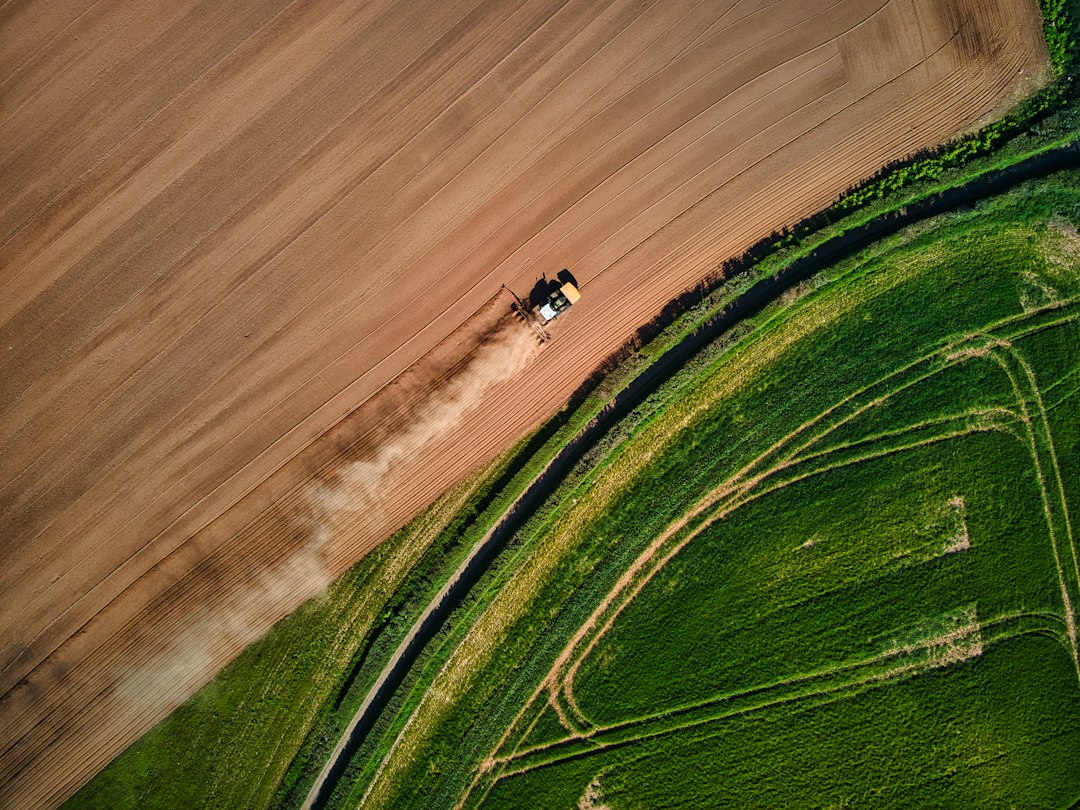
Many 44807 exemptions are for agriculture, and the FAA says spraying makes up "the vast majority of exemptions for UAS above 55 pounds" (90 FR 38220). Under 14 CFR Part 137, dispensing economic poisons, plant nourishment, soil treatment or pest control from any aircraft, including a drone, is an agricultural aircraft operation. The FAA's page on dispensing chemicals with UAS sets out the requirements by weight:
- Under 55 pounds, including the substance being dispensed: you may operate under Part 107, but you need an exemption from §107.36 (carriage of hazardous materials) and several Part 137 rules.
- 55 pounds or more: you operate under Part 91 and Part 137, and need exemptions from several rules in Parts 61, 91 and 137.
After the exemption, you need an agricultural aircraft operator certificate (AAOC). For visual line of sight operations within the exemption's altitude and airspeed limits, the FAA's simplified process has you submit FAA Form 8710-3 with your exemption number instead of going through your local Flight Standards District Office. The name on the form must match the exemption holder.
The FAA has also flagged compliance problems. Its page states it "has become aware of exemption holders conducting commercial agricultural operations in a manner noncompliant with the conditions and limitations of their exemption," and is now running operational validations, including checks on basics such as a Remote Pilot Certificate and aircraft registration.
For the operational side of spraying, see our guides to agricultural drones and drones in agriculture.
Our breakdown of spraying cost per acre covers the economics, and operators running spray programs across many fields will find our agriculture industry page useful too.
What 44807 says about BVLOS and right-of-way
Two parts of the statute matter for anyone planning beyond visual line of sight work.
Expedited BVLOS approvals. Section 44807(c)(2) directs the FAA to issue approvals "to enable low-risk beyond visual line of sight operations, including, at a minimum, package delivery operations, extended visual line of sight operations, or shielded operations within 100 feet of the ground or a structure." It also covers approvals aligned with earlier exemptions that use acoustics, ground-based radar, ADS-B and other technology.
No right-of-way. Section 44807(c)(4) says nothing in it gives a drone "the right of way over a manned aircraft." Under an exemption, as under Part 107's §107.37, the drone yields. That is a sharp contrast with the Part 108 proposal, which would give Part 108 drones right-of-way over aircraft that are not broadcasting ADS-B Out or electronic conspicuity, except in Class B or C airspace, over Category 5 population areas, and for aircraft arriving at or departing from an airport or heliport (proposed §91.113(h)).
The statute also addresses Mode C veils. Section 44807(c)(3) treats an operation flown entirely within a Mode C veil as meeting the §91.113(b) see-and-avoid rule if it uses ADS-B In-based detect and avoid, ATC communication and coordination, notices to other airspace users such as NOTAMs, or other mitigations the FAA sets.
44807 exemptions and Part 108
The FAA's proposed Part 108 rule would create standing permits and certificates for BVLOS operations, and it would change how exemptions fit in. Our Part 108 requirements checklist lists what operators would need.
Part 107 already excludes operations an exemption holder elects to conduct under its Section 44807 exemption (§107.1(b)(3)), and the proposal keeps that exclusion. For transition, the FAA anticipates that certain operations, "such as agricultural, package delivery, aerial surveying, photography, and flight testing," now flown under waivers or exemptions "would transition to the operations under part 108 when their exemptions expire, and a reasonable transition can occur" (90 FR 38225). Operations that would not fit Part 108 could continue under their existing approvals. It also notes that its proposed 24-month permit term "would be in line with" exemptions and other approvals it issues (90 FR 38266).
Two proposed changes matter most for today's approval holders. First, the NPRM would take BVLOS out of Part 107 entirely, because "it no longer makes sense to provide waivers to the part 107 rules for this type of activity" (90 FR 38319). Second, it says the Part 108 permits and certificates for agricultural operations with aircraft over 55 pounds would be "replacing the streamlined exemption process" (90 FR 38346). Our Part 108 vs Part 107 comparison walks through what else would change.
Part 108 is still a proposal. The draft final rule has been under White House review since July 10, 2026, with no publication date. Our Part 108 NPRM tracker follows the status. Until a final rule takes effect, a 44807 exemption remains the main path for heavy aircraft and non-waivable operations, alongside Section 927 waivers for eligible operations, and the statutory authority itself runs until September 30, 2033.
Frequently asked questions
How long does a 44807 exemption take?
There is no guaranteed timeline. Section 11.63(d) tells you to file 120 days before you need the exemption, and the FAA repeats that guidance in its Section 927 notice. Missing information, requests for information and public comment all add time, so a complete petition is the fastest one.
Is a 44807 exemption the same as a Section 333 exemption?
They are the same idea under different law. Section 333 of the 2012 FAA Modernization and Reform Act created the authority, and the FAA Reauthorization Act of 2018 replaced it with 49 U.S.C. 44807. New petitions are filed under Section 44807.
Do I still need a Part 107 Remote Pilot Certificate?
Usually, yes. The FAA's agricultural guidance lists obtaining a Remote Pilot Certificate among the basic requirements, and its request for information asks for the pilot in command's certificate number. Check the conditions and limitations in your specific exemption. Under the Part 108 proposal, crew would not need one; our Part 108 drone license guide explains what would replace it.
Can I renew or extend a 44807 exemption?
Yes, by petitioning for an extension. The FAA's agricultural guidance says to file at least 120 days before your current exemption expires. If you previously failed to get your Part 137 certificate in time, you must obtain it as part of the extension.
Ready to build an exemption petition the FAA can approve?
Every 44807 petition rests on the same evidence: who flies, which aircraft, how they are maintained, and what the flight history shows. DroneBundle keeps flight logs, aircraft and battery cycles, maintenance records and pilot certifications in one place, so the flight history and supporting documents for a petition are an export, not a project.
Start your free trial today - no credit card required.
Or try the live demo to see flight history and maintenance records ready for an FAA submission, with the full feature set.
Sources and references
Official documents this guide is based on:
- 49 U.S.C. 44807: Special authority for certain unmanned aircraft systems (govinfo)
- FAA: Section 44807
- 14 CFR Part 11: General rulemaking procedures (eCFR)
- 14 CFR Part 137: Agricultural aircraft operations (eCFR)
- FAA: Dispensing chemicals and agricultural products with UAS
- FAA: Part 107 waivers
- Federal Register: Implementing Section 927 Waiver Process for Certain Unmanned Aircraft Operations (91 FR 16276)
- Federal Register: Normalizing Unmanned Aircraft Systems Beyond Visual Line of Sight Operations (proposed rule, 90 FR 38212)