What are Part 108 Permitted Operations?
Part 108 permitted operations are lower-risk BVLOS drone flights authorized under one of eight proposed FAA permit types, each with its own limits on aircraft weight and population density, and on active aircraft for most types. A permit lasts 24 months and covers one operation type. Larger fleets, heavier delivery aircraft and most flights over Category 4 or 5 areas need an operating certificate instead. As of October 7, 2026, Part 108 is a proposal and no final rule has been published.
The FAA's Part 108 Notice of Proposed Rulemaking introduces two pathways for authorizing beyond visual line of sight drone operations: operating permits and operating certificates (§108.100). Knowing which one fits your business is the first planning decision for anyone moving from Part 107 operations to BVLOS work.
This guide breaks down the eight permit types, compares them with certificated operations, and shows how to pick a pathway. For the rule as a whole, start with our FAA Part 108 explainer. Every limit below comes from the proposed rule text (§108.x) or the FAA's BVLOS fact sheet, and any of them can change in the final rule.
Quick comparison: permits vs certificates
Before looking at each type, here is how the two pathways differ in the proposal.
| Feature | Operating permit | Operating certificate |
|---|---|---|
| Operation types | 8 listed (§108.400(a)) | 4 listed (§108.500(a)) |
| Types per authorization | One per permit (§108.400(e)) | Several per certificate (§108.515(d)) |
| Fleet limits | Type-specific caps | No fleet cap |
| Population density | Category 3 or lower, tighter for some types | Up to Category 5, with limits by type |
| Duration | 24 months (§108.410) | Until surrendered, suspended or revoked, or until it lapses under the 12-month recency rule (§§108.510, 108.530) |
| Safety management system | Not required | Required, under 14 CFR Part 5 (§108.560) |
| FAA-accepted training program, validation tests, risk assessments | Not required, though §108.315 crew training still applies and agriculture permits need a training program (§108.445(i)) | Required (§§108.540 to 108.550) |
| Company operations manual | Required, except recreational | Required |
| Hazardous materials | Prohibited, except special operations under 49 CFR 175.9(b) | Package delivery with FAA hazmat authorization (§108.570) |
| Application lead time | None set; renewal up to 120 days before expiry | None set |
Permits fit operators running routine BVLOS operations in less populated areas. Our Part 108 vs Part 107 comparison covers how both pathways differ from today's rules. Certificates fit larger operations that need more aircraft, heavier delivery aircraft or access to dense areas.
Part 108 permitted operations: the 8 permit types
The Part 108 NPRM lists eight permit types (§108.400(a)). Six of them cap the fleet, always written as "fewer than" a number, so a cap of 25 means up to 24 active aircraft. Recreation allows one active aircraft, and flight test sets no fleet cap. The FAA can also authorize other operation types not on the list (§108.400(c)).
Package delivery
The package delivery permit covers commercial drone delivery (§108.440).
| Specification | Limit |
|---|---|
| Active aircraft | Fewer than 100 (§108.440(f)) |
| Maximum weight | 55 lbs, including payload |
| Population density | Category 3 or less |
Operators must train anyone handling cargo in hazardous materials recognition every 24 calendar months (§108.440(b)), brief customers on the delivery method (§108.440(d)), keep delivery areas clear of obstructions (§108.440(e)), and hold a TSA limited security program (§108.440(i)). Delivery over Category 4 or 5 areas, or with aircraft over 55 pounds, needs a certificate.
Agriculture
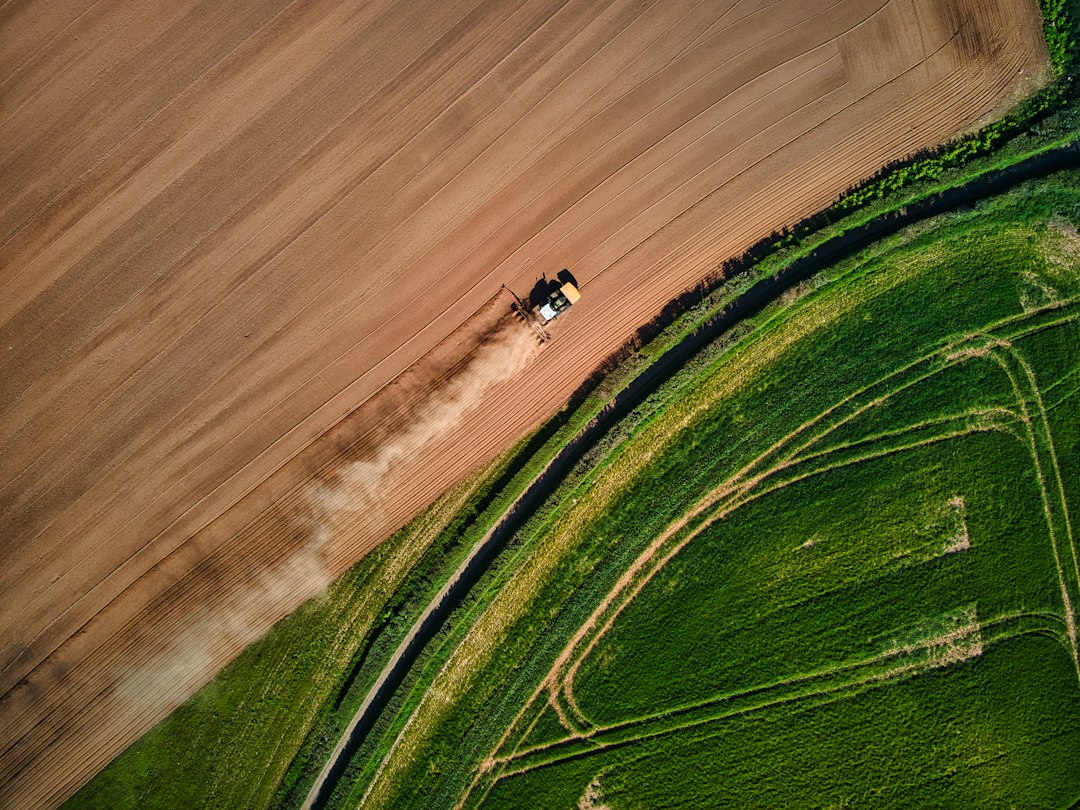
The agriculture permit covers dispensing work: "aerial seeding, dusting, spraying, fertilizing, crop improvement, or pest control" (§108.445(a)). Camera-only scouting is not in the agriculture definition, while photography and mapping fall under aerial surveying (§108.450(a)). Our drones in agriculture guide covers the wider field.
| Specification | Limit |
|---|---|
| Active aircraft | Fewer than 10 (§108.445(b)) |
| Maximum weight | 1,320 lbs, including payload |
| Population density | Category 1, unless the FAA authorizes otherwise (§108.445(e)) |
The 1,320-pound allowance fits heavy spray drones. Category 1 means farther than 1 statute mile from any populated cell of 10 or more people. Operators must also keep a record of each customer, date, and material dispensed (§108.40(a)(3)).
Aerial surveying
The surveying permit covers "photography, videography, mapping, inspecting, or patrolling operations" (§108.450(a)), including commercial surveying and inspection.
| Specification | Limit |
|---|---|
| Active aircraft | Fewer than 25 (§108.450(b)) |
| Maximum weight | 110 lbs, including payload |
| Population density | Category 3 or less |
This is the permit most surveying and inspection businesses would use, including infrastructure inspection along linear assets.
Civic interest
Civic interest is narrower than the name suggests. It covers two kinds of work (§108.455(a)):
- Forest and wildlife conservation, including wildfire recovery and tracking climate change
- Public safety support, such as fire, accident and disaster response, coordinated with the agency running the incident
| Specification | Limit |
|---|---|
| Active aircraft | Fewer than 25 (§108.455(b)) |
| Maximum weight | 110 lbs, including payload |
| Population density | Category 3 or less unless the FAA authorizes otherwise, with an exception to save lives (§108.455(e)-(f)) |
The operator must be under contract to a federal, state, local, tribal or territorial government (§108.455(d)). Civic interest flights may go over any population density to the extent necessary to safeguard lives under imminent threat (§108.455(f)). Agencies flying their own public aircraft operations would keep using Part 91 and their certificate of authorization (90 FR 38276). Contracted inspection work for an agency is not in the civic interest list, so it would look like aerial surveying under §108.450(a).
Training
The training permit covers unmanned aircraft operations training (§108.460), such as standalone training programs for Part 108 crews. Operators training their own crews for another permit type can do so under that permit (§108.460(a)).
| Specification | Limit |
|---|---|
| Active aircraft | Fewer than 10, unless the FAA authorizes more (§108.460(c)) |
| Maximum weight | 1,320 lbs, including payload, unless the FAA authorizes more (§108.460(b)) |
| Population density | Category 1, unless the FAA authorizes otherwise (§108.460(d)) |
The higher weight limit lets training cover the full range of Part 108 aircraft, while the Category 1 limit keeps training flights away from people.
Demonstrations
The demonstration permit covers "aerial performances such as air races, air shows, sales demonstrations, and exhibitions," plus practice for those events (§108.465(a)).
| Specification | Limit |
|---|---|
| Active aircraft | Fewer than 50, unless the FAA authorizes more (§108.465(b)) |
| Maximum weight | 110 lbs, unless the FAA authorizes more |
| Population density | Category 2 or less, unless the FAA authorizes otherwise |
Flights must stay at least 500 feet away from anyone not taking part, unless the FAA authorizes otherwise (§108.465(e)). Flying several aircraft per flight coordinator, as in a light show, needs FAA approval (90 FR 38277).
Flight testing
The flight test permit covers tests of new designs, modifications and other development work (§108.470(a)).
| Specification | Limit |
|---|---|
| Active aircraft | No limit stated |
| Maximum weight | 1,320 lbs, unless the FAA authorizes more (§108.470(d)) |
| Population density | Category 1, unless the FAA authorizes otherwise (§108.470(c)) |
Only aircraft manufacturers qualified under Subpart G and accredited educational institutions may hold one (§108.470(b)). Flight test is also the only type where an operator may hold more than one permit (§108.400(e)).
Recreation
The recreational permit is for non-commercial BVLOS flying (§108.475).
| Specification | Limit |
|---|---|
| Active aircraft | 1 (§108.475(e)) |
| Maximum weight | 55 lbs, unless the FAA authorizes more |
| Population density | Category 3 or less |
| Range | Within 10 nautical miles of the flight coordinator (§108.475(d)) |
Recreational permit holders skip several requirements, including the company operations manual, the operations supervisor, the flight coordinator experience hours, cybersecurity policies, and the duty and rest limits (§108.475(f)).
Understanding population density categories
Part 108 defines five population density categories, calculated from Oak Ridge National Laboratory's LandScan USA data as of August 1 each year, with day or night data as appropriate. Requirements follow the highest category an operation flies over, and each category excludes areas that qualify for a higher one (§108.185(c)). From Category 2 up, each category adds to the requirements below it, except that the Category 1 rule to stay 50 feet from non-participating people does not carry over (90 FR 38240).
| Category | Definition | FAA's example | Added requirement |
|---|---|---|---|
| 1 | Farther than 1 statute mile from any cell of 10+ people | Few to no people | Stay at least 50 feet from exposed, non-participating people |
| 2 | Within 1 statute mile of a cell of 10+, and not in Category 3, 4 or 5 | Rural areas near farms | No control link on unlicensed Part 15 radios |
| 3 | Within 1 statute mile of a cell of 25+, and not in Category 4 or 5 | Single-family homes | Strategic deconfliction |
| 4 | Within 0.5 statute mile of a cell of 100+, and not in Category 5 | Shopping centers, multifamily housing | Operating certificate |
| 5 | Within 0.5 statute mile of a cell of 2,500+ | Major downtowns | Detect and avoid aircraft not broadcasting their location |
Permitted operations stop at Category 3, and several types stop lower. Category 4 and 5 operations require an operating certificate (§108.185(d)(4)), unless the FAA authorizes otherwise or a civic interest flight goes over them to the extent necessary to safeguard lives under imminent threat (§§108.185(a), 108.455(f)). Only Category 5 adds detection of non-broadcasting aircraft (§108.185(d)(5)), as detailed in the Federal Register publication.
Mapping your usual operating areas against these categories tells you quickly whether a permit can cover your work.
Permitted operations requirements
Operating permits come with a defined set of requirements that differ from certificated operations.
Validity and renewal
A permit expires at the end of 24 months from the month it is issued (§108.410(a)). You can apply for a new permit up to 120 days before the current one expires, and a new permit issued in that window runs 2 years beyond the old expiration date (§108.410(c)). The FAA would review your continued compliance at each renewal.
Fleet and operational limits
Six permit types have a fleet cap written as "fewer than" a number of active aircraft; recreation allows one and flight test has none. You cannot hold a second permit of the same type to double that cap (§108.400(e)). The FAA says an operator cannot get "two package delivery operating permits in hopes of doubling the size of their UAS fleet" (90 FR 38264). Operators who outgrow a permit need a certificate.
Documentation requirements
Permit and certificate holders need the same company operations manual (§108.135), except recreational permit holders. It covers personnel duties, preflight steps, weight and balance, accident notification, records and reports, maintenance procedures, emergency procedures, recovery of aircraft that fail to return, and hazardous materials recognition. Permit holders also keep the §108.40 records and file the §108.45 reports. The Part 108 requirements checklist lists every one.
Personnel requirements
Every permit except recreational needs an operations supervisor (§108.305). Anyone who directs an aircraft in flight must be a qualified flight coordinator, except a trainee gaining supervised experience (§108.310(b)). Outside recreational permits, a coordinator needs 5 hours of supervised experience on the make and model (§§108.310(e), 108.475(f)(2)). Operations supervisors, flight coordinators, and staff with unescorted access to the aircraft or cargo need a TSA security threat assessment first (§108.335). Tracking personnel qualifications is how you prove all of that.
Prohibited activities
Permit holders cannot carry hazardous materials. The one exception is special operations under 49 CFR 175.9(b), such as crop spraying (§108.400(d)). Permits do not allow Category 4 or 5 flights, except civic interest flights to the extent necessary to safeguard lives under imminent threat (§108.455(f)).
Certificated operations requirements
Operating certificates remove the fleet cap and open dense areas, with more obligations in return.
Four certificate categories
The proposal lists four certificate types (§108.500(a)):
- Package delivery
- Agriculture
- Aerial surveying
- Civic interest
The NPRM lists no certificate for training, demonstration, flight test or recreation, and the FAA says those flights belong in low population areas (90 FR 38279). The FAA could still approve other operation types under a certificate (§108.500(c)).
No fleet size limits
Certificate holders have no fleet cap, which supports scaling operations across regions or high-volume services. One certificate can cover several operation types (§108.515(d)).
Population density access
Certificates can reach Category 4 and 5 areas, with limits by type:
- Package delivery certificates can serve all five categories with aircraft up to 110 pounds (§108.565(c); 90 FR 38283)
- Agriculture certificates stop at Category 3, unless the FAA authorizes otherwise (§108.575(c))
- Surveying and civic interest flights with aircraft over 110 pounds stop at Category 4 unless the FAA authorizes otherwise (§§108.580(b), 108.585(c)), and civic interest flights may go further to the extent necessary to safeguard lives under imminent threat (§108.585(d))
Category 5 flights also need the ability to detect and avoid aircraft not broadcasting their location (§108.185(d)(5)(ii)).
Safety Management System
All certificated operators must keep a safety management system that meets 14 CFR Part 5 (§108.560). Part 5 has four components: safety policy, safety risk management, safety assurance, and safety promotion. One-person organizations are exempt from some Part 5 provisions (§108.560(b)). A working risk assessment process is the core of it.
Additional certificate obligations
- An accepted training program (§108.540)
- Validation tests before operations begin (§108.545)
- Communication and ground risk assessments (§108.550)
- Inoperative equipment procedures (§108.555)
- FAA authorization to resume any operation type not flown in the preceding 12 calendar months (§108.530)
- Routine FAA surveillance of active operations (90 FR 38280)
Which path is right for your operation
The choice comes down to fleet size, aircraft weight, operating area and operation type.
Choose permits if
Your operations stay in Category 3 areas or lower, and in Category 1 for agriculture or training. Your active fleet stays below the cap for your operation type. Each line of work fits one permit type. You want to avoid the cost of a safety management system, an FAA-accepted training program and validation tests.
Choose certificates if
You need to fly over Category 4 or 5 areas. Your fleet will reach the permit cap for your type. You deliver packages with aircraft over 55 pounds. You want several operation types under one authorization, or you already run a safety management system.
Industry considerations
Utilities and energy companies inspecting rural corridors may find a surveying permit sufficient. The proposal's shielded-area rule applies under either pathway. Areas within 50 feet of power lines, substations, railroad tracks, bridges and pipelines can be shielded with the owner's permission, but only where no crewed aircraft are expected to operate (§108.205). Urban substations in Category 4 or 5 areas need a certificate.
Construction operations on suburban sites could fly under a surveying permit. Dense urban sites need a certificate.
Agricultural operators doing spraying or seeding in Category 1 areas fit the agriculture permit, as long as the active fleet stays below 10. Spraying in Category 2 or 3 areas needs FAA authorization under the permit, or an agriculture certificate.
Delivery services need to weigh coverage. A permit allows up to 99 active aircraft in Category 3 areas or lower with 55-pound aircraft. Denser areas or heavier aircraft need a certificate.
Application process and timeline
The proposal sets no minimum lead time for a first permit or certificate application. Permit applications must be submitted "sufficiently in advance to allow adequate processing times to prevent lapses of approval" (§108.410(b)), and renewals can go in up to 120 days before expiry.
Application components
A permit application must include (§108.405(b)):
- Contact details and the principal base of operations
- The name of the operations supervisor, except for recreational permits
- The intended operation type and operating areas
- The company operations manual
- A recordkeeping process and reporting procedures
- The types of aircraft to be used
Applicants also declare that covered personnel have completed their TSA security threat assessment (§108.335). Operating area requests include the area's boundaries and the estimated number of daily operations (90 FR 38234). Certificate applications add items such as the safety management system (§108.505).
Review and approval
The FAA evaluates each application and may ask for more information (§§108.415(a), 108.515(a)). Certificate applicants also complete validation tests (§108.545). Build review time into launch dates.
Maintaining authorization
Ongoing compliance means current personnel qualifications, aircraft with airworthiness acceptance (except under a flight test permit), and staying inside the permit or certificate limits. Permits and certificates can be amended when operations change (§§108.425, 108.525). Drone operations software helps track each of those across a growing fleet.
Current status
As of October 7, 2026, the FAA has not published a final rule. The draft final rule has been under OIRA review since July 10, 2026, and the FAA's Unified Agenda entry target of July 2026 has passed. Until a final rule takes effect, civil BVLOS flights still need a Part 107 waiver, a Section 44807 exemption or a Section 927 waiver.
Our BVLOS waiver guide covers today's options, and the Part 108 NPRM tracker follows the final rule.
Industry use cases
These examples apply the proposed limits to typical operations.
Utilities inspection
A regional utility running power line inspections across rural territory fits an aerial surveying permit. Corridors in Category 1 to 3 areas stay within permit limits, and a fleet of 15 aircraft sits below the cap of fewer than 25.
Agriculture services
An agricultural service provider with 8 spray drones serving farms in Category 1 areas fits the agriculture permit. The 1,320-pound allowance covers heavy spray rigs, and 8 aircraft sit below the cap of fewer than 10. Fleet management tools coordinate scheduling across client properties.
Urban delivery
A delivery service targeting metropolitan customers needs a package delivery certificate for Category 4 and 5 areas. Its aircraft would be limited to 110 pounds, it would need a TSA limited security program, and its FAA hazmat authorization would have to permit hazardous materials before it could carry any, including medical shipments that qualify as hazmat (§108.570).
Multi-service provider
A company offering surveying and crop spraying would need two permits, one per type, each with its own fleet cap. If it expands into urban inspection, one certificate could cover both types instead of the two permits (§108.515(d)).
Frequently Asked Questions
Can I switch from a permit to a certificate?
Yes. Nothing in the proposal stops a permit holder from applying for a certificate. No lead time is set for certificate applications, so plan the switch so the permit does not expire before the certificate is issued.
What if my operations span multiple permit categories?
You need a separate permit for each operation type, and each permit's limits apply independently. A company doing both crop spraying and aerial surveying needs an agriculture permit and a surveying permit. A certificate can cover several types at once (§108.515(d)).
How do fleet limits work if I hold multiple permits?
The NPRM sets the cap per permit (90 FR 38269), and you may hold only one permit per operation type, except flight test (§108.400(e)). So each type's cap applies once. The final rule may change this.
What happens if I exceed permit restrictions?
Operating outside your permit's limits would violate the rule. The fix is not a second permit of the same type, since the proposal does not allow that. Stay inside the limits, ask the FAA for an authorization where the section allows one (training and demonstration fleet, weight and density limits; flight test weight and density; agriculture and civic interest density; recreational weight), or move to a certificate. The package delivery and surveying fleet, weight and density caps have no such clause. Systematic flight logging shows how close you run to each cap.
Implementation considerations
Start by assigning each of your operations to a Part 108 type and checking it against that type's caps. Then map your operating areas to population categories. Those two steps tell you whether permits are enough.
Personnel work takes the longest. Name an operations supervisor, document how they qualify, and start logging flight coordinator hours by make and model now. Our Part 108 drone license guide covers what each role needs.
Hold off on detect-and-avoid hardware. Only Category 5 and Class B or C airspace require detection of non-broadcasting aircraft, and the right-of-way and electronic conspicuity rules behind it are the part the FAA reopened for comment. Operations platforms that track people, aircraft and records help under either pathway.
In summary
Part 108 would offer two pathways. Permits cover eight operation types with set limits on weight and population density, plus fleet caps for six of them, last 24 months, and cover one type each. Certificates cover four types without a fleet cap, reach Category 4 and 5 areas with limits by type, and require a safety management system, a training program and validation tests.
Package delivery, agriculture, aerial surveying and civic interest exist under both. Training, demonstration, flight test and recreation are permit-only in the proposal. Civic interest is limited to conservation and public safety support, both flown under contract to a government.
As of October 7, 2026, no final rule has been published. Use these limits for planning, and check the final rule before you commit to a pathway.
Ready to prepare for Part 108 operations?
Whether you aim for a permit or a certificate, the FAA will judge your application on records: who is qualified, what your aircraft have done, and how you manage risk.
Start your free trial today - no credit card required.
Or book a demo to see how DroneBundle supports Part 108 preparation with equipment management and pilot qualification tracking.
Last updated: October 7, 2026. This guide reflects the FAA Part 108 NPRM published August 7, 2025. No final rule has been published, and requirements may change. Consult the official FAA documentation and aviation legal counsel for compliance decisions.