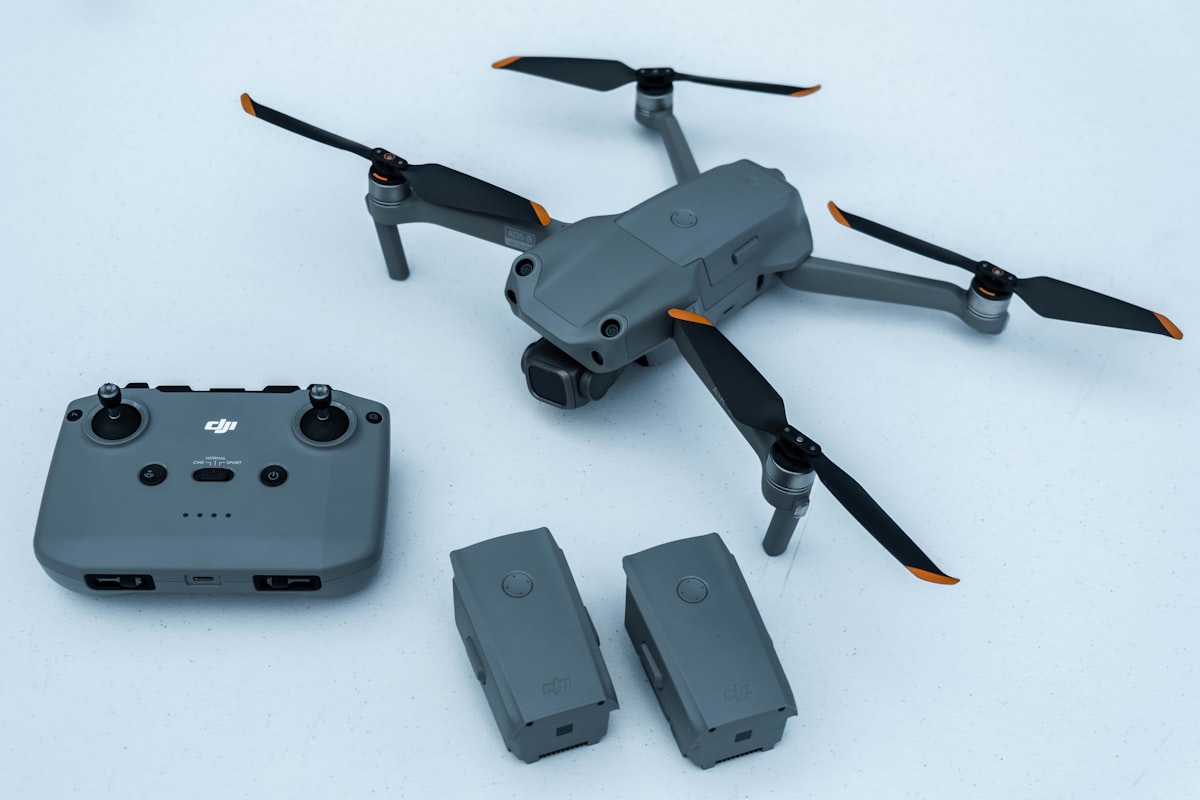
FAA drone registration is required for all drones weighing more than 0.55 pounds (250 grams) before their first flight. The process costs $5 per registration, takes about five minutes through the FAA DroneZone portal, and is valid for three years.
Whether you just bought your first DJI Mini or you manage a commercial fleet of 50 aircraft, registration is one of those non-negotiable boxes you have to check. Skip it, and you are looking at civil penalties up to $27,500 or criminal fines up to $250,000.
The good news? The actual process is simple. The confusing part is everything around it: the difference between recreational and Part 107 registration, how Remote ID fits in, what happens when you sell a drone, and how to keep a growing fleet compliant without losing your mind. This guide covers all of it.
Table of contents
- Who needs to register a drone with the FAA
- Recreational vs. Part 107 commercial registration
- How to register your drone: step-by-step process
- FAA drone registration cost breakdown
- Marking your drone with the registration number
- Remote ID and registration: how they connect
- How to renew your FAA drone registration
- Managing registration across a drone fleet
- Common registration mistakes and how to avoid them
- Penalties for flying an unregistered drone
- Registration and drone insurance
- Frequently asked questions
Who needs to register a drone with the FAA
Every drone that weighs more than 0.55 pounds (250 grams) at takeoff must be registered with the FAA before it flies. This applies regardless of whether you are flying for fun or for profit. The weight threshold includes everything the drone carries during flight: cameras, propeller guards, batteries, and any attached payload.
There is one narrow exception. Recreational flyers operating drones that weigh 0.55 pounds or less do not need to register. But here is the catch that trips people up: if you fly that same sub-250g drone for any commercial purpose, registration is required regardless of weight. The exemption applies only to recreational use under 49 USC 44809.
To be eligible to register, you must:
- Be at least 13 years old (a parent or guardian can register for younger owners)
- Be a U.S. citizen or legal permanent resident
- Have a valid email address and credit or debit card
Foreign nationals operating drones in the United States follow a different process. The FAA issues a "recognition of ownership" rather than a standard U.S. aircraft registration. This distinction matters for drone insurance purposes since some carriers require standard FAA registration for policy eligibility.
If you are unsure whether you need a registration, a license, or both, our guide on what drone license do I need breaks down the full picture.
Recreational vs. Part 107 commercial registration
The FAA maintains two completely separate registration tracks, and picking the wrong one creates real problems. A drone registered under the recreational track cannot legally be used for commercial work. You would need to deregister it and re-register under Part 107.
Here is how the two tracks compare:
| Feature | Recreational Registration | Part 107 Commercial Registration |
|---|---|---|
| Governed by | 44 USC 44809 | 14 CFR Part 107 |
| Cost | $5 total | $5 per drone |
| Validity | 3 years | 3 years |
| Coverage | All your drones under one number | Each drone gets a unique number |
| Pilot requirement | TRUST test | Part 107 certificate |
| Weight threshold | Over 250g only | All weights for commercial use |
| Remote ID required | Yes (over 250g) | Yes |
The most important distinction for commercial operators: Part 107 registration assigns a unique registration number to each individual aircraft. Recreational registration gives you a single number that covers every drone you own.
This matters for fleet tracking. When you operate commercially, every aircraft in your inventory needs its own registration, its own Remote ID serial number linkage, and its own compliance record. That per-aircraft accountability is exactly what regulators and clients expect from professional operations.
If you already hold your FAA drone license, you should register through the Part 107 pathway even if some flights are recreational. Mixing registration types across your fleet creates confusion and compliance risk.
How to register your drone: step-by-step process
FAA drone registration happens entirely online through the FAA DroneZone portal. The process typically takes under five minutes per drone.
Step 1: Create your FAA DroneZone account
Visit faadronezone-access.faa.gov and select "Create Account." You will need your full legal name, physical address, mailing address, email, and phone number. Use a professional email if you are registering for commercial operations; you may need to share account access with team members later.
Step 2: Choose your registration type
Select either "Part 107" (commercial) or "Exception for Recreational Flyers." This choice is permanent for each drone. You cannot switch a drone between registration types without deregistering and starting over.
Step 3: Enter your drone information
For each drone, provide the make, model, and the manufacturer-assigned serial number. You will also need the Remote ID serial number if your drone has standard Remote ID capability built in. If you are using a broadcast module instead, enter that module's serial number.
Step 4: Pay the registration fee
The fee is $5 per drone (Part 107) or $5 total (recreational, covering all your drones). Payment is by credit or debit card only.
Step 5: Download your certificate
After payment, your registration certificate and unique registration number are available immediately. Download the certificate and save a digital copy on your phone. You must carry proof of registration (paper or digital) whenever you fly.
Important warning: Several third-party websites charge $50 or more for "drone registration services." These sites simply fill out the same FAA DroneZone form on your behalf. Do not use them. The only legitimate registration portal is faadronezone-access.faa.gov.
For drones weighing more than 55 pounds, online registration is not available. You must register through the traditional paper-based aircraft registration process with the FAA Aircraft Registry.
FAA drone registration cost breakdown
Registration costs $5 per drone under Part 107 and $5 total for recreational flyers. Both are valid for three years. Here is what that looks like for different fleet sizes:
| Fleet Size | Part 107 Cost (3 Years) | Annual Equivalent |
|---|---|---|
| 1 drone | $5 | $1.67/year |
| 5 drones | $25 | $8.33/year |
| 10 drones | $50 | $16.67/year |
| 25 drones | $125 | $41.67/year |
| 50 drones | $250 | $83.33/year |
Registration is easily the cheapest part of running a compliant drone operation. The real costs come from the Part 107 certification process, insurance, equipment, and ongoing compliance management. But cheap does not mean unimportant. An expired or missing registration can ground your entire operation and void your insurance coverage.
Marking your drone with the registration number
After registration, you must physically label every drone with your registration number before flying. The FAA requires that the marking be legible and visible upon inspection of the aircraft's exterior.
Practical marking methods include:
- Permanent marker on the battery compartment or inside the battery bay door
- Engraved plates attached to the airframe
- Printed labels covered with clear tape for weather protection
- Laser engraving directly on the chassis (popular for commercial fleets)
The registration number must be on the exterior of the drone. The FAA changed this rule in 2019; previously, markings could be placed in an enclosed compartment. Now they must be accessible without tools, so first responders and law enforcement can identify the aircraft without handling it.
For commercial operators managing multiple aircraft, consistent marking practices matter. Every drone in your fleet should follow the same labeling standard. This makes field inspections faster and demonstrates operational professionalism to clients and regulators. Platforms like DroneBundle let you store registration numbers alongside each aircraft's equipment record, so your team always knows which number goes with which drone.
Remote ID and registration: how they connect
Remote ID and FAA drone registration are separate requirements, but they are tightly linked. During the registration process, you must provide your drone's Remote ID serial number. Think of registration as the drone's license plate and Remote ID as its transponder.
As of March 2026, all registered drones must comply with Remote ID requirements under 14 CFR Part 89. There are three ways to comply:
- Standard Remote ID drones that broadcast identification data from the factory
- Remote ID broadcast modules retrofitted onto older drones
- FAA-Recognized Identification Areas (FRIAs) where non-equipped drones can still fly within visual line of sight
For Part 107 operators, each drone's Remote ID serial number is tied to its individual registration. If you swap a broadcast module between aircraft, you need to update the registration record in DroneZone for each affected drone. This is a detail that many guides skip, but it matters for compliance tracking.
The latest Remote ID news indicates that the FAA is expanding enforcement. The 2026 National Defense Authorization Act requires the FAA to provide real-time Remote ID data to law enforcement agencies. This means your registration information is increasingly visible during flight operations, making accurate records more important than ever.
For a broader view of how drone regulations are evolving, including Remote ID enforcement trends, keep an eye on our regulatory updates.
How to renew your FAA drone registration
FAA drone registration expires three years from the date of issue. Renewal happens through the same FAA DroneZone portal and costs another $5 per drone (Part 107) or $5 total (recreational).
To renew:
- Log in to your FAA DroneZone account
- Navigate to your drone inventory
- Select the drone(s) due for renewal
- Click "Renew" and pay the fee
- Download the updated certificate
The FAA does not send renewal reminders by default. This is where operators get caught. Three years feels like a long time, but it arrives fast, and an expired registration means grounded aircraft.
Set a calendar reminder for 30 days before each drone's expiration date. Better yet, use a fleet management platform that tracks expiration dates automatically. DroneBundle's compliance tracking monitors registration expiration alongside pilot certifications, insurance policies, and maintenance schedules, so nothing falls through the cracks.
If your registration lapses, you can still renew it. But any flights conducted with an expired registration were technically illegal, which creates liability exposure if an incident occurred during that window.
Managing registration across a drone fleet
Individual drone registration is straightforward. Managing registration across a fleet of 10, 25, or 50 aircraft is where the complexity multiplies. This is the part that most registration guides ignore entirely, because they are written for hobbyists buying their first drone, not for commercial operators scaling a business.
Here is what fleet registration management actually involves:
Inventory tracking. Every drone in your fleet needs its registration number, expiration date, Remote ID serial number, and registration type documented in a single system. Spreadsheets work for three or four drones. Beyond that, you need a proper equipment management system.
Staggered renewals. If you bought your fleet all at once, every registration expires simultaneously. That is manageable but easy to forget. If you acquired drones over time, you have different expiration dates scattered across the calendar. Either way, you need a tracking system that flags upcoming renewals.
Personnel access. The FAA DroneZone allows Part 107 account holders to add users with "Inventory Manager" or "Part 107 Administrator" roles. Use this. Your operations manager or compliance lead should have account access so registration management does not depend on a single person.
Aircraft transfers. When you sell, retire, or destroy a drone, its registration needs to be cancelled in DroneZone. When you acquire a used drone, it needs to be registered fresh under your account. The previous owner's registration does not transfer.
Audit readiness. Clients, insurers, and regulators may request proof of registration at any time. Having digital certificates accessible to your entire team through a centralized drone operations platform eliminates the scramble of digging through email inboxes.
For growing drone businesses in surveying and inspection, construction, or any field where compliance is client-facing, integrating registration tracking into your broader fleet management workflow prevents gaps from forming as you scale. The operators who build these systems early avoid the painful retroactive cleanup that comes from years of scattered records.
Common registration mistakes and how to avoid them
After working with hundreds of commercial operators, certain registration mistakes come up repeatedly. Most are easy to prevent if you know about them ahead of time.
Registering under the wrong category. This is the most common and most consequential mistake. If you register a drone recreationally and then use it for a paid job, you are operating illegally. The fix requires deregistering and re-registering under Part 107. When in doubt, register under Part 107 if there is any chance you will fly commercially.
Forgetting to update your address. The FAA requires your registration information to be current. If you move and do not update your DroneZone profile, your registration is technically non-compliant. This also affects where the FAA sends any official correspondence.
Not registering accessories that push you over 250g. Your drone might weigh 249 grams out of the box, but adding a propeller guard, an aftermarket camera filter, or a heavier battery could push it over the threshold. Weigh your drone in its actual flight configuration.
Losing track of which number goes on which drone. In a fleet, it is surprisingly easy to mislabel a drone or forget to mark a newly purchased aircraft. Build registration marking into your onboarding process for every new piece of equipment. Document it in your pre-flight checklist.
Paying a third-party registration service. As mentioned above, scam sites charge $50 or more for a $5 process. Only use faadronezone-access.faa.gov.
Neglecting to deregister sold or destroyed drones. If a drone you no longer own is involved in an incident, the registration still points back to you. Always cancel the registration when a drone leaves your inventory.
Penalties for flying an unregistered drone
The FAA takes registration violations seriously, and the penalties reflect that. According to FAA enforcement guidelines:
- Civil penalties: Up to $27,500 per violation
- Criminal penalties: Fines up to $250,000 and/or imprisonment for up to three years
These are maximum penalties. In practice, first-time offenders flying recreationally are more likely to receive a warning or a smaller fine. But commercial operators face greater scrutiny. If you are conducting paid work with an unregistered drone, the FAA treats it as a deliberate violation of 14 CFR Part 48, not an innocent oversight.
Beyond FAA penalties, unregistered operations create cascading problems:
- Insurance claims denied. Most drone insurance policies require valid registration as a condition of coverage. Fly unregistered, and your insurer has grounds to deny any claim.
- Client contracts voided. Commercial contracts frequently include compliance clauses. An unregistered drone means you were not legally authorized to perform the work.
- LAANC authorizations invalid. Airspace authorization through LAANC requires a registered drone. Unregistered flights in controlled airspace compound the violation.
The FAA's 2024 Reauthorization Act increased drone-related fines to up to $75,000 per violation for unsafe or unauthorized operations. Registration violations combined with other infractions can stack penalties quickly.
Registration and drone insurance
Registration and insurance are legally separate requirements, but practically they are inseparable for commercial operators. Nearly every drone insurance carrier in the United States requires valid FAA registration as a prerequisite for coverage.
Here is how they interact:
Your registration number is typically listed on your insurance policy. If you add a new drone to your fleet, you need to both register it with the FAA and add it to your insurance. If a registration expires and you do not renew, some policies automatically suspend coverage for that aircraft.
For commercial operators, having registration and insurance data in a single system saves significant administrative overhead. When a client requests proof of compliance before a job, you need to produce both documents quickly. DroneBundle's document management stores registration certificates alongside insurance policies, pilot certifications, and maintenance records for exactly this reason.
The relationship also works in reverse. Some risk assessment frameworks and insurance underwriters consider your registration history when pricing policies. A clean record of continuous registration suggests operational discipline. Gaps or lapses suggest the opposite.
If you are exploring insurance options for your operation, our drone insurance guide covers providers, coverage types, and cost factors in detail.
Frequently asked questions
How long does FAA drone registration take?
Online registration through FAA DroneZone takes approximately five minutes per drone. Your registration number and certificate are available immediately after payment. There is no waiting period or approval process for standard small UAS registration under Part 48.
Can I fly my drone while waiting for registration?
No. The FAA requires registration to be complete before the first flight. Since the process is instant through the online portal, there is no practical reason to fly before registering. Flying an unregistered drone is a federal violation regardless of intent.
Do I need to register a drone I only fly indoors?
The FAA's registration requirement under 14 CFR Part 48 applies to drones operated in the national airspace system. Indoor-only flights in fully enclosed structures are generally not considered NAS operations. However, if there is any possibility the drone will fly outdoors, register it. The $5 cost is not worth the risk.
What happens if I sell my drone? Does the registration transfer?
No. FAA drone registration does not transfer between owners. When you sell a drone, you should cancel its registration in DroneZone. The new owner must create their own account and register the drone under their name. This applies to both recreational and Part 107 registrations.
Keep your fleet compliant without the headaches
FAA drone registration is just one piece of the compliance puzzle for commercial operators. Between pilot certifications, airspace authorizations, Remote ID compliance, insurance renewals, and maintenance tracking, there are dozens of expiration dates and regulatory requirements to juggle across every aircraft and pilot on your team.
That is exactly what DroneBundle was built to handle. Our platform centralizes registration records, certification tracking, flight planning, and compliance management into a single dashboard. No more spreadsheets. No more missed renewals.
Start your free trial and see how DroneBundle keeps your fleet compliant, or book a live demo to walk through the platform with our team.