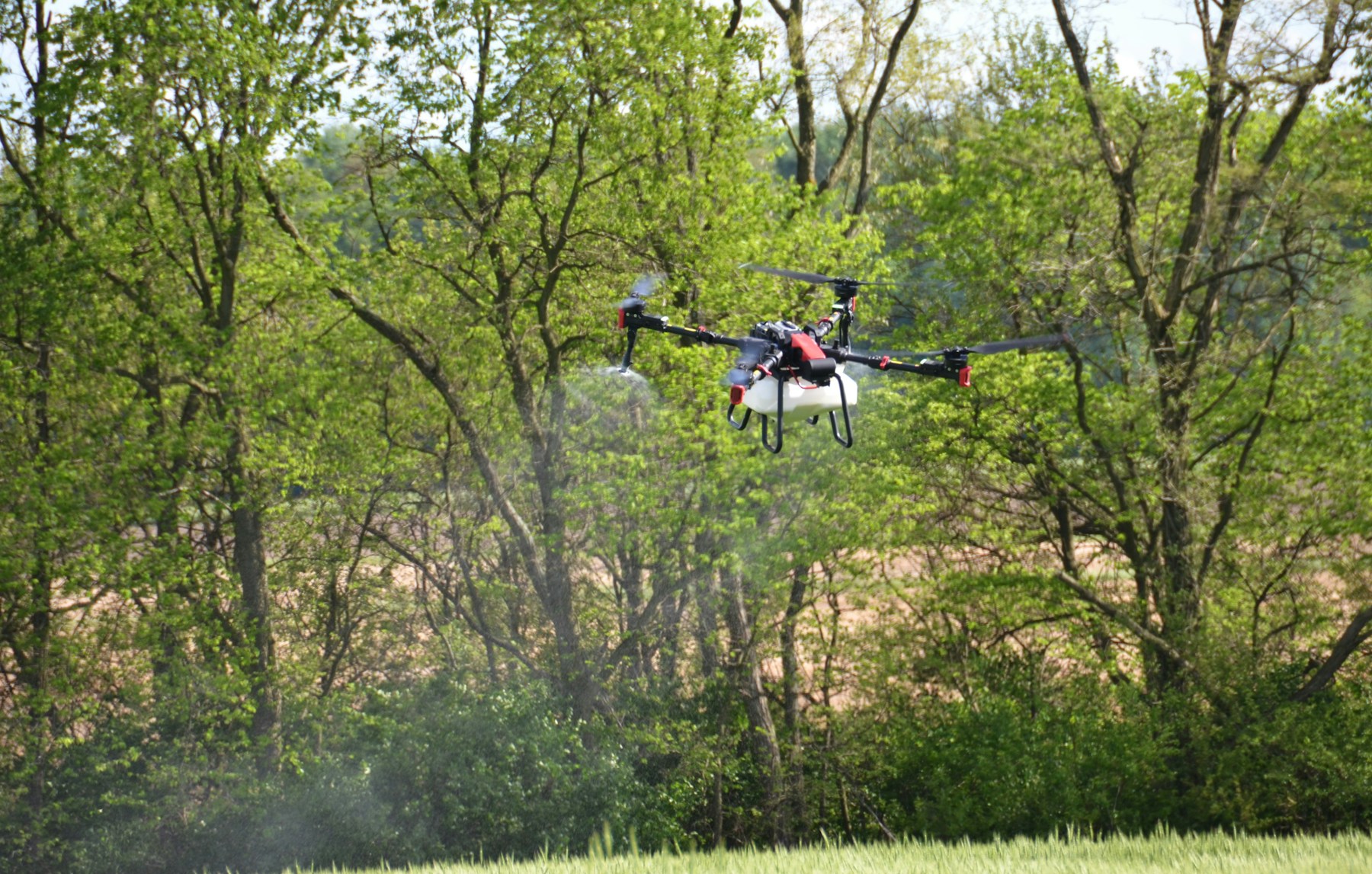
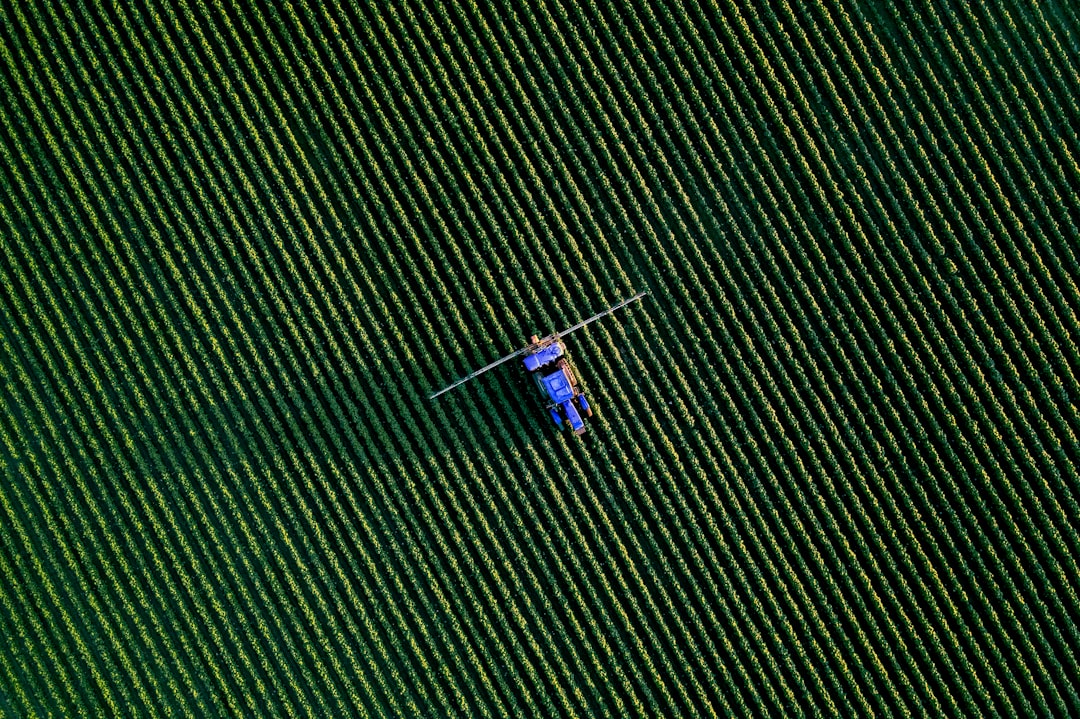
Drone spraying cost per acre ranges from $8 to $40 depending on the application type, field size, terrain, and whether you hire a service or own the equipment. Most commercial operators charge between $12 and $25 per acre for standard herbicide and pesticide applications, with specialty treatments pushing higher.
If you are building a drone spraying business or deciding whether to hire a service or buy your own rig, you need actual numbers. This guide covers real pricing data from operators, university research, and current equipment costs, including the regulatory and insurance expenses most pricing guides ignore.
What does drone spraying cost per acre in 2026?
The average drone spraying cost per acre in 2026 falls between $12 and $25 for standard applications when hiring a commercial operator. Custom hire rates have settled around $14 to $17 per acre in competitive markets like the Midwest, while specialty applications in the Northeast or on difficult terrain can run $30 to $40 per acre.
These numbers shift based on three core variables: what you are spraying, how much acreage you are covering, and where the field is located.
For small jobs under 50 acres, expect a premium. Operators have mobilization costs (driving to the site, setup, mixing chemicals) that stay fixed regardless of acreage. A 10-acre job might run $30 to $40 per acre simply because setup time eats into the economics. Once you cross 100 acres, per-acre rates drop significantly. Bulk contracts covering 500+ acres often land in the $12 to $18 range.
If you own the equipment, the University of Missouri Extension found the total cost per acre drops to approximately $12.27 for a farmer spraying 1,000 acres annually. Custom operators covering 4,000+ acres per season can push that below $8 per acre. If you are exploring drone business ideas for the first time, agricultural spraying consistently ranks among the highest-revenue niches.
Cost breakdown by application type
Different spray applications carry different price tags because chemical costs, application rates, and precision requirements vary significantly.
| Application type | Typical price range | Average per acre | Notes |
|---|---|---|---|
| Basic herbicide | $12 - $20 | $16 | Most common service, high volume |
| Fungicide/pesticide | $18 - $28 | $23 | Often requires tighter application patterns |
| Liquid fertilizer | $15 - $25 | $20 | Heavier payload, more refill stops |
| Spot treatment | $25 - $40 | $32 | Targeted areas, higher precision needed |
| Multi-pass applications | $30 - $50 | $40 | Two or more passes per field |
| Cover crop seeding | $10 - $18 | $14 | Lighter payload, faster coverage |
Spot treatments represent a pricing sweet spot many operators overlook. Treating a 5-acre weed patch in a 200-acre field with a drone is far cheaper than sending a ground rig across the whole thing. Operators who market spot treatment services at premium rates often earn more per hour than those running bulk acreage jobs. The chemical itself is usually provided by the farmer and is not included in these service prices.
Regional pricing differences across the US
Pricing varies meaningfully by region due to competition, farm density, field sizes, and local cost of living. If you are building a drone service business, knowing your regional rate before you set pricing is critical.
| Region | Typical range per acre | Market notes |
|---|---|---|
| Midwest (IA, IL, IN, OH) | $13 - $22 | Most competitive market, large flat fields |
| Great Plains (KS, NE, SD, ND) | $13 - $20 | Low density, high acreage per client |
| Southeast (GA, AL, MS, SC) | $16 - $28 | Varied terrain, longer growing season |
| Northeast (NY, PA, VT, ME) | $22 - $38 | Smaller fields, more obstacles, fewer operators |
| West Coast (CA, OR, WA) | $20 - $35 | Specialty crops push prices higher |
| Mountain West (MT, WY, CO) | $15 - $25 | Remote locations increase mobilization costs |
The Midwest offers the most volume but the tightest margins. The Northeast and West Coast offer higher per-acre rates but require more flight planning per job because of irregular field shapes and obstacle density. Our agriculture and environmental industry page covers how operators in these regions structure their service offerings. Seasonality matters too: spring and early summer are peak demand, and some operators charge a 10-15% premium for rush jobs during those windows.
Owning versus hiring: the breakeven math
This is the question every farmer and aspiring operator needs to answer: at what point does buying your own drone make financial sense compared to hiring a service?
The University of Missouri Extension conducted a detailed economic analysis using the DJI Agras T40 platform:
Farmer ownership costs (1,000 acres/year):
- Operating costs: $3.37/acre
- Ownership costs (depreciation, interest): $8.90/acre
- Labor: $1.05/acre (at $21/hour)
- Maintenance and repairs: $2.06/acre
- Total: approximately $12.27/acre
Custom operator costs (4,000 acres/year):
- Total cost: approximately $7.39/acre
- Higher acreage spreads fixed costs across more acres
The breakeven point sits at roughly 980 acres per year when comparing ownership costs against a custom hire rate of $16/acre. Real-world breakeven tends to be higher, closer to 1,200 to 1,500 acres, once you account for weather days, maintenance downtime, and time spent on pre-flight checklists and regulatory compliance.
The equipment investment itself is significant. A DJI Agras T50 basic kit runs about $36,000 to $37,000. Add a generator, spare batteries, mixing equipment, and transport, and a realistic startup budget is $45,000 to $60,000. Proper equipment management becomes essential with this much capital deployed.
For anyone serious about starting a drone spraying business, the custom operator numbers are what matter. At 4,000 acres per season charging $14 to $17 per acre, gross revenue lands between $56,000 and $68,000. Subtract total costs of roughly $30,000 and you are looking at $26,000 to $38,000 in profit from spraying alone, before adding revenue from scouting, mapping, or other agricultural drone services.
Regulatory costs most guides skip
Agricultural drone spraying in the United States requires compliance with 14 CFR Part 137, which governs agricultural aircraft operations. The FAA requires an Agricultural Aircraft Operator Certificate (AAOC) for any operation dispensing chemicals from an aircraft, including drones.
Mandatory requirements:
- Part 107 Remote Pilot Certificate: $175 testing fee (plus study time)
- FAA drone registration: $5 per drone (renewed every 3 years)
- Part 137 exemption petition: no direct fee, but the application process takes 120+ days minimum
- AAOC application: no fee, but requires submitting Form 8710-3
State-level requirements (vary by state):
- Pesticide applicator license: $25 to $200 depending on state
- Business license and permits: $50 to $500
The Part 137 exemption process can take 4 to 6 months. During that time you cannot legally spray for hire. These costs add $500 to $1,500 to your first-year expenses and ongoing administrative time every year after. Factor them into your pricing or they come straight out of profit.
Insurance: the hidden budget killer
Agricultural drone spraying requires specialized insurance that costs significantly more than standard drone insurance. Standard liability policies do not cover chemical application.
Annual insurance costs for a single-drone spray operation:
| Coverage type | Annual cost | What it covers |
|---|---|---|
| Hull coverage | $800 - $2,000 | Physical damage to your drone |
| Non-chemical liability | $1,000 - $2,500 | Bodily injury, property damage (non-spray) |
| Chemical liability | $1,500 - $3,500 | Spray drift, crop damage, contamination |
| Total annual premium | $2,500 - $6,000 | All coverages combined |
If you are spraying herbicides (the most common service), you need comprehensive chemical coverage that includes herbicides, defoliants, and desiccants. One requirement that catches new operators off guard: FOG (Farmer, Owner, Grower) coverage. Many farming operations require you to name them as an Additional Insured before you set foot on their property. If your policy does not include FOG endorsements, you will lose contracts. Our guide on insurance and liability for commercial drone services covers the broader picture.
When you divide annual insurance costs across your seasonal acreage, the per-acre impact is meaningful. An operator spraying 2,000 acres per year with a $4,000 premium adds $2.00 per acre. At 500 acres, that jumps to $8.00 per acre. Volume is the only way to dilute insurance overhead.
How field conditions change your cost per acre
Two fields of identical acreage can have wildly different costs to spray.
Terrain and obstacles are the biggest factors. Flat Midwest corn fields spray fast with automated passes. Hilly terrain requires altitude adjustments, slower speeds, and more battery swaps, adding $5 to $10 per acre. Power lines, irrigation pivots, and buildings force the drone out of automated mode, and each obstacle adds time.
Field shape matters more than most operators realize. A perfect square 160-acre field sprays much faster than an irregular 160-acre field with cutouts and odd angles. Using proper flight planning software helps, but weird shapes still cost more.
Distance and weather affect margins indirectly. Driving two hours to spray a 30-acre field erases most of your profit. Smart operators cluster clients geographically, which is where having a proper client management system becomes a business advantage. Spray applications also have strict weather requirements: wind under 10 mph, no rain within a certain window, specific temperature ranges. Operators who integrate weather forecasting into their scheduling minimize wasted trips.
Drone spraying versus traditional methods
| Method | Cost per acre | Coverage rate | Minimum practical acreage | Best for |
|---|---|---|---|---|
| Drone spraying | $12 - $25 (hired) | 30 - 50 acres/hour | Any size | Precision work, small/irregular fields, wet conditions |
| Ground sprayer (self-propelled) | $6 - $12 | 80 - 150 acres/hour | 200+ acres | Large flat fields, high-volume application |
| Manned aerial (crop duster) | $10 - $18 | 200 - 500 acres/hour | 300+ acres | Very large fields, fast turnaround |
| Backpack sprayer (manual) | $40 - $80 | 1 - 3 acres/hour | Under 5 acres | Gardens, small plots, tight spaces |
On pure per-acre cost, ground sprayers win for large flat fields. Crop dusters dominate on massive acreage. Drones do not compete on speed or cost for 1,000-acre corn fields in Iowa.
Where drones win: wet fields where ground rigs cause compaction damage, small or irregular fields that are uneconomical for crop dusters, precision spot treatment using drone mapping data (reducing chemical usage by 20-30%), and steep or terraced terrain that is dangerous for ground equipment. Drone spraying also uses 75-90% less water than ground rigs. The EPA's pesticide registration guidelines apply regardless of method, so reduced chemical usage simplifies compliance reporting.
For operators scaling their business, the smart strategy is to own the niches where drones are the best or only option, not to compete head-to-head with ground rigs on bulk acreage.
How to price your services and track profitability
Most operators land at $7 to $12 per acre in true all-in costs once you account for equipment depreciation, battery replacement, insurance, regulatory compliance, travel, and maintenance. A healthy target is 30-50% gross margin, which puts retail rates at $12 to $20 per acre for standard applications in competitive markets.
Pricing structures that work:
- Per-acre flat rate: Simple, easy for clients to compare. Best for standard applications on straightforward fields.
- Tiered pricing: Lower per-acre rate as acreage increases. Incentivizes larger contracts.
- Minimum charge: Set a floor ($200 to $500) for small jobs so mobilization costs are always covered.
- Seasonal contracts: Offer a 10-15% discount for clients who commit to multiple applications throughout the season.
Track every job's actual costs versus quoted price. Key metrics: effective acres per hour, cost per acre by application type, battery cycles per acre, revenue per flight hour, and client profitability. Fleet management software turns this from guesswork into data. Automated flight logging and DJI log processing pull data directly from the aircraft so you are not reconstructing numbers after a 12-hour spray day.
A proper operations management platform makes this analysis straightforward. DroneBundle's operations platform gives agricultural operators a single dashboard for flight logs, equipment tracking, maintenance scheduling, and client management. Try it free or book a live demo to see how it fits your operation.
FAQ
How many acres can a spray drone cover per hour?
Most commercial spray drones cover 30 to 50 acres per hour under ideal conditions. The DJI Agras T50 with its 40-liter tank can spray approximately 50 acres per hour on flat terrain with standard application rates. Real-world throughput depends on field shape, refill distance, wind conditions, and battery swap time. Budget for 30 to 40 acres per hour in your planning.
Do I need a Part 137 certificate to spray with a drone?
Yes. The FAA requires an Agricultural Aircraft Operator Certificate (AAOC) under 14 CFR Part 137 for any commercial drone spraying operation. You also need a Part 107 Remote Pilot Certificate and an exemption from Section 107.36 for carrying hazardous materials. The application process takes a minimum of 120 days, so plan ahead. Some states also require a separate pesticide applicator license.
Is drone spraying cheaper than hiring a crop duster?
It depends on acreage. For fields under 100 to 200 acres, drone spraying is usually cheaper because crop dusters have high minimum charges (often $1,000 or more per visit). For fields over 500 acres, manned aerial application is typically more cost-effective at $10 to $18 per acre with much higher coverage rates. Drones hold a cost advantage on small, irregular, or difficult-to-access fields where ground rigs and planes cannot operate efficiently.
What is the ROI timeline for a drone spraying business?
Most operators who actively market their services report reaching profitability within their first full spray season, typically 3 to 6 months of active operation. An operator spraying 2,000 to 3,000 acres in their first season at $15/acre generates $30,000 to $45,000 in gross revenue against roughly $45,000 to $60,000 in startup costs. By year two, with the startup investment behind them, the same volume generates strong margins. Tracking your ROI systematically using a fleet management ROI calculator helps validate the numbers.