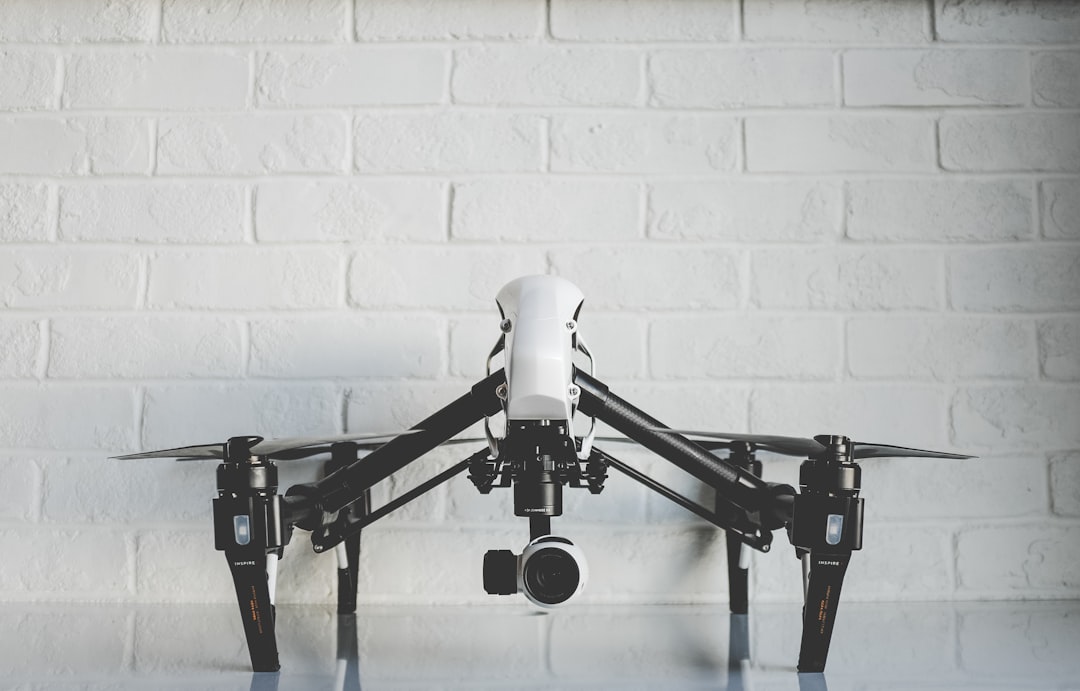
The commercial drone services market is projected to exceed $40 billion by 2030, and the best drone business ideas combine a specific niche, repeatable client demand, and an operational backbone that scales beyond a single pilot.
You have a drone. You have your Part 107 certificate. Now what?
That is the question thousands of newly certified pilots ask every year. The internet is full of vague listicles telling you to "try aerial photography" or "look into inspections," but very few explain what it actually takes to turn a drone into a business that pays the bills. The equipment is the easy part. Choosing the right niche, pricing your services correctly, managing compliance, and building repeatable workflows; that is where most operators either succeed or quietly fade out.
This guide goes deeper than the typical list. For each drone business idea, you will find realistic earnings, startup costs, the operational complexity involved, and the back-office systems you need to run the business properly. Because owning a drone and running a drone company are two very different things.
Table of contents
- What makes a drone business idea actually profitable
- 1. Real estate aerial photography and video
- 2. Roof inspections for insurance and property management
- 3. Construction site monitoring and progress tracking
- 4. Agricultural crop monitoring and spraying
- 5. Power line and utility inspections
- 6. Drone mapping and land surveying
- 7. Thermal imaging and energy audits
- 8. Cell tower and telecom inspections
- 9. Wind turbine inspections
- 10. Event and wedding videography
- 11. Solar panel inspections
- 12. Drone pilot training and education
- 13. Environmental and wildlife monitoring
- 14. Drone light shows
- 15. Drone data processing and analytics
- The operational backbone most drone businesses ignore
- How to choose the right drone business niche
- Frequently asked questions
What makes a drone business idea actually profitable
Profitability in a drone business comes from three factors working together: high per-job margins, repeatable demand from the same clients, and low operational overhead between jobs. Most guides skip this and jump straight to listing niches. That is a mistake, because the niche matters far less than how you execute within it.
A real estate photographer charging $200 per shoot who flies three jobs per day and books 20 days per month earns $12,000 monthly before expenses. An inspection pilot charging $1,500 per day who books 10 days per month earns $15,000. The inspection pilot earns more per day but less total if they cannot fill their calendar. The math changes based on your market, your marketing, and how efficiently you run the business side.
Here is what separates drone businesses that survive past year one from those that do not:
- Recurring revenue beats one-off gigs. A construction company that needs monthly progress flights is worth more than a dozen wedding bookings. Recurring contracts reduce the constant pressure to find new clients.
- Specialization commands premium rates. Operators who go deep in one vertical (inspections, agriculture, mapping) earn 2 to 3 times more per hour than generalists. Clients pay for expertise, not just flight time.
- Back-office systems prevent chaos. Flight logging, compliance tracking, invoicing, client communication, and equipment management all need structure. Spreadsheets work at five clients. They collapse at fifty.
Understanding the salary landscape for drone pilots helps you benchmark realistic earnings for each niche below.
1. Real estate aerial photography and video
Real estate aerial photography remains the most accessible entry point for new drone businesses because the demand is consistent and the barrier to entry is low. Agents in most metro areas now consider aerial photos standard for listings above $400,000.
Typical earnings: $150 to $400 per property shoot. Full-service packages including interior tours and twilight shots push prices to $500 to $800. Operators averaging three to four shoots per day earn $60,000 to $120,000 annually.
Startup costs: $2,000 to $5,000. A DJI Mini 4 Pro or Air 3 handles most residential work. You will need editing software (Adobe Lightroom and Premiere Pro at $55/month), a portfolio website, and business cards.
What competitors miss about this niche: The real constraint is not flying skill. It is turnaround time. Agents want edited deliverables within 24 hours, sometimes same-day. Building an editing workflow that handles volume without sacrificing quality is the difference between a side gig and a real business. Some operators outsource editing to virtual assistants at $10 to $15 per set, which frees up flying time during peak hours.
You also need a system for scheduling shoots, sending proofs, and managing dozens of active agent relationships simultaneously. A client portal where agents can request flights, review deliverables, and download files without constant back-and-forth emails saves hours every week.
2. Roof inspections for insurance and property management
Drone roof inspections replace ladder climbs and cherry pickers, reducing inspection time from hours to minutes while eliminating fall risk. Insurance adjusters, property managers, and roofing contractors all need this service regularly.
Typical earnings: $150 to $350 per residential roof. Commercial buildings with large flat roofs command $500 to $1,500. An operator handling four to six inspections per day earns $75,000 to $150,000 annually.
Startup costs: $3,000 to $8,000. You need a drone with a high-resolution camera (at least 20MP) and ideally a thermal camera for moisture detection. The DJI Mavic 3 Enterprise with a thermal sensor covers both needs.
This niche has strong recurring potential. Property management companies with hundreds of units need annual inspections. Insurance carriers increasingly accept drone imagery for claims, and some now require it for properties where ladder access is unsafe. Build relationships with three to five large property management firms and you may never need to market again.
Detailed roof inspection workflows help you deliver consistent, professional reports that win repeat business.
3. Construction site monitoring and progress tracking
Construction companies use drone data to track progress, verify earthwork volumes, create 3D site models, and document conditions for dispute resolution. This niche offers some of the highest recurring revenue potential because projects run for months or years.
Typical earnings: $500 to $2,000 per site visit. Monthly monitoring contracts for large projects range from $2,000 to $5,000. Multi-site programs serving general contractors can generate $150,000 to $300,000 annually.
Startup costs: $5,000 to $15,000. You need a drone with RTK capability for survey-grade accuracy (DJI Matrice 350 RTK or similar), mapping software like Pix4D or DroneDeploy, and training in photogrammetry fundamentals.
The operational detail others overlook: Construction sites have strict safety requirements. You will need OSHA 10 or OSHA 30 certification on most commercial job sites. Site access requires advance coordination with the general contractor. Flight paths must avoid active crane zones. And every deliverable needs to be georeferenced so engineers can overlay it on their site plans.
Learn more about using drones for construction inspections and how drone mapping creates measurable value for project stakeholders.
4. Agricultural crop monitoring and spraying
Agricultural drone services represent roughly 26% of the commercial drone market. Farmers use drones for crop health monitoring via multispectral imaging, precision spraying, plant counting, and irrigation assessment. The demand is seasonal but intense, with operators often fully booked during growing months.
Typical earnings: Crop monitoring runs $8 to $15 per acre. Precision spraying commands $10 to $25 per acre. An operator covering 200 to 500 acres per day during peak season can gross $100,000 to $250,000 annually with the right equipment and territory.
Startup costs: $10,000 to $50,000. Spraying drones like the DJI Agras T50 cost $15,000 to $25,000. Multispectral sensors for crop analysis add $5,000 to $10,000. You also need a truck or trailer to haul equipment and chemical supplies to remote fields.
The regulatory layer is thicker here than in most niches. Spraying operations often require a state pesticide applicator license in addition to your Part 107. Some states classify agricultural drone spraying under their own agricultural aviation rules. Check your state's department of agriculture before investing in equipment.
For deeper exploration, read our guide on drones in agriculture and how the agriculture and environmental industry is adopting drone technology at scale.
5. Power line and utility inspections
Utility companies spend billions annually on infrastructure inspections. Drones inspect power lines, substations, and transmission towers faster and more safely than helicopter surveys or ground crews. This niche pays well but requires specialized training and often long-term contracts.
Typical earnings: $1,500 to $4,000 per day depending on line miles covered and sensor requirements. Annual contracts with mid-size utilities can exceed $200,000.
Startup costs: $15,000 to $40,000. You need an enterprise-grade drone (DJI Matrice 350 RTK or similar), a thermal camera, and potentially LiDAR for vegetation encroachment analysis. Insurance requirements are higher; most utilities require $5 million in liability coverage.
The entry barrier nobody talks about: Utilities do not hire unknown operators off the street. You need a track record, safety management documentation, and often a pre-qualification process that can take months. Start by subcontracting for established inspection firms to build your portfolio and compliance history. Once you have completed 50 to 100 utility inspection flights with documented safety records, you are positioned to bid on contracts directly.
Our guide on power line inspections covers the technical and operational details for this high-value niche.
6. Drone mapping and land surveying
Drone photogrammetry produces survey-grade orthomosaics, digital elevation models, and 3D point clouds that serve civil engineers, land developers, mining companies, and government agencies. This is one of the most technically demanding niches but also one of the most defensible because the learning curve keeps casual competitors out.
Typical earnings: $800 to $3,000 per survey project. Volumetric analysis for mining and excavation runs $1,000 to $2,500. Operators with GIS expertise and Ground Control Point workflows consistently earn $100,000 to $200,000 annually.
Startup costs: $10,000 to $30,000. RTK-capable drones are essential for survey-grade accuracy. Software licenses for Pix4D, Agisoft Metashape, or Global Mapper add $3,000 to $5,000 annually. A powerful workstation for processing large datasets costs $2,000 to $4,000.
Understanding drone surveying fundamentals and flight planning best practices is essential before entering this market.
7. Thermal imaging and energy audits
Thermal drone imaging serves multiple markets: building energy audits, flat roof moisture detection, electrical fault detection, and industrial process monitoring. The specialized equipment and interpretation skills create a natural moat against generic drone operators.
Typical earnings: $500 to $1,500 per residential energy audit. Commercial building thermal scans run $1,000 to $3,000. Industrial clients pay $2,000 to $5,000 per day for ongoing monitoring programs.
Startup costs: $8,000 to $25,000. A radiometric thermal camera (FLIR Vue TZ20 or DJI Zenmuse H30T) is essential since consumer-grade thermal cameras lack the resolution and calibration needed for professional reports. Thermography certification (Level I ITC or equivalent) costs $2,000 to $3,000 and takes about a week.
We have a complete guide on building a drone thermal imaging business that covers certification paths, equipment selection, and pricing strategies in detail.
8. Cell tower and telecom inspections
Telecom companies manage hundreds of thousands of tower sites that require regular inspections for structural integrity, antenna alignment, and lease compliance. Drone inspections reduce tower climb requirements and the associated fall risks.
Typical earnings: $500 to $1,200 per tower inspection. Multi-tower contracts covering 50 to 200 sites per month can generate $200,000 to $500,000 annually for operators with the right relationships and capacity.
Startup costs: $8,000 to $20,000. You need a drone capable of close-proximity flying near metal structures (compass interference is a real issue on towers), a high-resolution zoom camera, and familiarity with ANSI/TIA-222 tower standards.
The gap in most guides: Tower inspections require understanding what you are looking at, not just flying around the structure. Corrosion, ice bridge integrity, cable routing, antenna tilt, and structural member condition all need to be assessed and documented. Many operators partner with structural engineers to provide a complete inspection package rather than just imagery.
Read more about cell tower inspection workflows and the telecom and tower inspection industry.
9. Wind turbine inspections
Wind farms need regular blade inspections to detect cracks, erosion, lightning strikes, and delamination. Each turbine stands 300 to 500 feet tall, making drone inspections dramatically faster and safer than rope-access technicians.
Typical earnings: $800 to $2,000 per turbine. A single wind farm with 50 to 100 turbines represents a contract worth $50,000 to $150,000. Seasonal demand peaks in spring and fall when maintenance windows align.
Startup costs: $10,000 to $25,000. High-resolution zoom cameras (at least 45MP) are essential for detecting hairline cracks from a safe distance. Automated blade inspection software from providers like Aerones or SkySpecs adds processing capability.
Wind turbine inspections require flying in challenging conditions. Wind speeds at hub height are often higher than at ground level, and turbulence from the blades themselves creates tricky flight dynamics. Most operators need 50 or more hours of precision flying experience before attempting close-proximity blade work.
Our detailed guide on wind turbine inspections with drones covers flight techniques, reporting standards, and client acquisition strategies for this growing niche.
10. Event and wedding videography
Aerial event coverage adds a cinematic dimension to weddings, festivals, corporate events, and sports. While this niche is competitive, skilled operators who deliver polished, story-driven content command premium rates.
Typical earnings: $300 to $800 per event for basic aerial coverage. Full wedding packages including ground and aerial videography run $2,000 to $6,000. Corporate events pay $500 to $2,000 for half-day coverage.
Startup costs: $2,000 to $6,000. A quiet drone is critical for events (the DJI Air 3 or Mavic 3 are popular choices). You also need ND filters for cinematic footage, a gimbal stabilizer for ground shots, and professional editing software.
The regulatory catch most operators miss: Flying over people requires compliance with FAA Part 107 operations over people rules. Your drone must be categorized under Category 1, 2, 3, or 4 based on its weight and impact kinetic energy. Many popular consumer drones qualify for Category 1 (under 0.55 lbs) but most commercial drones fall into higher categories that require Remote ID and specific operational constraints. Check your drone's category before promising aerial coverage directly over a crowd.
For tips on creating compelling aerial footage, see our guide on drone videography techniques.
11. Solar panel inspections
Solar farms and commercial rooftop installations require regular thermal inspections to detect hotspots, micro-cracks, soiling patterns, and underperforming cells. As installed solar capacity grows, so does the demand for efficient inspection services.
Typical earnings: $0.02 to $0.05 per watt of installed capacity for utility-scale farms. A 100MW solar farm inspection pays $2,000 to $5,000. Commercial rooftop systems run $300 to $800 per inspection.
Startup costs: $10,000 to $20,000. You need a drone with a radiometric thermal camera and GPS-tagged image capture. Software for thermal analysis and defect mapping (such as Raptor Maps or DroneDeploy Solar) adds $2,000 to $5,000 annually.
This niche pairs naturally with the utilities and energy industry and can be combined with general thermal imaging services to fill your calendar year-round.
12. Drone pilot training and education
If you have extensive flight experience and strong teaching skills, training other pilots is a viable business that scales differently than flight services. Revenue comes from course fees rather than billable flight hours, and you can serve multiple students simultaneously.
Typical earnings: Part 107 prep courses sell for $150 to $500 per student. In-person flight training workshops command $500 to $1,500 per student per day. Corporate training programs for enterprise drone teams run $5,000 to $15,000 per engagement.
Startup costs: $5,000 to $15,000. You need training drones (ideally multiple models), a curriculum, liability insurance covering student operations, and a marketing presence. Online course platforms like Teachable or Thinkific cost $50 to $100 per month.
Understanding how to become a drone pilot, the Part 107 study guide requirements, and UAS pilot training best practices gives you the foundation to teach others effectively.
13. Environmental and wildlife monitoring
Conservation organizations, government agencies, and research institutions use drones for wildlife population surveys, habitat mapping, erosion monitoring, and pollution tracking. This niche often involves grant-funded projects with predictable budgets.
Typical earnings: $500 to $2,000 per survey day. Multi-year monitoring contracts with government agencies can provide stable baseline revenue of $50,000 to $100,000 annually.
Startup costs: $5,000 to $20,000 depending on sensor requirements. Multispectral cameras for vegetation analysis, thermal cameras for wildlife counting, and LiDAR for canopy penetration each serve different research needs.
This work often requires permits beyond Part 107. Flying over national parks, wildlife refuges, or protected habitats involves agency coordination and sometimes BVLOS operations waivers for covering large areas. The research and education industry continues to expand drone adoption for environmental monitoring.
14. Drone light shows
Drone light shows have emerged as a premium alternative to fireworks for corporate events, holidays, product launches, and municipal celebrations. This is the highest-revenue drone business idea on this list, but it also requires the most capital and the most complex operations.
Typical earnings: $15,000 to $150,000 or more per show depending on fleet size and choreography complexity. A show using 100 drones typically starts around $20,000 to $50,000.
Startup costs: $100,000 to $500,000 or more. You need a fleet of GPS-synchronized show drones, choreography software, a ground control station, and a dedicated operations team. FAA waivers for nighttime operations and flights over people are required for most shows.
This niche is capital-intensive and operationally complex. It requires multi-drone operations management, airspace coordination, and a level of flight planning that goes well beyond single-aircraft missions. Most operators start by subcontracting for established light show companies before investing in their own fleet.
15. Drone data processing and analytics
Not every drone business requires flying. Companies that process, analyze, and interpret drone-collected data serve the operators who prefer to stay in the field rather than behind a computer. Services include orthomosaic generation, 3D modeling, volumetric calculations, and custom GIS analysis.
Typical earnings: $200 to $1,000 per dataset for standard processing. Custom analysis and reporting for engineering firms runs $500 to $3,000 per project. Monthly retainers from high-volume operators generate $2,000 to $10,000 per client.
Startup costs: $3,000 to $8,000. A high-performance workstation, professional photogrammetry software, and GIS tools are the main investments. No drone or Part 107 required.
This niche pairs well with drone data processing services and can serve as an add-on revenue stream for operators who already fly missions but want to monetize their technical expertise further.
The operational backbone most drone businesses ignore
Here is what none of the "50 drone business ideas" listicles tell you: the business that runs behind the flights matters more than the flights themselves once you get past your first ten clients.
Every successful drone service company eventually needs systems for:
- Flight logging and compliance. The FAA requires flight records for commercial operations. Beyond the legal minimum, detailed flight logs protect you in insurance claims and client disputes. Logging every flight manually in a spreadsheet works until it does not.
- Equipment tracking. Batteries, drones, sensors, SD cards. You need to know what is charged, what is due for maintenance, and what is checked out to which pilot. A proper equipment management system prevents the 6 AM scramble when you realize your thermal camera is at a different job site.
- Client management and invoicing. Tracking proposals, contracts, scheduled flights, deliverables, and payments across 20 or 30 active clients requires more than email and memory. CRM tools designed for service businesses keep revenue from falling through the cracks.
- Risk assessment documentation. Before every commercial flight, you should document site hazards, airspace restrictions, weather conditions, and mitigation strategies. A risk assessment process protects your business legally and improves safety outcomes.
- Regulatory tracking. Your Part 107 certificate, drone registrations, airspace authorizations through LAANC, and insurance policies all have different expiration dates. Missing a renewal can ground your operation overnight.
This is the work that separates a freelancer with a drone from a scalable business. Platforms like DroneBundle consolidate flight planning, compliance tracking, equipment management, client portals, and invoicing into a single operational system. Instead of stitching together five different tools (or worse, running everything in spreadsheets), you get one platform that grows with your business. Explore the full feature set.
If you are serious about starting a drone business, invest as much thought in your operational systems as you do in your equipment. The operators who scale successfully are not the ones with the best drones. They are the ones with the best processes.
How to choose the right drone business niche
Picking the right niche comes down to four factors that interact with each other. Evaluate them together, not in isolation.
1. Your local market demand. The best drone business idea in rural Montana is different from the best one in Miami. Real estate photography thrives in hot housing markets. Agricultural services require proximity to farmland. Construction monitoring follows development activity. Research what businesses in your area actually need before choosing a niche.
2. Your existing skills and connections. A former electrician has a natural advantage in utility inspections because they understand the infrastructure. A photographer already has the editing skills and portfolio for real estate work. A former surveyor can transition into drone mapping with minimal additional training. Your background matters.
3. Startup capital available. If you have $3,000, start with real estate photography or event videography. If you have $15,000, inspection services and mapping open up. If you have $50,000 or more, agricultural spraying and specialized industrial work become viable. Match your niche to your budget and scale up from revenue rather than debt.
4. Recurring revenue potential. One-off gigs require constant marketing. Recurring contracts (monthly construction monitoring, quarterly roof inspections, annual utility surveys) provide predictable revenue that lets you hire, invest in equipment, and plan ahead. Prioritize niches where repeat business is the norm.
For a deeper look at the strategic side, read our complete guide on building a drone service business and the software tools that power drone companies.
Frequently asked questions
What is the most profitable drone business?
Industrial inspections (power lines, cell towers, wind turbines) and construction monitoring consistently rank as the most profitable drone businesses, with day rates of $1,500 to $4,000 and strong recurring revenue from long-term contracts. However, profitability depends as much on your market and operational efficiency as on the niche itself. A well-run real estate photography business in a hot market can out-earn a poorly managed inspection service.
Do I need a license to start a drone business?
Yes. In the United States, the FAA requires a Part 107 Remote Pilot Certificate for all commercial drone operations. You must be at least 16 years old, pass an aeronautical knowledge test, and complete a TSA security screening. The certificate requires renewal every 24 months through an online recurrent training course. Some niches require additional certifications; agricultural spraying may need a state pesticide applicator license, and thermography work benefits from ITC Level I certification. Read our full Part 107 guide and FAA drone license breakdown for the complete requirements.
How much does it cost to start a drone business?
A basic drone photography business can launch for $2,000 to $5,000 covering a mid-range drone, editing software, insurance, and business registration. Specialized services like mapping, thermal imaging, or industrial inspections require $10,000 to $30,000 for professional-grade equipment and sensors. Agricultural spraying operations start at $15,000 to $50,000. Beyond equipment, budget for drone insurance ($500 to $2,000 annually for liability coverage), a business website, and marketing. For a more detailed breakdown, check out our complete guide on how to start a drone business.
Can you make a full-time living with a drone business?
Full-time drone operators in the U.S. typically earn $50,000 to $100,000 annually, with specialized pilots in inspection and mapping niches exceeding $150,000. The key is choosing a niche with repeatable demand and building a client base that generates consistent bookings. Most operators need six to twelve months to ramp up to full-time income levels. During that period, keeping overhead low and reinvesting revenue into better equipment and marketing accelerates growth. Our drone pilot salary guide breaks down earnings by industry, experience level, and region.
Ready to run your drone business on one platform?
Whichever niche you choose, the operational work is the same: flight logs, equipment tracking, client invoicing, compliance deadlines, and scheduling. DroneBundle puts all of it in a single dashboard so you can focus on flying and growing your client base instead of juggling spreadsheets.
Start your free trial today — no credit card required.
Or try the live demo to see the client portal and equipment management in action.