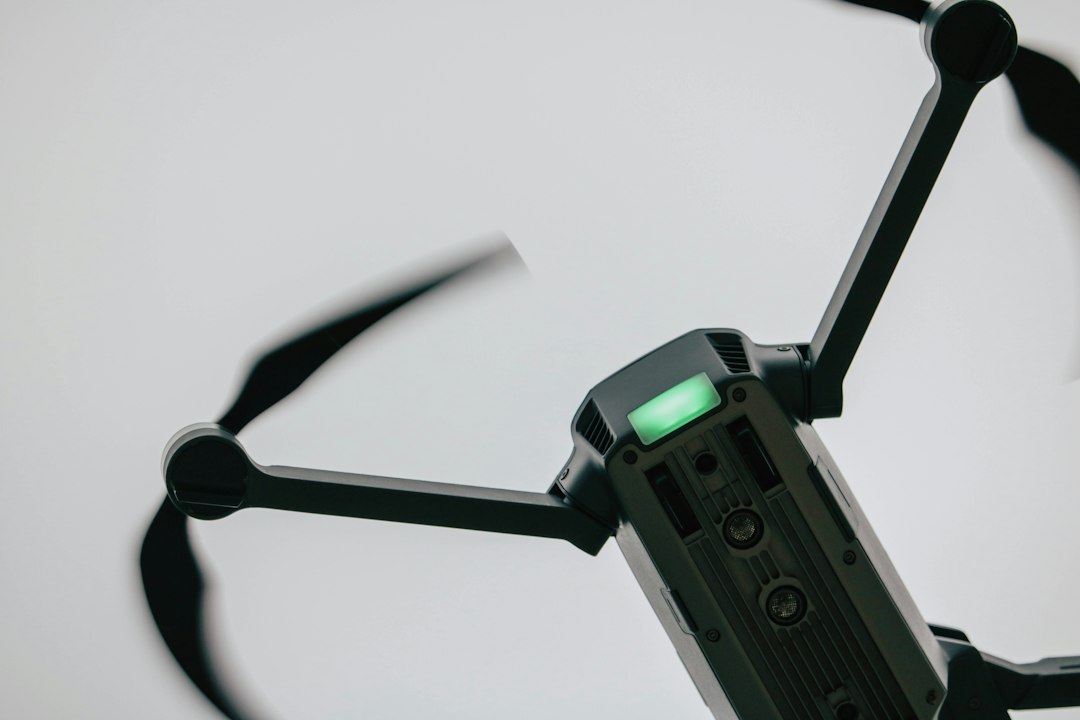
Drone as a service (DaaS) is a model where a provider supplies the aircraft, certified pilots, compliance, and data processing, and the customer pays for the output instead of owning the program. It is sold per job, as a recurring subscription, as an embedded crew, or as remote dock operations.
Every guide to drone as a service says roughly the same thing. No hardware to buy, no pilots to train, no regulations to learn, just data. That pitch is mostly true, and it is also the reason so many DaaS relationships go wrong in month four.
The reason is simple. Outsourcing the flying does not outsource the questions. Who owns the imagery? What happens when it is windy for nine days straight and the contract promised weekly captures? Whose name is on the incident report if the aircraft lands on a car? What happens to three years of inspection history when you switch vendors?
This guide covers the parts the brochures skip. It is written for both sides of the table: the enterprise buyer deciding whether to outsource a drone program, and the operator building a recurring-revenue service business. If you only need a one-off inspection priced, our guide to drone inspection services is the shorter read.
Table of contents
- What is drone as a service?
- The four drone as a service delivery models
- How drone as a service is priced
- DaaS vs building an in-house drone program
- Who holds the regulatory liability in a DaaS arrangement
- DaaS SLAs: what a provider can and cannot guarantee
- Data ownership, copyright, and the exit clause
- Running a drone as a service business on the provider side
- Where drone as a service is heading
- FAQ
What is drone as a service?
Drone as a service is an outsourcing model in which a specialist operator delivers aerial data or aerial work under contract, while the customer never owns aircraft, employs pilots, or holds aviation approvals. The customer buys an outcome: a thermal report, a monthly orthomosaic, a sprayed field, a corridor inspection.
The term borrows from software as a service, and the analogy holds in one important way. You pay for continuity rather than a one-time purchase. A single roof shoot is a gig. A 24-month agreement to inspect 400 cell sites on a rotating schedule, with defined deliverables, turnaround times, and a data handover format, is DaaS.
A typical DaaS bundle includes:
- Aircraft and sensors, including maintenance, spares, and replacement when something breaks
- Certified pilots and visual observers, with currency and training handled by the provider
- Flight planning and airspace authorization, including LAANC requests and any waivers
- Risk assessment and insurance, with the customer named on the certificate
- Processing and delivery, from raw imagery to orthomosaics, 3D models, or annotated defect reports
- Records, meaning flight logs, maintenance history, and the evidence chain behind each deliverable
What DaaS is not: equipment rental (you still fly it), a marketplace gig (no continuity, no SLA), or a software subscription (you still need pilots). Those blur together in vendor marketing. They should not blur together in a contract.
The four drone as a service delivery models
Drone as a service comes in four operating models, and the one you pick decides who carries the operational risk. Most providers offer two or three of these. Very few are good at all four.
| Model | How it works | Best fit | Who carries the most risk |
|---|---|---|---|
| On-demand / per job | Customer orders a mission, provider mobilizes a crew | Irregular needs, storm response, one-off surveys | Provider (per mission) |
| Program subscription | Recurring captures on a fixed schedule across a portfolio of sites | Construction progress, utility corridors, telecom portfolios | Shared, defined by SLA |
| Embedded crew | Provider pilots work on-site full time, sometimes on customer-owned aircraft | Mines, large plants, long infrastructure builds | Shared, messy if unclear |
| Remote dock operations | Docked aircraft on site, flown remotely by the provider's operations center | Security patrols, stockpile volumes, high-frequency site monitoring | Provider, heavy on compliance |
On-demand is the closest to traditional contracting. It is also where margins are thinnest for the provider, because every job carries its own mobilization cost.
Program subscriptions are what most people mean when they say DaaS. The provider's economics improve with route density and repeat sites, and the customer gets comparable data over time because the same flight plans run every cycle.
Embedded crews look simple and are the most legally tangled. If the pilot works for the provider but flies the customer's aircraft under the customer's safety procedures, three questions need written answers: whose maintenance records govern, whose insurance responds first, and who the remote pilot in command reports to. More on that below.
Remote dock operations are where much of the industry investment is heading, and they are the model where regulation matters most. Dock-based flights with nobody on site generally mean operating beyond visual line of sight, which in the US still requires an FAA waiver or exemption today.
How drone as a service is priced
Drone as a service is priced in one of four units: per mission, per site per period, per crew-day, or per outcome (such as per acre, per mile, or per megawatt). The pricing unit matters more than the headline number, because it decides who absorbs weather delays, re-flies, and scope creep.
There is no reliable public benchmark for DaaS prices. Most providers quote privately, and rates move with the asset type, sensor, deliverable, travel distance, and contract length, so treat any published range as a starting point and collect several written quotes against the same scope. What you can compare across quotes is the pricing unit and who carries the risk under it:
| Pricing unit | What it usually covers | Who absorbs the risk of a bad week |
|---|---|---|
| Per mission | One mobilization, capture, and agreed deliverable | Customer (a delayed job is simply rescheduled) |
| Per site per month | A fixed capture cadence at each site | Provider (must hit the cadence to earn the fee) |
| Per outcome | Per acre, per MW, or per line mile of accepted output | Provider (paid only on accepted deliverables) |
| Per crew-day / retainer | Pilot and aircraft availability, often a monthly floor | Customer (paying for availability, not output) |
Providers often price recurring programs below their equivalent one-off rate. When they do, it is not generosity. Lower sales cost and better route density make repeat work cheaper to deliver, and the provider is betting on the renewal. Ask how the recurring rate compares with their one-off rate for the same scope.
Two pricing traps catch buyers regularly.
First, processing is often priced separately. A quote that looks cheap per flight can double once orthomosaics, 3D models, and annotated reports are added. Ask for the price per accepted deliverable, not per flight.
Second, mobilization fees hide in on-demand contracts. A small inspection far from the provider's base can carry a travel charge larger than the flight fee. For portfolios spread over a region, ask whether the provider has pilots near your sites or will subcontract (and if so, to whom).
DaaS vs building an in-house drone program
Drone as a service beats an in-house program when your flight volume is irregular, your needs span several sensor types, or you cannot yet justify a full-time pilot. In-house wins once flying is frequent, predictable, and core to how you operate. Most mature enterprises land on a hybrid.
The break-even is usually driven by volume, not equipment cost. Most in-house costs (a pilot's salary, aircraft, insurance, software) are fixed, so the cost per flight falls as flight volume rises. An outsourced price per mission stays roughly flat. The drone inspection services guide linked above works through a hypothetical thermal program, built on assumed equipment, salary, and outsourced-rate figures rather than measured costs, to show how that crossover works. Run the same comparison with your own quotes and your realistic annual mission count; at low or unpredictable volumes, the fixed costs of an in-house team are hard to justify.
Here is how the decision usually breaks down:
| Factor | Favors DaaS | Favors in-house |
|---|---|---|
| Flight frequency | Monthly or less, or seasonal spikes | Weekly or daily, year-round |
| Sensor variety | Thermal one month, LiDAR the next | One sensor, one workflow |
| Speed to first data | Needed this quarter | Can invest 6 to 12 months building the program |
| Site access and security | Contractors already badge in routinely | Sites are sensitive or hard to access |
| Data sensitivity | Low to moderate | Critical infrastructure, CEII, or defense work |
| Internal champion | Nobody owns drones internally | A manager wants to own the program |
The hybrid pattern is common and often overlooked. Many utilities and construction firms keep a small in-house team for routine, high-frequency work and use DaaS providers for surge capacity, specialist sensors, and anything requiring a waiver they do not hold. That only works if both sides log flights, pilots, and deliverables in a consistent format. Otherwise the enterprise ends up with two incompatible histories of the same assets.
If you are on the in-house path, the discipline is covered in our drone fleet management guide.
Who holds the regulatory liability in a DaaS arrangement
In a drone as a service contract, the provider's remote pilot in command holds direct regulatory responsibility for each flight, but the customer does not become invisible. Contracts can move financial risk around. They cannot move FAA responsibility.
Under 14 CFR 107.19, a remote pilot in command must be designated for every flight and is "directly responsible for and is the final authority as to the operation." That person holds the certificate, makes the go or no-go call, and answers to the FAA. No clause in a service agreement changes that. Under 14 CFR 107.7, the pilot must also produce their certificate and required records on FAA request.
Three consequences follow for buyers.
A customer cannot pressure a flight. If your site manager tells the pilot to launch in winds the pilot judges unsafe, and the pilot refuses, the pilot is right and the contract should say so explicitly. Build a no-penalty weather and safety cancellation clause into the SLA rather than fighting about it later.
Civil liability can still reach you. If an aircraft injures someone on your site, a claim may name the site owner as well as the provider. This is why the insurance clause matters more than the price. Require a certificate of insurance naming you as additional insured, with per-occurrence and aggregate limits your risk or legal team sets, and higher limits for utility, municipal, or crowded-site work. Our guide to drone insurance cost shows what different limits cost the provider, and insurance and liability for commercial drone services covers indemnification language.
Waivers belong to the holder. A provider's BVLOS or over-people waiver is issued to them with specific conditions. Do not assume it covers a subcontractor, and it will not follow the work to you if you later bring it in-house. Ask to see the waiver and its conditions, not just a statement that one exists. Our BVLOS waiver guide explains what those conditions usually include.
The subcontracting edge case
Large DaaS providers often subcontract flights to local pilots through networks. That is legal and often sensible. But it means the pilot on your site may work for a company you have never vetted. Your contract should require the provider to disclose subcontractors, flow down insurance and records requirements, and remain liable for their work.
Europe works differently
In the EU, the regulated entity is the UAS operator, not just the pilot. A provider registers as an operator in the member state where it has its principal place of business, and specific-category work generally needs an operational authorisation issued to that operator (or an operational declaration for standard scenarios), under Implementing Regulation (EU) 2019/947. The customer cannot borrow the authorisation. See EASA's civil drones guidance and our EASA compliance guide.
What Part 108 would change
Part 108, the FAA's proposed BVLOS rule, would shift much of the compliance burden from individual pilots to operator-level permits and certificates, which is structurally friendlier to DaaS providers. It is not law yet. The NPRM was published in the Federal Register on August 7, 2025, the draft final rule has been under White House (OIRA) review since July 10, 2026, and as of late September 2026 no final rule has been published. Any DaaS provider selling routine BVLOS today is doing it under FAA waivers or exemptions. For the full picture see our Part 108 guide.
DaaS SLAs: what a provider can and cannot guarantee
A realistic drone as a service SLA guarantees capture windows, turnaround times, deliverable quality, and re-fly obligations. It should never guarantee a specific flight date, because weather and airspace sit outside the provider's control.
Weather and scheduling terms are where most DaaS disputes start. A contract that says "weekly site captures" sounds clear until a nine-day stretch of high wind and rain. Did the provider breach? Does the customer still pay?
Write the SLA around things both sides can measure:
- Capture window, not capture date. "One capture per site within each calendar week, with a 72-hour extension when weather minimums are exceeded" is enforceable. "Every Monday" is not.
- Documented weather exclusions. Define the minimums (wind, gusts, precipitation, visibility, temperature for battery performance) and require the provider to log the forecast and conditions for each scrubbed attempt. Our guide to weather considerations for professional drone operations covers realistic limits by aircraft class.
- Turnaround measured from capture. Raw data in 24 hours, processed deliverables in 3 to 5 business days, urgent defect notifications same day.
- Acceptance criteria for deliverables. Ground sample distance, overlap, coverage completeness, and positional accuracy if the data is survey grade. Without these, "poor quality" becomes an argument instead of a measurement. See quality assurance in drone inspections.
- Re-fly obligation. If a deliverable fails acceptance for reasons within the provider's control, the re-fly is free and has its own deadline.
- Records on request. Flight logs, pilot certificate, aircraft used, and maintenance status for any mission you ask about, within a set number of days.
- Airspace and access exclusions. TFRs, site closures, and the customer failing to provide access should pause the clock, not create a breach.
The providers worth hiring will welcome this level of detail. The ones who resist are usually the ones planning to run your weekly schedule off a spreadsheet and hope for good weather.
Data ownership, copyright, and the exit clause
In the US, the provider (or whoever employs the pilot) generally owns any copyright in the imagery by default unless the contract transfers it in writing. This surprises most enterprise buyers, and it is one of the most consequential clauses in a drone as a service agreement.
The US Copyright Office's Circular 30 explains why. Work by an independent contractor only counts as a "work made for hire" owned by the commissioning party if two things are true: the parties sign a written agreement saying so, and the work falls within one of nine specific statutory categories. Routine inspection imagery often does not fit neatly into those categories. The safer contractual route is an explicit written assignment of copyright, with the provider receiving a limited license back if it needs one. Have counsel draft it; the point is that silence favors the provider. This guide is general information, not legal advice, so have counsel review any DaaS contract before you sign.
Copyright is only one layer. A complete data clause answers:
- What counts as the data. Raw imagery, processed outputs, flight logs, telemetry, and any annotations or AI-generated findings. Many contracts cover only "deliverables," which leaves raw data with the provider.
- Where it is stored and for how long. Including retention after the contract ends and deletion certification on request.
- Secondary use. Can the provider use your imagery to train models, market their services, or build a dataset they resell? Say yes or no in writing.
- Sensitive data handling. Critical infrastructure, security-sensitive sites, and personal data captured incidentally (people, vehicles, neighbors' property) need defined handling rules.
- Export format. Open formats (GeoTIFF, LAS/LAZ, OBJ, CSV logs) rather than a proprietary viewer you lose access to on termination.
The exit clause nobody writes
Switching DaaS providers after three years of quarterly inspections is where weak contracts get expensive. Without a transition clause, the incoming provider has no flight plans to replicate, no baseline to compare defects against, and no history of which issues were already reported. Your trend data resets to zero.
A good exit clause requires the outgoing provider to hand over the full data archive in open formats, the flight plans and mission parameters for each site, and the defect history, within 30 to 60 days of termination at no extra charge. It is dull to negotiate. It is the clause you will care about most.
Hardware continuity belongs in the same conversation. Since December 22, 2025, the FCC's Covered List has blocked new equipment authorizations for foreign-produced drone models unless a specific national security exemption is granted, though previously authorized models can still be used and sold. A multi-year program built on a single manufacturer should include a plan for replacing aircraft that can no longer be bought. Our posts on the DJI ban and the broader US foreign drone ban cover the details, and DroneBundle's data ownership page explains how we handle export on our side.
Running a drone as a service business on the provider side
Running a drone as a service business is an operations problem more than a flying problem. The provider that wins renewals hits cadence across dozens of sites, proves it with records, and delivers without anyone chasing it for files.
Recurring contracts change what "busy" looks like. A one-off operator can juggle ten jobs a month in their head. A DaaS provider with 60 sites on weekly, monthly, and quarterly schedules is running a logistics operation where one sick pilot or a grounded aircraft ripples across the SLA. The failure points that come up most often:
- Capacity planning. Knowing, three weeks out, that the second week of the month has 40 captures scheduled and only three current pilots available. Our pilot scheduling and multi-drone operations guide cover how operators handle this.
- Pilot currency across a network. Part 107 recurrent training every 24 months, client-specific site inductions, and subcontractor certificates all expire on different dates. See managing pilot certifications.
- Aircraft readiness. An SLA is only as reliable as the aircraft behind it. Maintenance tracked by flight hours rather than memory keeps a fleet available. See drone maintenance.
- Proof of work. Every mission needs a flight log tied to the site and the deliverable, so SLA disputes are settled with data. Our drone logbook guide explains what a defensible record looks like.
- Delivery without email. Clients on a subscription expect a single place to see every capture, report, and invoice. A client portal replaces the shared-drive-link chaos, and white-label branding lets the portal carry your name.
MobiLysis, a Swiss mobility-data company, shows what multi-site service delivery looks like at project scale. Working on a traffic management initiative led by Forum Virium Helsinki and the City of Helsinki, they coordinated six pilots across seven locations, uploaded 200 flight logs, and managed 74 hours of flight time through one workspace, planning around poor weather during the project week. The MobiLysis case study walks through how.
On pricing your own service, our posts on building a drone service business and how to scale a drone business cover margins, contracts, and hiring.
Where drone as a service is heading
Drone as a service is moving from crews in trucks toward remote operations, with docked aircraft flown from centralized operations centers. The limiting factor is not technology; it is BVLOS regulation, and that depends on when Part 108 is finalized.
Three trends to watch:
- Docks as the delivery unit. Providers install and own docks at customer sites and sell the data stream monthly. That turns DaaS into something much closer to a utility bill, and it demands operations software that can file hundreds of automated flights a week under the right client and job.
- Consolidation. The drone software and services market is consolidating quickly, which makes vendor continuity and data export clauses more important, not less. Our drone software companies landscape tracks who has been acquired or shut down.
- Evidence-grade records. As drone data feeds insurance claims, regulatory filings, and asset management systems, buyers increasingly ask not just for the images but for the flight record that proves when, where, how, and by whom they were captured.
FAQ
What is drone as a service?
Drone as a service (DaaS) is a business model where a specialist provider supplies aircraft, certified pilots, airspace approvals, insurance, and data processing, and the customer pays per mission, per site, or per outcome instead of running its own drone program. It is most common in inspection, construction monitoring, surveying, agriculture, and security.
How much does drone as a service cost?
There is no reliable public price benchmark for drone as a service. Cost depends on the pricing unit (per mission, per site per month, per outcome, or per crew-day), the asset and sensor, the deliverables, travel, and contract length. Compare several written quotes against the same scope, and ask for the price per accepted deliverable, including processing.
Who owns the data in a drone as a service contract?
In the US, the provider generally owns the copyright in the imagery unless a signed written agreement assigns it to the customer or qualifies it as a work made for hire. Buyers should explicitly cover raw data, processed deliverables, flight logs, secondary use, retention, and handover on termination.
Is drone as a service better than an in-house drone program?
Drone as a service is usually better when flights are irregular, sensor needs vary, or you need data quickly. An in-house program becomes cheaper once you fly frequently and predictably enough to spread its fixed costs; the crossover depends on your own quotes, salaries, and equipment. Many enterprises use a hybrid model with in-house teams for routine work and DaaS providers for surge and specialist missions.
Run your drone as a service program like an operations business
Whichever side of the contract you are on, the problems are the same. Schedules that slip in bad weather, certificates that lapse quietly, deliverables scattered across email threads, and a flight history that nobody can produce when a client disputes the SLA.
DroneBundle is the operations layer for drone service providers and the enterprises that manage them. Recurring jobs across client sites, pilot and aircraft assignment with certification tracking, weather-aware flight planning, DJI log and dock flight sync filed under the right job, maintenance counters by flight hour, a branded client portal for delivery, and invoicing tied to completed work. Everything a DaaS SLA needs to be provable.
Start a free trial and set up your first recurring client program, or book a live demo and we will walk through a multi-site DaaS workflow with you. Compare Starter, Professional, Business, and Enterprise tiers on the pricing page.