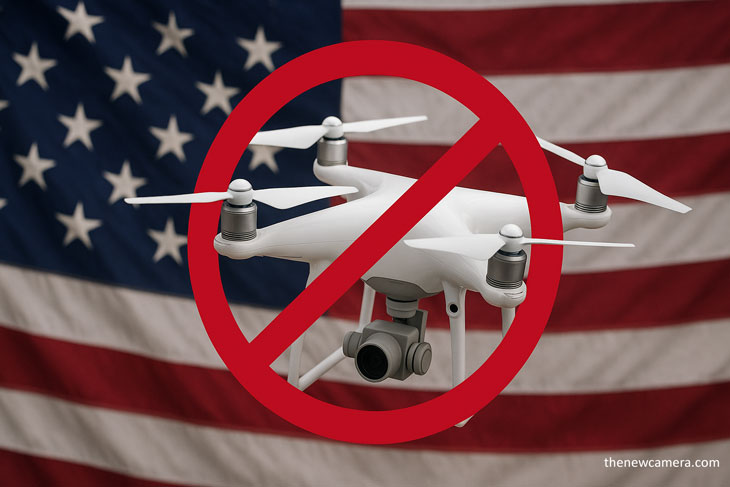

Blue UAS is the Department of War's vetted list of drones and components cleared for government use. It is not a flight rule, but for anyone flying under a federal contract it has become the fastest way to prove your aircraft is acceptable.
Blue UAS is a procurement program, not a certification you need to fly. The FAA does not ask whether your drone is on the Blue UAS Cleared List, and Part 107 says nothing about it. What changed is who now asks: federal agencies, prime contractors passing down FAR clauses, state agencies with their own foreign-drone laws, and enterprise clients writing supply chain terms into their master service agreements.
For a drone service company, the practical questions are narrower than most explainers suggest. Do I need Blue aircraft to win this work? Which of my aircraft count? And how do I prove it when a contracting officer asks?
This guide answers those, along with the basics of what the list is and who runs it now.
What is Blue UAS?
Blue UAS is a Department of War program that vets small drones and drone components for cybersecurity, supply chain provenance and compliance with the National Defense Authorization Act, then publishes the ones that pass. Government buyers can pick from the list without repeating that security review themselves.
The program started in 2020 under the Defense Innovation Unit (DIU), building on the Army's Short Range Reconnaissance program, with five small drones from Altavian, Parrot, Skydio, Teal Drones and Vantage Robotics. The concern was simple: drones from companies in countries of concern, China above all, could leak imagery, flight data or network access.
The list now has more than one layer:
- Blue UAS Cleared List. Complete drone systems that have passed the security and supply chain assessment and can be bought and operated by government users.
- Blue UAS Select List. A narrower tier for platforms that were competitively selected or sponsored by a military Service or combatant command and have received an Authority to Operate.
- Blue UAS Framework. Individual components and software (flight controllers, radios, cameras, gimbals, ground control software) that have been cleared so manufacturers can build new compliant aircraft from vetted parts.
When people say a drone "is Blue UAS," they almost always mean it is on the Cleared List. That is the version clients will ask about.
If you are still getting oriented on the wider policy shift away from Chinese-made aircraft, our DJI ban explainer and the US foreign drone ban guide cover the background this program sits inside.
Who runs the Blue UAS list in 2026
The Defense Contract Management Agency (DCMA) runs the Blue UAS list. DIU handed it over on December 3, 2025, ahead of a January 1 deadline set by the July 2025 "Unleashing U.S. Military Drone Dominance" memo.
The list now sits with DCMA's Unmanned Systems Experimental Command (US-X) in Palmdale, California, and the official list lives on DCMA's Blue List portal at bluelist.dcma.mil. DIU no longer maintains the list.
At the handoff, DIU reported 81 companies processed onto the Blue List and, as of November 19, 2025, more than 39 certified Blue UAS systems and 165 cleared components. Those numbers move. Entries are added as new assessments finish, and the list can change between the day you bid and the day you fly.
Two practical consequences. Many vendor pages, grant documents and bid templates still point to old DIU URLs, and a dealer's "Blue UAS approved" badge is a claim, not proof; the DCMA portal is the only authority. And because entries change, record the date you checked. If an aircraft later drops off, you can show it was listed when you bid.
Blue UAS vs NDAA compliant vs Green UAS
Blue UAS, NDAA compliant, Green UAS and American-made are four different claims, and only one of them is a Department of War clearance. Contracts and clients use these terms loosely, so it pays to know exactly which one a requirement means.
| Term | Who decides | What it means | Enough for federal work? |
|---|---|---|---|
| Blue UAS Cleared | DCMA (formerly DIU) | Specific system passed a DoW security and supply chain assessment | Yes, the strongest evidence you can offer |
| NDAA compliant | Usually the manufacturer, self-declared | Claims no components from prohibited Chinese sources under NDAA restrictions | Sometimes, if the contract only bars covered sources; you carry the proof burden |
| Green UAS | AUVSI, a recognized assessor | Cybersecurity and supply chain certification for commercial and defense buyers | Increasingly; Green UAS is a recognized route onto the Blue list |
| Made in USA / Buy American | Manufacturer, against federal content rules | Manufactured or assembled domestically, or meets domestic content thresholds | Not by itself; origin is not a security review |
| FCC-exempt | FCC | Can still receive new FCC equipment authorizations despite the Covered List | Unrelated to who can buy or operate it |
The trap is "NDAA compliant." It sounds official, but there is no NDAA compliance certificate. A vendor that says its drone is NDAA compliant is telling you it believes no prohibited components are inside. If a contracting officer later disagrees, you are the one holding the aircraft.
AUVSI's Green UAS program is worth knowing about separately. Since July 16, 2025, AUVSI has been a recognized Blue UAS assessor, and Green UAS certification is accepted as a pathway onto the Blue Cleared List.
Who actually needs Blue UAS drones
Only Department of War users are steered to Blue UAS by default; everyone else has a narrower obligation that Blue aircraft happen to satisfy cleanly. The rule that actually binds most commercial operators is the American Security Drone Act (ASDA), not the Blue list itself.
ASDA, passed as part of the FY2024 NDAA and signed on December 22, 2023, bars federal agencies from buying drones made or assembled by "covered foreign entities." From December 22, 2025, it also bars agencies from operating them and bars the use of federal funds, including money paid out through contracts and grants, to buy or operate them. The covered entities are listed by the Federal Acquisition Security Council in SAM.gov, and that list includes DJI and Autel Robotics.
Notice what ASDA does not say. It does not require Blue UAS. It prohibits a list of manufacturers. A drone from a non-covered maker that is not on the Blue list can still be legal under ASDA. Blue just removes the argument.
Here is how that plays out by client type:
| Your client | What applies | Do you need Blue? |
|---|---|---|
| Department of War units and installations | DoW policy, ASDA, FAR/DFARS clauses | In practice, yes |
| Federal civilian agencies (Interior, USDA, DOT, etc.) | ASDA via FAR 52.240-1 | Not required, but the easiest proof |
| Prime contractors on federal jobs | Flowed-down FAR 52.240-1 | Not required, but expect to be asked |
| Federally funded research and grants | ASDA restrictions on federal funds, set in award terms | Check the award terms |
| State and local agencies | State laws, which vary | Depends on the state statute |
| Private commercial clients | Contract terms only | Only if the MSA says so |
State law is where operators get surprised. Florida's first approved drone manufacturer list for government agencies, published in 2022, named the same five companies as the original Blue UAS selection, so "Blue" and "allowed" are easy to conflate there. Other states write their rules around country of origin instead, so read the statute rather than assuming Blue is required. Police departments and fire services elsewhere are making similar choices, which is part of why public safety software like DroneSense highlights Blue-cleared aircraft support. Our guide to drones for first responders covers how agencies are handling those state rules.
For a purely private client, such as a homebuilder or a solar developer, nothing requires Blue UAS. Some large enterprises, especially utilities and critical infrastructure owners, are writing supply chain clauses into contracts anyway. Power line inspection is where this comes up most; the utilities and energy page covers that work.
How FAR 52.240-1 reaches subcontractors
FAR 52.240-1 is the contract clause that carries ASDA into federal contracts, and it must be flowed down to subcontractors. If a prime contractor hires you to fly part of a federal job, the clause is supposed to be in your subcontract too.
The clause text prohibits a contractor from delivering a prohibited drone, and from December 22, 2025, operating one in contract performance or using federal funds to buy or operate one. It also requires the contractor to search SAM for the covered entity list before submitting a proposal or using any drone on the contract.
What this means on a real job:
- The engineering firm scenario. A civil engineering firm wins a federally funded bridge inspection and subcontracts the drone capture to you. The firm's contract carries 52.240-1, so your subcontract should too. Flying a DJI aircraft on that job puts the prime in breach, whatever the quality of your data.
- The "unmanned aircraft system" definition is wide. The clause uses the statutory definition, which covers the aircraft plus its control elements and communication links. A compliant airframe flown from a prohibited controller or ground station is a question you do not want to answer in an audit.
- Exceptions must be in writing. An exception or waiver applies only where the agency has made that determination and the contract indicates it. A verbal "it's fine" from a project manager does not count.
- You need to show the search. Keep a dated record of the SAM check you did before proposing, alongside your aircraft list.
Read every subcontract for 52.240-1 before you assign aircraft. It is often buried in a long list of incorporated clauses.
A listing covers a configuration, not a brand
Treat a Blue UAS listing as covering the system that was assessed, not the manufacturer or the whole product family. The list names specific platforms and components, so change the payload, add a third-party radio or run different firmware, and the aircraft in your case may no longer match what was assessed. Ask the manufacturer in writing which configurations its listing covers.
This is the gap between "we own a Blue drone" and "the drone we flew on your contract was Blue." Contracting officers and auditors care about the second statement.
The risk points are mundane:
- Payload swaps. A cleared airframe with a non-cleared third-party camera or LiDAR unit is a different system.
- Firmware updates. A listing reflects the software assessed. Check the manufacturer's guidance on which versions remain covered before you update a contract aircraft.
- Radios and links. Aftermarket long-range kits, LTE modules or mesh radios change the communication link, which is part of the system definition.
- Ground software. Third-party flight apps sit on the control side. Ask whether the app you fly with is part of the cleared configuration.
- Repairs. A replaced flight controller or gimbal from an unofficial parts source can quietly break the chain.
So the compliance record has to live at the aircraft level, not the brand level. For each contract-eligible aircraft, keep:
- The listing entry and the date you checked it
- Serial number, payloads fitted, controller and ground station used
- Firmware version, with the date of each update
- Repair and part replacement history, with part sources
- Which jobs it flew, backed by flight logs
Most of this is ordinary drone maintenance log discipline with one extra field for compliance status, and it slots into a broader drone compliance program. If you already run a proper equipment register, you are most of the way there.
Running a mixed fleet when some contracts require Blue
Most commercial operators will run mixed fleets for years, flying Blue or ASDA-compliant aircraft on federal work and DJI aircraft on private jobs. That is legal. The risk is assigning the wrong aircraft to the wrong job and having no record that shows otherwise.
Blue aircraft generally cost more than comparable DJI enterprise models; our 2026 drone buyer's guide compares current options. So few operators replace a whole fleet at once. They buy two or three compliant aircraft for the contracts that need them and keep the rest flying private work.
That works if four habits hold:
- Tag compliance status on the aircraft record. Every drone in your register should carry a field such as "Blue UAS Cleared," "ASDA-compliant, not Blue," or "Not eligible for federal work." In DroneBundle, equipment records take custom fields per item, so this sits next to the serial number and maintenance history.
- Gate assignment, not just purchasing. The error is rarely buying the wrong drone. It is a pilot grabbing the nearest case on a busy morning. Mark federal jobs clearly at the job level so the aircraft choice is deliberate.
- Match flights to jobs. If a client asks which aircraft flew their site, the answer should come from flight logs, not memory. DroneBundle reads flight logs from DJI and from Blue aircraft such as the Freefly Astro and Teal 2 (PX4), Inspired Flight (ArduPilot) and Parrot ANAFI USA, so both halves of a mixed fleet land in one record. It matches synced flights to jobs when it can; flights it cannot match wait for someone to link them, so close those out before you invoice. For a closer look at what logs prove, see our drone logbook guide.
- Keep the evidence where the contract lives. Store the dated list check, SAM search and any vendor compliance letters with the job, using document management, so the file is complete when the prime asks.
Insurance deserves one note. Your hull and liability cover generally does not depend on Blue status, but a contract breach claim from a prime is not a flight accident, and a drone insurance policy may not respond to it. Ask your broker whether contractual liability is covered before taking federal subcontract work.
Blue UAS also says nothing about where your data ends up afterward. Some federal and critical infrastructure clients ask about data residency and ownership as a separate question. Our post on drone data ownership covers what to check in your software stack.
Blue UAS and the FCC Covered List
Drones and components on the Blue UAS Cleared List are exempt from the FCC's December 2025 Covered List restriction on new equipment authorizations until January 1, 2028. The FCC extended that exemption, previously set to expire on January 1, 2027, in a July 21, 2026 public notice.
This matters because the Covered List otherwise blocks new FCC authorizations for foreign-produced drones and critical components. A Blue listing lets a cleared system with foreign-made parts or assembly keep receiving authorizations for new models. Products that qualify as domestic end products under the Buy American standard have the same exemption to 2028. Systems with Department of War Conditional Approval, tied to onshoring commitments, no longer have an expiry date.
Two points that get confused:
- The FCC exemption is not a purchasing rule. It controls whether a product can be authorized and marketed, not who can buy or fly it. Aircraft you already own keep flying either way.
- The FCC's pending "military-grade" proposal (PS Docket 26-189) would restrict imports and sales of foreign-made drones in categories including thermal imaging, LiDAR-equipped drones, docking stations and aircraft of 55 pounds or more. Products qualifying under Blue UAS, Buy American or Conditional Approval would be exempt. Our DJI Matrice 4T guide covers what that proposal means for thermal fleets, and drone regulations news tracks where it stands.
So Blue status now does double duty. It answers the federal buyer's security question, and it shields the manufacturer from the FCC restrictions that are squeezing the rest of the market.
How a drone gets on the Blue UAS list
Manufacturers get on the Blue UAS list by having their system assessed and cleared. Operators do not apply; the listing belongs to the manufacturer's product.
DIU set out three routes onto the Cleared List in July 2025, before the handoff:
- Green UAS certification. Platforms that complete AUVSI's Green UAS certification are added to the Blue UAS Cleared List.
- Recognized assessor. An approved third-party assessor evaluates the platform or component. MTSI, Dark Wolf Solutions and AUVSI formed the initial cohort, taking submissions from September 2025.
- Blue UAS Checklist. Empowered agencies, general and flag officers and Senior Executive Service members can certify platforms, components and software against a Department checklist.
The Select tier works differently. It holds platforms that were competitively selected, or sponsored by a military Service or combatant command, and that have received an Authority to Operate.
For an operator, the takeaway is about planning. Waiting for a particular aircraft to "get Blue" before you bid means betting on someone else's assessment calendar. Buy what is on the list today for the contracts you can see today.
Frequently asked questions
Is DJI on the Blue UAS list?
No. DJI has never been on the Blue UAS Cleared List, and DJI is among the entities federal contractors cannot use under the American Security Drone Act. Private operators can still legally fly DJI aircraft they own under Part 107; the restrictions apply to federal agencies, federal contracts and funds, and state agencies with their own laws.
Do I need a Blue UAS drone to fly commercially?
No. The FAA does not require Blue UAS for any commercial flight. You need a Part 107 certificate, a registered drone that meets Remote ID rules, and whatever your client's contract requires. Blue only becomes a requirement when a contract, grant or state law says so.
What is the difference between Blue UAS Cleared and Blue UAS Select?
Blue UAS Cleared is the main list of systems that passed the security and supply chain assessment and are approved for government purchase and use. Blue UAS Select is a narrower tier for platforms that were competitively selected or sponsored by a military Service or combatant command and have received an Authority to Operate.
Can DJI and Blue UAS flights live in one logbook?
Yes, if your software reads both. DroneBundle reads DJI flight records alongside PX4 logs (for example the Freefly Astro and Teal 2), ArduPilot logs (for example the Inspired Flight IF800 and IF1200), Parrot ANAFI logs and Autel EVO logs. A mixed fleet keeps one flight record instead of one app per brand, which makes it simple to show which aircraft flew a federal job.
Is NDAA compliant the same as Blue UAS?
No. "NDAA compliant" is usually a manufacturer's own claim that its drone contains no prohibited components. Blue UAS is a government assessment of a specific system configuration. A Blue drone should be NDAA compliant, but an NDAA-compliant drone is not automatically Blue.
Keep your federal-eligible fleet provable
Winning federal or public sector drone work now depends on proving which aircraft flew, in what configuration, and that it was eligible on the day. That proof is a records problem. DroneBundle keeps every aircraft, battery and controller in one register with custom compliance fields, ties maintenance and flight logs from DJI, PX4, ArduPilot, Parrot and Autel aircraft to each item, and stores the contract evidence with the job. The same records help agencies and contractors in public safety and emergency response stay accountable.
Start your free trial or book a live demo to see how a mixed Blue and non-Blue fleet looks in one dashboard. Plans start at $149 a month; see the pricing page for what each tier includes.