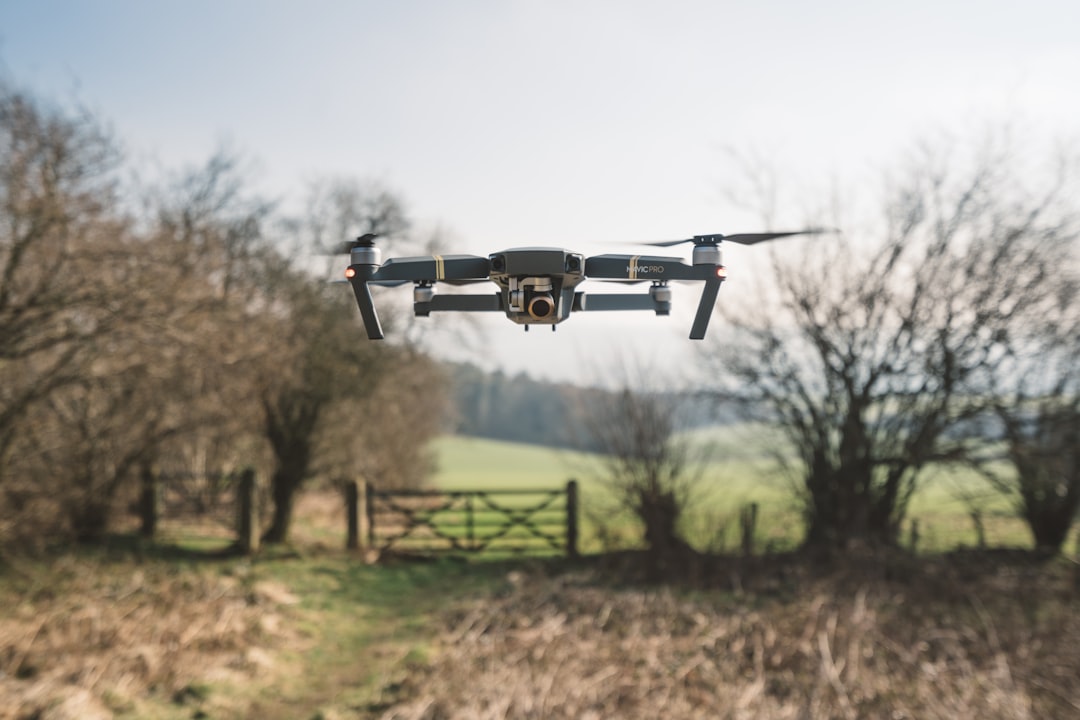
UAS vs UAV comes down to scope: a UAV is the aircraft alone, while a UAS is the entire unmanned aircraft system, meaning the aircraft plus the ground control station, the data link, and the support equipment. Regulators, insurers, and clients care about the system, not just the flying part.
If you run drones for money, you have seen both acronyms used as if they were interchangeable. They are not. UAV vs UAS is the difference between the machine in the sky and everything that makes it fly legally and safely. That gap sounds like pedantry until it shows up on a registration form, an insurance quote, or a client audit.
Here is the short version. A UAV, or unmanned aerial vehicle, is the aircraft. A UAS, or unmanned aircraft system, is the aircraft plus the controller, the communication link, the software, and the people and procedures around it. The FAA, EASA, and ICAO all regulate at the system level, which is why official documents almost never say "drone" and rarely say "UAV." They say UAS or RPAS.
Most articles on this topic stop at that definition and a market-size chart. We keep going. Below you get the clean comparison, the other acronyms that muddy the water, the US-versus-international terminology split that trips up cross-border operators, and the part that actually costs money: how the "system" framing changes your compliance, your liability, and how you run a fleet.
UAS vs UAV: the core difference
A UAV is the unmanned aircraft by itself, and a UAS is that aircraft plus everything required to operate it. That is the whole distinction, and every other nuance flows from it. The UAV is a component. The UAS is the system that contains the component.
Think about it the way an aviation regulator does. The FAA defines a UAS as "an unmanned aircraft and the equipment necessary for the safe and efficient operation of that aircraft." Read that again. The definition names the aircraft first, then explicitly folds in the equipment around it. The aircraft on its own is the UAV. The aircraft in its operating context is the UAS.
Here is the cleanest way to hold the two terms side by side:
| Aspect | UAV (unmanned aerial vehicle) | UAS (unmanned aircraft system) |
|---|---|---|
| What it names | The aircraft only | The aircraft plus all supporting equipment and personnel |
| Scope | Airframe, motors, sensors, payload | UAV, ground control station, data link, software, remote pilot |
| Who uses it | Manufacturers, hobbyists, casual conversation | FAA, EASA, ICAO, insurers, legal and contract language |
| Why it exists | Describes the flying machine | Describes what regulators actually govern |
| Register or certify | You register the aircraft | Your authorization covers the whole operation |
The practical takeaway: when you are talking hardware specs, UAV is fine. When you are talking about anything legal, insured, or contractual, the correct and safer term is UAS, because that is the unit those parties regulate and price.
Where "drone" fits, and the RPA and RPAS acronyms
"Drone" is the everyday word that covers both UAV and UAS, while RPA and RPAS are the international equivalents that add one more condition: a human pilot. All of these describe the same broad technology at different levels of precision.
- Drone. The colloquial catch-all. Technically imprecise but universally understood. Nobody at a job site says "deploy the UAS." They say "get the drone up." That is fine for conversation and even marketing, but it is not the word that appears on your registration certificate.
- UAV (unmanned aerial vehicle). The aircraft. A subset of the UAS. Note that a UAV can be fully autonomous, flying a pre-programmed route with no live human input.
- UAS (unmanned aircraft system). The complete system. The preferred term in United States regulation.
- RPA (remotely piloted aircraft). The aircraft, but with a specific condition: a human is actively flying it remotely. An autonomous drone is a UAV but not an RPA.
- RPAS (remotely piloted aircraft system). The complete system for a remotely piloted aircraft. This is the term ICAO and EASA prefer internationally.
The distinction between UAV and RPA is subtle but real. RPA insists on a pilot in the loop. UAV does not. So every RPA is a UAV, but a fully autonomous UAV is not an RPA. In commercial practice most operations keep a remote pilot in command anyway, which is why RPA and RPAS map so neatly onto UAV and UAS in day-to-day use.
One more term worth knowing because it shows up constantly in FAA rules: sUAS, or small unmanned aircraft system. In the US that means a UAS weighing less than 55 pounds, which is the category almost every commercial operator flies under and the one Part 107 governs. If you want the full breakdown of what a UAS contains and how the acronym maps to your license, our guide on the UAS drone goes deeper on the system itself.
Why regulators chose the word "system"
Regulators use "system" because the aircraft is the least of their safety concerns. A quadcopter sitting on a bench harms no one. The risk appears when that aircraft shares airspace with crewed traffic, and managing that risk requires the whole system to work: reliable command and control, a competent remote pilot, functioning Remote ID broadcast, and procedures for when something fails.
That is why the definition is built around the operation rather than the object. When the FAA writes a rule, it is rarely regulating a motor or a propeller. It is regulating who may fly, under what conditions, with what equipment, and with what oversight. All of that lives at the system level.
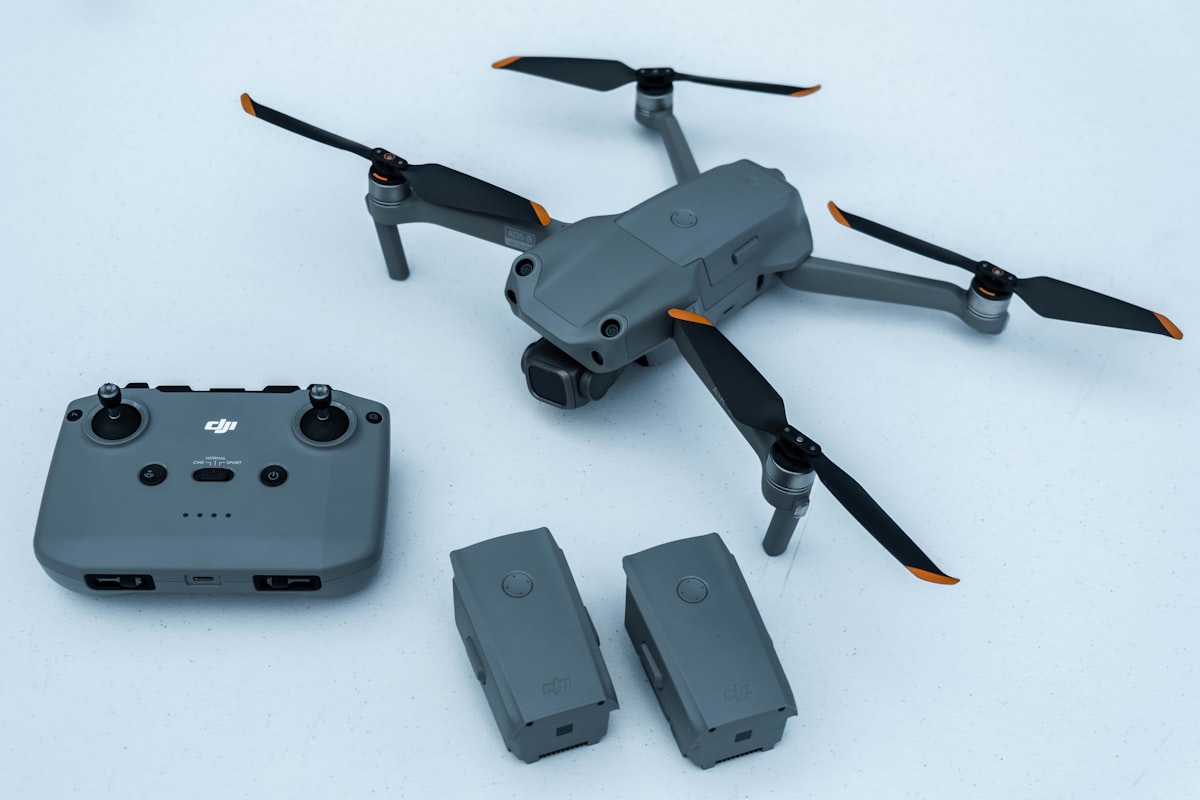
A UAS typically breaks into four parts:
- The unmanned aircraft (the UAV). Airframe, propulsion, flight controller, and payload such as a camera or LiDAR sensor.
- The ground control station. The controller, tablet, or laptop the pilot uses to command the aircraft and monitor telemetry.
- The command and control link. The radio or network connection between pilot and aircraft. Lose this link and the aircraft must fail safely, which is itself a regulated behavior.
- Support elements. Software, the remote pilot, visual observers, maintenance, and the documented procedures that hold it all together.
When you think of your drone as a UAV, you think about the hardware. When you think of it as a UAS, you think about the pilot certificate, the pre-flight checklist, the airspace authorization, and the logbook. The second mindset is the one that keeps a commercial operation out of trouble. If you are early in your journey, our guide on how to become a drone pilot walks through the certification side of that system.
UAS vs RPAS: the US versus international split
The United States says UAS, while ICAO and EASA say RPAS, and if you operate across borders that difference is not cosmetic. It signals which rulebook applies. Most competitor articles skip this entirely, which is a problem for any operator working internationally.
In US regulation, the FAA standardized on UAS. Your Part 107 certificate, your FAA registration, and your Remote ID obligations all use that language. If you fly commercially in America, UAS is your term.
Internationally, the International Civil Aviation Organization uses RPAS, and so does the European Union Aviation Safety Agency. When you read EASA's civil drone framework, you will see RPAS and the Open, Specific, and Certified operating categories rather than the Part 107 model. The emphasis on "remotely piloted" reflects ICAO's focus on aircraft that a licensed human commands, as distinct from fully autonomous flight, which the international framework treats more cautiously.
Why this matters in practice:
- Documentation. A tender in Europe will ask about your RPAS and your Specific category authorization. A US client asks about your UAS and your Part 107 status. Using the wrong term in a proposal signals you do not know the local rulebook.
- Certification does not transfer automatically. A US Part 107 certificate is not an EASA authorization, and vice versa. The terminology difference is the surface of a deeper regulatory divide. Our European drone regulations guide covers what an EASA operation actually requires.
- Airspace integration. ICAO's RPAS work focuses on integrating remotely piloted aircraft into non-segregated airspace worldwide, which is the same problem the FAA is solving through BVLOS rulemaking and the forthcoming Part 108. Different names, converging goals.
If your work stays inside US borders, UAS is all you need. The moment a job crosses into EASA territory, learn to speak RPAS and Open/Specific/Certified fluently, because that is the language the paperwork is written in.
Why the UAV vs UAS distinction matters for your business
The UAV versus UAS distinction stops being trivia the moment money is involved, because insurers, regulators, and clients all price and audit the system rather than the aircraft. Here is where the difference actually shows up.
Registration. You register the aircraft, but your legal authority to fly rests on the whole system: a current pilot certificate, working Remote ID, and compliant operating procedures. A registered UAV flown by an uncertificated pilot is still an illegal operation. Note too that commercial drones must register regardless of weight; the 250-gram exemption applies only to recreational flying, and a recreationally registered drone cannot be used for paid work. Our FAA drone registration guide covers the details.
Insurance. Insurers do not quote a UAV. They quote a UAS operation. Hull coverage protects the aircraft, but liability coverage assesses the pilot, the procedures, the flight environment, and your safety record. Two operators flying the identical drone can get very different premiums because the underwriter is pricing the system and the operation, not the airframe. Our breakdown of commercial drone insurance and liability explains what carriers actually look at.
Contracts and audits. When an enterprise client audits your operation, they ask for documentation across the entire system: pilot certifications, maintenance logs, risk assessments, incident reports, and airspace authorizations. A folder full of drone spec sheets does not answer any of those questions. This is exactly where treating your work as a UAS rather than a UAV pays off, and why systematic drone compliance is a competitive advantage rather than a chore.
Liability after an incident. If something goes wrong, investigators and lawyers reconstruct the system. Was the pilot current? Was the aircraft airworthy? Was the command link reliable? Were procedures followed? "The drone malfunctioned" is not a defense when the entire system is on trial. Solid flight logging and records are what turn a bad day into a defensible one.
The pattern across all four: nobody with authority over your business cares about the UAV in isolation. They care about the UAS. Operators who internalize that early build cleaner, more auditable, more insurable operations.
How the system framing changes fleet operations
Once you manage more than a handful of aircraft, the UAS mindset becomes the only mindset that scales, because coordinating systems is a fundamentally different problem than tracking hardware. A single pilot with one drone can keep the whole system in their head. A company running twenty aircraft across a dozen pilots cannot.
At fleet scale, the "system" includes moving parts that live nowhere near the airframe:
- Pilot currency and certifications that expire on different dates across your team, which is why tracking pilot flight hours and credentials matters.
- Airspace authorizations that vary by job site and expire, handled through LAANC and flight approvals.
- Maintenance and airworthiness records for every aircraft, because a UAV that is overdue for service grounds the whole system it belongs to.
- Risk assessments and incident logs that clients and regulators expect to see on demand.
- Weather and airspace data feeding each flight decision, not just each aircraft.
Managing that in spreadsheets works until it does not, and the failure is usually silent: an expired certificate that nobody flagged, a maintenance interval missed, an authorization that lapsed the week of a big job. This is the problem DroneBundle was built to solve. It treats every operation as a system, tracking aircraft, pilots, compliance, and airspace in one place so the whole UAS stays flight-ready rather than just the drone.
For teams drowning in disconnected tools, our comparison of drone operations software versus spreadsheets shows what changes when the system, not the aircraft, becomes the unit you manage.
The terminology lesson and the operational lesson turn out to be the same lesson. A UAV is a thing you own. A UAS is an operation you run. The businesses that win treat it as the latter.
Frequently asked questions
Is a UAV the same as a drone?
Roughly, yes, but with a nuance. "Drone" is a casual catch-all for any unmanned aircraft, while UAV is the more technical term for the aircraft itself. Both refer to the flying machine. The difference is that "UAV" excludes the ground control station and support equipment, whereas "drone" is loose enough to mean either the aircraft or the whole system depending on context. For anything legal or contractual, use UAS instead of either.
Does the FAA use UAV or UAS?
The FAA uses UAS. United States regulation is standardized on "unmanned aircraft system," and you will see UAS in Part 107, registration rules, and Remote ID requirements. The FAA rarely uses "UAV" and almost never uses "drone" in formal rulemaking, because it regulates the entire operating system rather than the aircraft alone.
What is the difference between UAS and RPAS?
UAS and RPAS describe the same broad concept, a complete unmanned aircraft system, but from different regulatory traditions. The FAA and US industry use UAS. ICAO and EASA use RPAS, or remotely piloted aircraft system, which specifically emphasizes a human pilot commanding the aircraft remotely. If you operate only in the US, use UAS. If you work internationally or in Europe, learn RPAS and the EASA operating categories.
Do I register a UAV or a UAS?
You physically register the aircraft, which is the UAV, but your legal authorization to operate covers the whole UAS. Registration alone does not make you compliant. You also need a certified remote pilot, working Remote ID, and lawful operating procedures. A registered aircraft flown outside those rules is still an unauthorized operation, which is why professionals think in terms of the system, not just the airframe.
Run your whole system, not just the aircraft
The UAS vs UAV distinction is easy to dismiss as vocabulary until an insurer, a regulator, or a client asks you to prove your entire operation is sound. Then it becomes the difference between a folder of spec sheets and a defensible, auditable business.
DroneBundle helps you manage the full system. Track aircraft, pilots, certifications, maintenance, airspace, and compliance in one platform built for commercial drone operations, so the whole UAS stays flight-ready and audit-ready.
Start a free trial or book a live demo and see what it looks like to run your operation as a system instead of a pile of drones.