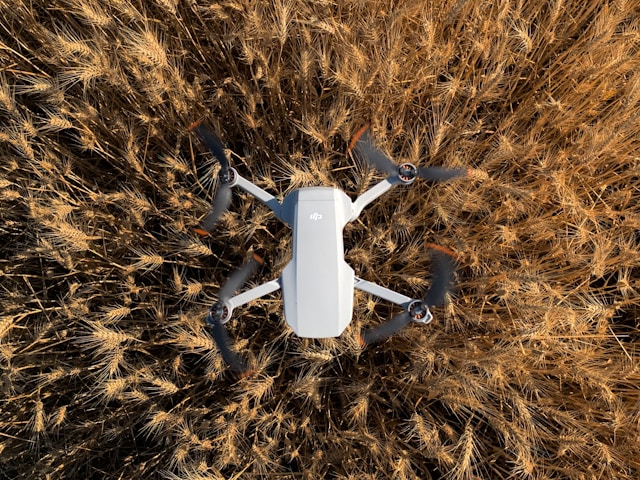
What is an FPV Drone?
An FPV (First-Person View) drone is an unmanned aircraft that streams live video from an onboard camera directly to the pilot's goggles or monitor, creating an immersive flying experience as if sitting in the cockpit. FPV drones are used for racing, freestyle aerobatics, cinematic filming, and commercial inspections where precise maneuvering through tight spaces is required.
FPV drones have moved far beyond the hobby racing circuits that first made them popular. Professional cinematographers used FPV drones to capture broadcast-quality footage at the 2026 Winter Olympics, real estate videographers fly cinewhoops through interiors for immersive property tours, and inspection teams navigate confined spaces that conventional drones cannot reach.
What makes an FPV drone different from a standard drone like a DJI Mavic? The fundamental difference is how you fly it. Instead of watching your drone from the ground and steering it like a remote-control car, an FPV drone puts you inside the aircraft through a real-time video feed. This first-person perspective enables the aggressive maneuvers, tight proximity flying, and cinematic movements that define modern drone videography.
Whether you are a complete beginner curious about the hobby or a commercial pilot evaluating FPV for inspection work, this guide covers how FPV drones work, the different types available, what it costs to get started, and the regulations you need to follow.
How FPV drones work
An FPV drone operates on three separate data flows that work simultaneously during flight: control signals, telemetry data, and live video. Understanding these systems explains why FPV flying feels fundamentally different from flying a standard drone.
The control link
Your radio transmitter sends stick inputs to a receiver on the drone. These commands control throttle, pitch, roll, and yaw. Unlike GPS-stabilized drones that hold position when you release the sticks, most FPV drones fly in "acro" (acrobatic) mode where the drone only holds its current angle of rotation. Release the sticks and the drone maintains whatever orientation it had, which is what enables flips, rolls, and freestyle tricks.
The video link
A small camera on the front of the drone captures a wide-angle view and sends it to a video transmitter (VTX). The VTX broadcasts that signal on either 5.8GHz analog or a digital protocol to your goggles. Latency is critical here. Even a few extra milliseconds of delay can make the difference between threading a gap and crashing. Modern digital systems from DJI and Walksnail deliver HD video with latency under 30 milliseconds.
The telemetry link
Flight data like battery voltage, GPS position, speed, and signal strength is transmitted back to an on-screen display (OSD) overlaid on your video feed. This lets you monitor critical information without looking away from the flight view. Telemetry data is also recorded for flight log analysis and post-flight review.
Types of FPV drones
FPV drones are not a single category. They span from palm-sized indoor toys to professional cinema platforms capable of carrying RED cameras. Here are the main types.
Tiny Whoops
Tiny Whoops are palm-sized drones (65-85mm motor-to-motor) with enclosed propeller guards called ducts. They weigh under 30 grams and are designed for indoor flying. Their light weight and propeller protection make them safe to fly around furniture, pets, and people. Tiny Whoops are the recommended entry point for beginners learning stick control before moving to larger aircraft.
Racing drones
Purpose-built for speed, racing drones typically use 5-inch propellers on lightweight carbon fiber frames. They reach speeds of 80 to over 100 mph and fly exclusively in acro mode. Racing drones prioritize power-to-weight ratio over camera quality or flight time. Professional drone racing leagues use standardized 5-inch quads with specific motor and battery restrictions.
Freestyle drones
Freestyle drones share similar hardware with racing drones (5-inch props, carbon frames) but are built more durably to survive crashes from aggressive aerial maneuvers. Pilots use these for flowing, expressive flight patterns: power loops, inverted yaw spins, diving gaps, and proximity flying along structures. Many freestyle pilots mount GoPro or similar action cameras to capture their flights.
Cinewhoops
Cinewhoops are the bridge between the FPV hobby and professional drone photography. They use ducted propellers (similar to Tiny Whoops but larger, typically 3-inch) and carry action cameras like GoPros. The ducts reduce prop noise and make the drone safe to fly near people and indoor environments. Real estate videography, event coverage, and commercial interiors work are prime cinewhoop applications.
Cinelifters
When a GoPro is not enough, cinelifters step in. These are large FPV platforms with six to eight motors capable of carrying professional cinema cameras like the RED Komodo, Blackmagic Pocket 6K, or Sony FX6. Cinelifters combine the precise maneuvering of FPV flying with cinema-grade image quality. They are used in film productions, commercials, and high-end drone videography projects.
Long-range FPV
Long-range FPV drones use larger frames (7-inch propellers or bigger), efficient motors, and GPS navigation for extended flights covering several kilometers. These platforms sacrifice the agility of a 5-inch quad for significantly longer flight time and range. They are used for scenic exploration, aerial surveying, and mapping applications where covering distance matters more than acrobatic capability.
Essential FPV drone components
Unlike consumer drones that come ready to fly, many FPV drones require understanding their individual components. Even if you buy a pre-built drone, knowing what each part does helps with maintenance, upgrades, and troubleshooting.
FPV goggles
Goggles are your window into the drone's perspective. They block outside light and display the live video feed on small screens inches from your eyes. Entry-level box-style goggles cost $50-$100. Compact "slim" goggles from DJI, Walksnail, or Fat Shark range from $200 to $650, offering higher resolution, better comfort, and digital HD reception. Your goggle choice often locks you into a specific video ecosystem.
Radio transmitter
The radio controller sends your stick inputs to the drone. FPV transmitters use protocols like ExpressLRS, Crossfire, or DJI's proprietary system. A quality transmitter costs $150-$350 and is typically the longest-lasting investment in your FPV setup since you can use the same transmitter across dozens of different drones. Popular brands include RadioMaster, TBS, and the DJI FPV Remote Controller.
Flight controller
The flight controller is the drone's brain. It reads data from gyroscopes, accelerometers, and the pilot's commands, then outputs precise motor speeds through the ESCs. Most FPV flight controllers run Betaflight firmware, an open-source software that allows extensive tuning of flight characteristics. This is analogous to how drone management software optimizes commercial operations at the fleet level.
Motors and ESCs
Brushless motors spin the propellers, and Electronic Speed Controllers (ESCs) regulate power delivery to each motor based on flight controller commands. Motor size is described by a four-digit number (e.g., 2306) indicating stator diameter and height. Higher KV ratings produce more RPM but less torque, and vice versa. The motor and prop combination determines a drone's speed, efficiency, and flight time.
Frame
Carbon fiber frames provide the structural foundation. Frame size is measured by motor-to-motor distance (e.g., 5-inch frames are roughly 210-230mm). The frame must balance durability against weight, as every gram affects performance. Leading frame manufacturers include iFlight, GEPRC, Armattan, and TBS.
Camera and video transmitter
The FPV camera captures the pilot's view, while the VTX broadcasts it to the goggles. These are separate from any HD action camera mounted for recording purposes. The FPV camera prioritizes low latency and good low-light performance over resolution, while the recording camera captures the high-quality footage for editing.
Analog vs digital video systems
One of the biggest decisions in FPV is choosing between analog and digital video transmission. This choice affects image quality, latency, range, cost, and equipment compatibility.
Analog FPV
Analog was the original FPV video standard and remains popular for its simplicity and low cost. Analog transmits a continuous signal on the 5.8GHz band with typical range of 1-2 kilometers. The image quality is comparable to standard definition television with visible static as range increases. Latency is extremely low (under 10ms), which is why many racing pilots still prefer analog.
| Feature | Analog | Digital |
|---|---|---|
| Image quality | Standard definition, visible noise | 720p to 1080p, clear image |
| Latency | Under 10ms | 20-40ms |
| Range | 1-2 km typical | 4-10 km with clear line of sight |
| Cost (goggles) | $50-$150 | $200-$650 |
| Ecosystem | Universal, multi-brand | Locked to manufacturer |
Digital FPV
Digital systems from DJI (O3/O4) and Walksnail (Avatar HD) deliver dramatically better image quality: 720p to 1080p with clear, noise-free video even at longer ranges. Digital systems use error correction to maintain image quality as distance increases, rather than gradually degrading like analog. The trade-off is slightly higher latency (20-40ms) and higher cost.
For commercial operators filming construction sites or conducting visual inspections, digital FPV provides the image clarity needed to identify structural details and defects while maintaining the pilot's immersive perspective.
How much does an FPV drone cost
FPV has options at every budget level, but the total investment depends on whether you are buying a complete system or building from components.
Ready-to-fly packages
The DJI Avata 2 Fly More Combo ($999) is currently the most accessible entry point for FPV, including the drone, goggles, controller, batteries, and charger. It flies with GPS stabilization by default with the option to switch to manual mode, making it approachable for pilots transitioning from standard consumer drones.
Beginner budget ($200-$500)
Budget-friendly kits from BetaFPV (Cetus X) and EMAX (Tinyhawk III) include a Tiny Whoop drone, basic goggles, transmitter, and batteries. These are limited in performance but provide a low-risk way to learn FPV fundamentals before investing in more capable equipment.
Committed hobbyist ($500-$1,500)
A typical mid-range FPV setup includes quality goggles ($200-$500), a radio transmitter ($150-$300), a bind-and-fly drone ($200-$400), batteries and charger ($100-$200), and a few sets of spare parts. Most serious FPV pilots land in this range after their initial learning phase.
Professional and commercial ($2,000+)
Professional setups add HD digital goggles, premium transmitters, multiple airframes for different applications (cinewhoop for interiors, 5-inch for exteriors, cinelifter for cinema cameras), and extensive spare parts inventory. Budget also includes drone insurance, accessories, and ongoing battery replacement costs ($20-$40 per battery).
Ongoing costs
FPV is harder on equipment than standard drone flying. Budget for replacement propellers, motors, frames, and batteries. A typical freestyle pilot might go through $50-$100 in parts per month depending on crash frequency. Starting with a simulator significantly reduces this early learning cost.
FPV drone regulations and licensing
FPV drones are subject to the same FAA regulations as any other unmanned aircraft. The rules differ based on whether you fly recreationally or commercially.
Recreational FPV flying
Recreational FPV pilots must pass the TRUST (The Recreational UAS Safety Test), a free online aeronautical knowledge exam. Drones weighing over 250 grams (0.55 lbs) require FAA registration at $5 per drone through FAADroneZone. All drones must comply with Remote ID requirements.
Commercial FPV operations
Any FPV flying for commercial purposes requires a Part 107 Remote Pilot Certificate. This includes paid videography, real estate tours, inspection work, and any flight that generates revenue. The Part 107 knowledge test covers airspace classifications, weather, regulations, and operational procedures. After certification, pilots must complete recurrent training every 24 months.
The visual observer requirement
This is the critical regulation for FPV flying. 14 CFR 107.31 requires the remote pilot to maintain visual line of sight (VLOS) with the drone at all times. Since FPV goggles prevent you from seeing the drone directly, commercial FPV operations require a visual observer (VO) who maintains direct VLOS and communicates aircraft position and hazards to the pilot.
The visual observer must be positioned to see the drone without visual aids (binoculars do not count) and must be able to communicate effectively with the pilot in command. This adds personnel costs to any commercial FPV operation and is a key factor in flight planning and pre-flight checklists.
Airspace and altitude
FPV drones must follow the same airspace rules as all UAS: 400 feet maximum altitude above ground level, LAANC authorization for controlled airspace near airports, and no flying over non-participating people (without the appropriate waiver and drone category certification).
Getting started with FPV
Start with a simulator
Every experienced FPV pilot recommends the same first step: buy a radio transmitter and practice on a simulator before purchasing any drone. Simulators like Velocidrone, Liftoff, and Orqa FPV.SkyDive provide realistic physics and let you crash thousands of times without breaking anything. Most pilots need 10-20 hours of simulator time before they can confidently fly a real FPV drone without immediately crashing.
Choose your ecosystem early
The goggles, video transmitter, and video system you choose lock you into an ecosystem. DJI digital goggles only work with DJI video transmitters. Walksnail goggles only work with Walksnail VTXs. Analog goggles work with any analog VTX. Research compatibility before purchasing, as switching ecosystems means replacing both goggles and the VTX on every drone you own.
Recommended beginner progression
- Simulator phase (2-4 weeks): Practice with a transmitter and flight simulator until you can fly circuits, land consistently, and recover from orientation mistakes
- Tiny Whoop phase (1-2 months): Fly a small indoor drone to learn real-world variables like wind, battery sag, and spatial awareness without high crash costs
- Outdoor phase: Graduate to a 3-inch or 5-inch drone outdoors in open areas with no obstacles
- Specialization: Focus on your interest area, whether racing, freestyle, cinematic work, or commercial applications
Join the community
FPV has an active community of pilots who share knowledge through forums, YouTube channels, and local flying groups. Organizations like MultiGP organize racing events and provide designated flying fields. Learning from experienced pilots accelerates your progress and helps you avoid expensive mistakes.
Commercial applications of FPV drones
FPV drones have carved out specific niches where their unique capabilities outperform conventional drones.
Real estate and architecture
Cinewhoops fly through interiors, transitioning smoothly from room to room through doorways and around furniture. These "walk-through" videos create immersive property tours that outperform static photos or traditional drone exterior shots. The ducted propellers keep flights safe around furnishings and finished surfaces.
Film and television
From Super Bowl commercials to Netflix productions, FPV drones deliver dynamic one-take shots that were previously impossible or required expensive cranes and cable systems. A skilled FPV cinematographer can follow a subject through buildings, around obstacles, and through dramatic elevation changes in a single continuous shot.
Industrial inspections
FPV drones navigate confined spaces that standard drones cannot access: inside storage tanks, through pipe racks at utility facilities, under bridges, and within cell tower structures. The pilot's immersive view makes it easier to identify defects, corrosion, and structural issues up close while maintaining precise control in tight quarters.
Search and rescue
Public safety agencies use FPV drones to quickly search collapsed structures, dense forests, and disaster zones. The pilot's first-person perspective helps identify survivors or hazards faster than a top-down camera view from a conventional drone.
Frequently asked questions
Is FPV drone flying hard to learn?
FPV flying has a steeper learning curve than flying GPS-stabilized consumer drones. Most beginners need 10-20 hours on a simulator before flying a real drone confidently. The key difference is that FPV drones in acro mode do not self-stabilize, so you must actively control the aircraft at all times. Starting with a simulator and progressing through a Tiny Whoop before flying larger drones outdoors is the safest and most cost-effective path.
Do I need a license to fly an FPV drone?
For recreational flying, you need to pass the free TRUST test and register your drone with the FAA if it weighs over 250 grams. For any commercial use, you need a Part 107 Remote Pilot Certificate, which requires passing a knowledge test at an FAA-approved testing center.
Can I fly FPV drones with glasses?
Yes. Most modern FPV goggles are designed to accommodate prescription glasses or include diopter adjustment lenses. DJI Goggles and many Walksnail models have enough internal space for glasses. Some manufacturers sell corrective lens inserts custom-made for specific goggle models, which provide a more comfortable fit than wearing glasses underneath.
What is the difference between an FPV drone and a regular drone?
The primary difference is the control method and flight experience. Regular drones like the DJI Mini or Mavic series fly with GPS stabilization, hover in place when you release the controls, and are operated by watching the drone from the ground or through a phone screen. FPV drones transmit live video to goggles for an immersive pilot perspective, typically fly in manual/acro mode without GPS stabilization, and allow aggressive maneuvers like flips, rolls, and high-speed proximity flying that standard drones cannot perform.
Implementation considerations
For hobbyists, the most important decision is choosing your video ecosystem (DJI, Walksnail, or analog) since it determines what goggles and video transmitters you will use across all future drones. Start with a simulator and a quality radio transmitter, which are ecosystem-independent and represent the best initial investment.
For commercial operators evaluating FPV for inspection services or videography work, factor in the visual observer requirement for every Part 107 FPV operation. This adds personnel costs and operational planning complexity. Cinewhoop platforms are the most common commercial FPV choice due to their safety features (ducted props), interior capability, and lower liability profile compared to open-prop racing frames.
Budget for ongoing parts and battery replacement. FPV flying, especially during the learning phase, involves frequent crashes and component wear. Maintaining a spare parts inventory and tracking equipment status through your drone management platform prevents downtime between jobs.
In summary
An FPV drone puts you inside the cockpit through a live video feed to your goggles, enabling precise maneuvers and perspectives that standard drones simply cannot achieve. From Tiny Whoops you can fly in your living room to cinelifters carrying cinema cameras on film sets, FPV covers a vast range of applications and price points.
The technology has matured significantly with digital video systems delivering HD clarity at ranges exceeding 10 kilometers, ready-to-fly packages like the DJI Avata 2 lowering the barrier to entry, and growing commercial adoption in real estate, film production, and industrial inspections. Whether you are drawn to the thrill of racing, the creativity of freestyle, or the commercial potential of cinematic FPV, the path to getting started is more accessible than ever.
The learning curve is real but manageable. Start with a simulator, progress through small indoor drones, and build your skills systematically. Know the regulations that apply to your flying, especially the visual observer requirement for commercial operations, and invest in quality goggles and a transmitter that will grow with you as your skills develop.
Ready to manage your FPV drone operations?
Whether you fly a single cinewhoop for real estate tours or manage a fleet of FPV platforms for inspection and cinematography work, DroneBundle helps you organize flights, track equipment, log pilot hours, and maintain compliance in one platform.
Start your free trial today - no credit card required.
Or book a demo to see how DroneBundle streamlines operations with synced flight logs and weather integration.