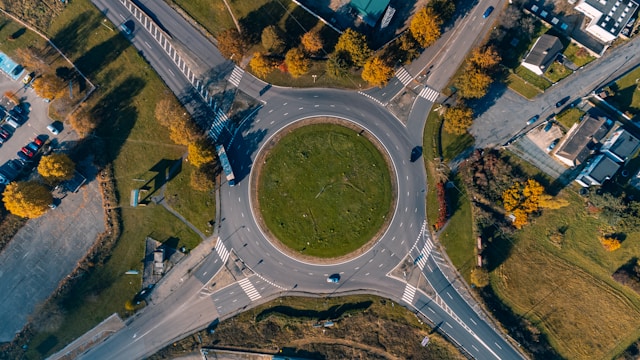
What Makes a Great Photography Drone?
The best drones for photography combine large image sensors (1-inch or larger), mechanical gimbal stabilization, RAW capture capability, and reliable flight performance. Professional operators should prioritize sensor quality and dynamic range over megapixel counts, while ensuring the platform meets regulatory requirements and integrates with existing operational workflows.
Selecting the best drones for photography has become increasingly complex as manufacturers release more capable platforms each year. Professional operators need equipment that delivers consistent image quality across diverse conditions while meeting the operational demands of commercial work. The right photography drone can dramatically impact project outcomes, client satisfaction, and operational efficiency.
Modern aerial photography spans numerous applications from real estate marketing to infrastructure documentation and creative productions. Each use case presents unique requirements for image quality, flight characteristics, and operational features. Understanding these requirements helps operators select equipment that performs reliably across their specific project profiles.
This guide examines the leading photography drones available in 2026, comparing specifications that matter most for professional work. Rather than focusing solely on consumer appeal, we evaluate platforms based on commercial viability, image quality under demanding conditions, and integration with professional drone operations workflows.
What to look for in a photography drone
Professional photography demands specific capabilities that separate commercial-grade equipment from consumer options. Understanding these technical requirements helps operators make informed purchasing decisions and set appropriate client expectations.
Sensor size and resolution
Sensor size directly impacts image quality more than megapixel counts alone. Larger sensors capture more light, producing images with greater dynamic range, better low-light performance, and reduced noise. The 1-inch sensor has become the minimum standard for professional aerial photography, while four-thirds sensors provide even better performance in challenging lighting conditions.
Resolution matters within sensor size context. A 50-megapixel 1-inch sensor produces excellent results, while the same resolution on a smaller sensor would compromise per-pixel quality. Professional operators should evaluate effective resolution rather than headline megapixel numbers.
Dynamic range and RAW support
Dynamic range determines a camera's ability to capture detail in both shadows and highlights simultaneously. Professional photography drones should deliver at least 12.8 stops of dynamic range to handle typical commercial scenarios with high-contrast scenes.
RAW capture capability is non-negotiable for professional work. RAW files preserve maximum image data for post-processing flexibility, enabling exposure correction, color grading, and detail recovery. D-Log and similar flat color profiles provide additional latitude for video work.
Gimbal stability
Mechanical three-axis gimbals remain essential for professional aerial photography. Electronic stabilization cannot match the precision and reliability of well-engineered mechanical systems. Gimbal specifications should include angular vibration range below ±0.01 degrees for sharp images at any shutter speed.
Gimbal reliability under various conditions impacts equipment maintenance schedules and operational confidence. Well-designed gimbals require less frequent calibration and perform consistently across temperature ranges.
Flight time and range
Extended flight time directly impacts operational efficiency and project economics. Modern professional platforms deliver 40-50 minutes of flight time, enabling comprehensive site coverage without frequent battery changes. Transmission range affects operational flexibility, while battery management becomes increasingly important as fleet operations scale.
Obstacle avoidance
Advanced obstacle avoidance systems protect equipment investments and enable safer operations in complex environments. Multi-directional sensing has become standard on professional platforms, with the best systems providing omnidirectional protection.
Integration between flight planning systems and obstacle avoidance creates operational efficiency without compromising safety. Operators should evaluate performance in varying light conditions, as some systems perform poorly in low light or against surfaces with minimal texture.
Best drones for photography in 2026
The current market offers several excellent options for professional photography work. Each platform presents distinct advantages depending on operational requirements, budget constraints, and specific use cases.
DJI Mavic 4 Pro — Best Overall
The Mavic 4 Pro represents the current benchmark for professional aerial photography. Its 1-inch 50-megapixel sensor delivers exceptional image quality with 13.8 stops of dynamic range. Extended 51-minute flight time enables comprehensive site coverage without operational interruptions.
Video capabilities include 6K recording at 30fps and 4K at 120fps for slow-motion applications. ProRes and D-Log support enable professional post-production workflows. At approximately $2,449, operators seeking the best available image quality will find the premium justified through improved deliverables.
DJI Air 3S — Best Value for Professionals
The Air 3S delivers professional-grade performance at a significantly lower price point. Its 1-inch 50-megapixel sensor matches the Mavic 4 Pro's resolution while the dual-camera system offers versatility with a secondary telephoto lens for detailed inspection work.
Flight time of 46 minutes approaches flagship performance while the compact form factor improves portability. At approximately $1,099, operators building drone service businesses will find exceptional value. Professional operators demonstrate how thoughtful equipment selection supports sustainable business growth.
DJI Mavic 3 Pro — Proven Performer
The Mavic 3 Pro has established an extensive track record in professional applications. Its 4/3-inch Hasselblad camera delivers distinctive color science and exceptional image quality for real estate photography, event coverage, and marketing content.
Three-camera system versatility sets the Mavic 3 Pro apart for operators requiring multiple focal lengths within single missions. At approximately $2,199, operators valuing reliability over cutting-edge specifications will appreciate this mature platform with extensive software support.
DJI Mini 5 Pro — Best Compact Option
The Mini 5 Pro achieves remarkable capability within the sub-250-gram weight class. Its 1-inch sensor delivers image quality that rivals larger platforms while enabling operations under simplified regulatory frameworks in many jurisdictions.
At approximately $959, the compact form factor makes an excellent secondary platform or entry point for operators expanding into aerial photography. Operators should recognize limitations in wind resistance and transmission range compared to larger platforms.
Autel Evo II Pro — Non-DJI Alternative
The Evo II Pro provides a capable alternative for operators seeking platform diversity or facing procurement restrictions affecting DJI products. Its 1-inch 20-megapixel sensor delivers professional image quality with 40-minute flight time.
The modular payload design enables sensor swaps for utilities and energy inspections. At approximately $1,749, some US operators prefer Autel platforms due to supply chain considerations. Operators should evaluate software compatibility with flight planning and data processing workflows before committing to the ecosystem.
Detailed comparison table
| Specification | DJI Mavic 4 Pro | DJI Air 3S | DJI Mavic 3 Pro | DJI Mini 5 Pro | Autel Evo II Pro |
|---|---|---|---|---|---|
| Price | ~$2,449 | ~$1,099 | ~$2,199 | ~$959 | ~$1,749 |
| Sensor | 1-inch 50MP | 1-inch 50MP | 4/3 CMOS 20MP | 1-inch | 1-inch 20MP |
| Video | 6K/30fps, 4K/120fps | 4K/60fps | 5.1K/50fps | 4K/60fps | 6K/30fps |
| Flight Time | 51 min | 46 min | 43 min | 34 min | 40 min |
| Weight | 909g | 720g | 958g | 249g | 1191g |
| Obstacle Avoidance | Omnidirectional | Omnidirectional | Omnidirectional | Tri-directional | Omnidirectional |
| Best For | Maximum quality | Professional value | Proven reliability | Portability/Regulations | Non-DJI requirements |
Choosing the right drone for your work
Different commercial applications present distinct requirements that influence optimal platform selection. Matching equipment to specific operational profiles maximizes return on investment.
Real estate photography
Real estate photography demands consistent image quality and reliable performance. The DJI Air 3S offers excellent value, delivering professional image quality at a price supporting healthy margins. Higher-end platforms like the Mavic 4 Pro justify their premium for luxury properties. Operators must verify local regulatory requirements when considering compact options.
Construction and infrastructure
Construction documentation requires consistent quality over extended timelines. Equipment durability and maintenance predictability become primary considerations for construction and infrastructure clients. Integration with mapping workflows enables progress documentation and volumetric analysis.
Surveying and mapping
Surveying operations prioritize geometric accuracy and integration with photogrammetry software. Professional surveying and inspection work demands high-resolution sensors. Ground control points remain essential for survey-grade accuracy regardless of platform selection.
Events and creative work
Event coverage benefits from platform versatility and reliable performance under time pressure. The Mavic 3 Pro's three-camera system provides focal length versatility without platform changes. Operators should consider backup equipment for critical coverage where failures create irreversible consequences.
Regulatory considerations
Professional photography drone operations require compliance with applicable regulations regardless of equipment selection.
Part 107 requirements
Commercial drone operations in the United States require Part 107 certification for pilots conducting work for compensation. Certification involves knowledge testing and biennial renewal to maintain currency. Equipment selection affects operational limitations including weight restrictions and altitude limits.
Remote ID compliance
Remote ID requirements mandate broadcast identification under FAA Remote ID rules. Current professional platforms include compliant modules. Understanding Remote ID implications for operational security helps operators advise clients appropriately.
Airspace considerations
Controlled airspace operations require authorization regardless of equipment capabilities. Airspace awareness prevents inadvertent violations. Flight planning incorporating airspace restrictions ensures compliant operations.
Frequently Asked Questions
What sensor size is best for professional drone photography?
One-inch sensors represent the minimum standard for professional aerial photography, offering substantial improvements in dynamic range, low-light performance, and per-pixel quality over smaller sensors. Four-thirds sensors provide even better performance but appear in fewer platforms. Sensor size matters more than megapixel counts—a 20-megapixel four-thirds sensor typically outperforms a 48-megapixel half-inch sensor for professional applications requiring post-processing flexibility and consistent quality across varied lighting conditions.
Should I invest in the most expensive drone for my photography business?
Equipment selection should match operational requirements and business economics rather than defaulting to flagship options. A $1,099 DJI Air 3S may deliver better return on investment than a $2,449 Mavic 4 Pro for operators whose clients cannot distinguish or value the incremental quality improvements. Start with equipment that meets current project requirements, building upgrade justification through demonstrated client demand for higher-end deliverables.
How important is flight time for professional photography work?
Flight time significantly impacts operational efficiency, particularly for large-area coverage, construction documentation, and survey operations. Extended flight time reduces battery change interruptions, enabling continuous workflow and faster project completion. However, operators should evaluate real-world endurance rather than manufacturer specifications, accounting for payload weight, wind conditions, and operational patterns typical of their specific work.
Can sub-250-gram drones produce professional quality images?
Modern sub-250-gram platforms like the DJI Mini 5 Pro deliver image quality suitable for many professional applications including real estate photography, event coverage, and content creation. The weight class involves engineering tradeoffs affecting wind resistance, transmission range, and accessory compatibility. Operators should evaluate whether specific project requirements can be met within these limitations rather than assuming lighter platforms cannot serve professional needs.
Implementation considerations
Selecting photography equipment represents one component of building effective drone operations. Integration with broader operational systems maximizes equipment value and operational efficiency.
Equipment procurement should align with fleet management strategies that address maintenance scheduling, replacement planning, and operational coordination. Standardizing on specific platforms simplifies training, spare parts inventory, and maintenance procedures.
Pre-flight procedures and operational workflows require adaptation to specific equipment characteristics. Developing platform-specific checklists and procedures ensures consistent operations regardless of which team members operate specific aircraft.
Consider how equipment selection affects data processing workflows and deliverable production. Some platforms integrate better with specific software ecosystems, affecting post-production efficiency and output quality.
Insurance requirements and equipment valuation affect operational economics. Proper coverage for professional equipment protects against loss while accurate valuation ensures appropriate insurance coverage without excessive premiums.
In summary
The best drones for photography balance image quality, operational capability, and business economics. Current market leaders deliver exceptional performance across professional applications, with options ranging from accessible entry points to no-compromise flagship platforms.
The DJI Mavic 4 Pro establishes the performance benchmark for operators requiring maximum capability, while the Air 3S provides outstanding value for professional work without flagship pricing. Established platforms like the Mavic 3 Pro offer proven reliability, and compact options like the Mini 5 Pro enable operations under simplified regulatory frameworks.
Equipment selection should reflect specific operational requirements rather than pursuing specifications for their own sake. Understanding how sensor characteristics, flight performance, and integration capabilities affect actual project outcomes enables informed purchasing decisions that support sustainable business growth.
Professional photography drone operations succeed through the combination of capable equipment, skilled operators, and systematic operational processes. The right platform forms an essential foundation, but operational excellence ultimately determines client satisfaction and business success.
Ready to Optimize Your Aerial Photography Operations?
Professional photographers are streamlining their drone operations with comprehensive management systems designed for commercial work. From flight planning to equipment tracking, systematic operations enable consistent quality and efficient project delivery.
Start your free trial today — no credit card required.
Or explore how DroneBundle supports professional photography operations with integrated flight management, equipment tracking, and compliance tools built specifically for commercial operators.