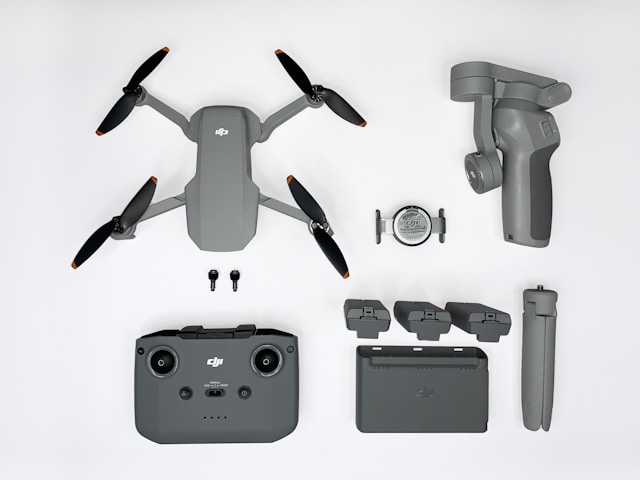
What Are the Must-Have Drone Accessories?
The essential drone accessories every pilot needs include extra batteries to extend flight time, ND filters for smooth video, a high-speed MicroSD card for reliable recording, a protective carrying case, and a Remote ID module for FAA compliance. These five items address the most common limitations pilots encounter out of the box and represent the highest-value upgrades regardless of experience level.
The right drone accessories transform a good flying experience into a great one. Most drones ship with a single battery, no filters, and a basic storage card that limits what you can accomplish in a single outing. Investing in a few targeted accessories extends flight time, improves image quality, protects your equipment, and keeps you compliant with regulations.
This buyer's guide covers the most important drone accessories across every category, with specific product recommendations, price ranges, and a prioritized buying order for both beginners and professionals. Whether you just purchased one of the top drones for 2026 or want to upgrade your existing kit, these accessories deliver the best return on investment.
Essential drone accessories overview
Before diving into individual categories, here is a quick reference of the highest-priority accessories every pilot should consider. These items address the most common pain points and deliver measurable improvements to your flying experience.
| Accessory | Why It Matters | Price Range | Priority |
|---|---|---|---|
| Extra batteries (2-3) | Triples flight time from ~30 min to ~90 min | $50-100 each | Critical |
| ND filter set | Enables cinematic video with proper shutter speed | $30-80 per set | Critical for video |
| MicroSD card (128GB+ V30) | Prevents recording errors and data loss | $20-60 | Critical |
| Carrying case/backpack | Protects investment during transport | $30-150 | High |
| Charging hub | Charges multiple batteries efficiently | $28-65 | High |
| Landing pad | Prevents prop damage on rough terrain | $20-40 | Medium |
| Remote ID module | FAA compliance (mandatory since March 2024) | ~$30 | Mandatory |
Every item on your pre-flight checklist becomes easier to complete when you have the right gear prepared and organized.
Camera and imaging accessories
Filters represent the single biggest improvement you can make to drone video quality. They control light entering the camera, enabling proper exposure settings for cinematic footage.
ND filters
Neutral density (ND) filters reduce the amount of light reaching the sensor without affecting color. This allows you to use slower shutter speeds following the 180-degree shutter rule (shutter speed = double your frame rate), which produces natural motion blur in video. Without ND filters, bright daylight forces fast shutter speeds that create choppy, unnatural footage.
A standard ND set includes ND8, ND16, ND32, and ND64 filters covering conditions from overcast skies to bright midday sun. Freewell Gear and PolarPro offer premium multi-coated glass filters ($40-80 per set), while budget options from K&F Concept start at $15-30.
For pilots focused on aerial videography, ND filters are non-negotiable. They rank alongside batteries as the most impactful accessory purchase.
CPL and UV filters
Circular polarizing (CPL) filters reduce reflections from water, glass, and snow while enhancing color saturation and sky contrast. They are particularly useful for aerial photography over lakes, coastlines, and urban environments with reflective surfaces.
UV filters serve primarily as protective barriers for the lens, shielding the camera from dust, moisture, and minor impacts. At $10-30, they are inexpensive insurance for your most critical component.
Multi-camera considerations
Drones with multiple cameras like the DJI Air 3 (dual camera) and DJI Mavic 3 Pro (triple camera) require different ND filter strengths for each lens due to varying apertures. Budget for a complete set per camera when purchasing filters for these models.
Power and battery accessories
Battery capacity directly determines how long your drone stays airborne, making extra batteries the highest-ROI accessory you can buy.
Extra batteries
Most consumer drones ship with a single battery providing 30-45 minutes of flight time. Adding two or three extra batteries extends a session to 90-180 minutes, transforming what you can accomplish in a single outing. Budget $50-100 per battery depending on the model.
Charging hubs
Charging hubs manage multiple batteries simultaneously or sequentially, dramatically reducing downtime between sessions. DJI's Two-Way Charging Hubs ($28-65) also function as portable power banks, adding utility beyond battery management.
The DJI Air 3 Charging Hub includes a power accumulation feature that transfers remaining charge from partially depleted batteries into one, maximizing every bit of stored energy before connecting to a charger.
Fly More Combos: are they worth it?
DJI's Fly More Combo bundles typically include two extra batteries, a charging hub, spare propellers, and a carrying bag for $110-300 over the base drone price. The combined retail value of these accessories individually exceeds the combo premium by a significant margin.
For most pilots, the Fly More Combo represents the best single purchase decision after the drone itself. The value proposition is strongest for professionals who need sustained flight time for commercial operations.
Portable power solutions
Field charging requires portable power. USB-C PD power banks (100W+, $40-100) work for casual pilots, while dedicated drone power stations like the SwellPro DronePower 45K ($200-300) support rapid charging in remote locations without grid access.
Protection and carrying accessories
Drones are precision instruments that require proper protection during transport and operations.
Cases and backpacks
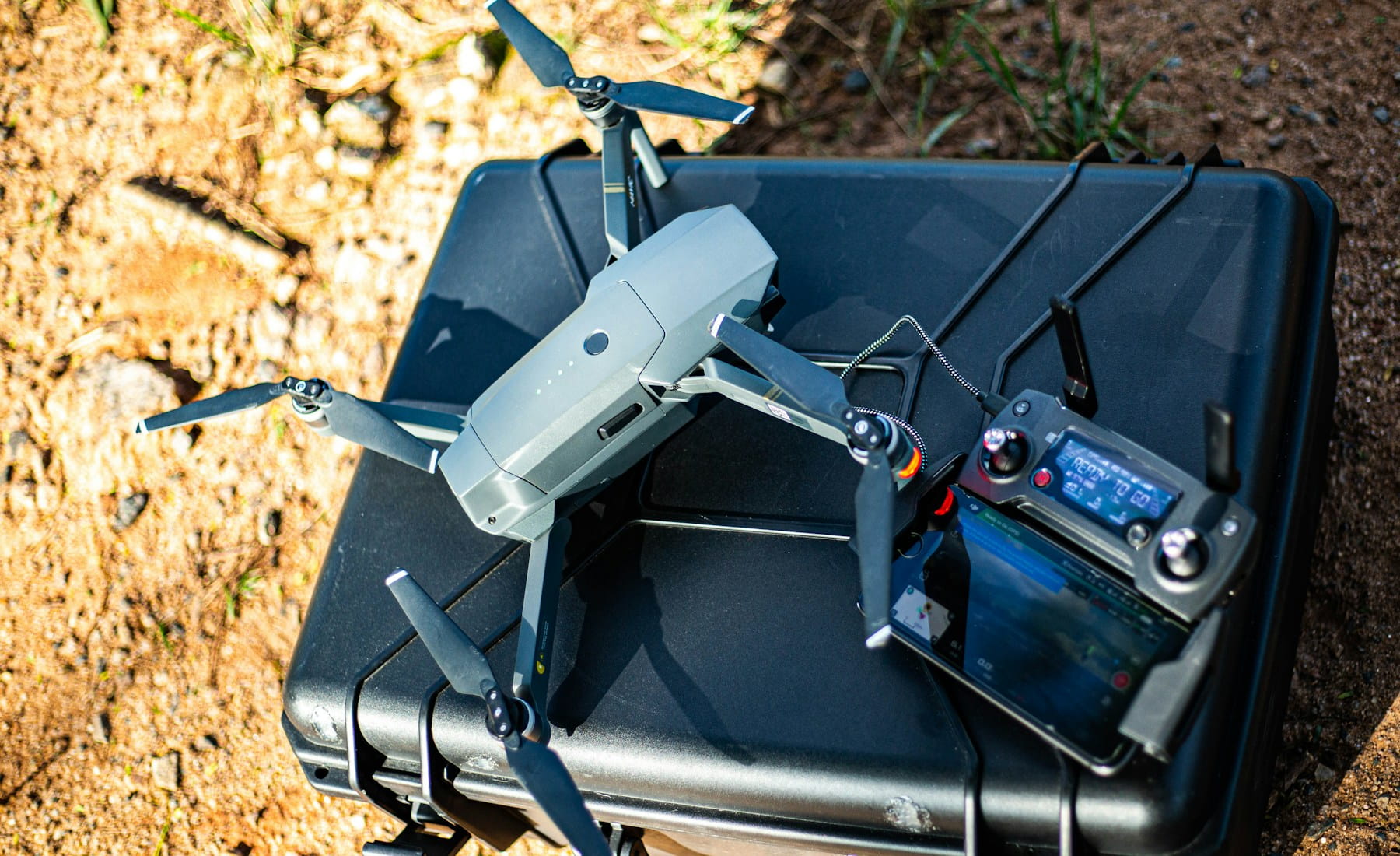
A quality carrying case prevents damage from impacts, moisture, and dust. Options range from hard-shell cases (HPRC, $100+) for maximum protection to padded backpacks (Lowepro DroneGuard, $60-150) that balance protection with portability. Look for custom compartments that fit your drone, controller, batteries, and a laptop.
Proper equipment management starts with organized storage that keeps every component accessible and protected.
Landing pads
Collapsible landing pads ($20-40) provide a clean, flat surface for takeoff and landing on grass, sand, gravel, or dirt. They prevent debris from damaging propellers or getting pulled into motors during ground-level operation. A 75 cm pad fits most consumer drones, while larger commercial platforms may need 110 cm versions.
Propeller guards and spares
Propeller guards add a physical barrier that prevents blade contact with people and obstacles. They are most valuable for beginners still developing spatial awareness and pilots operating indoors or in tight spaces. Experienced pilots typically remove guards to reduce weight and improve aerodynamics.
Spare propellers ($15-35 for a set) belong in every flight kit. Propellers are consumable items that wear with use, and a single damaged blade grounds your drone until replaced. Regular maintenance practices include inspecting propellers before each flight.
Controller and flight accessories
Several accessories improve the pilot experience during active flight.
Sun hoods
Screen glare in bright sunlight makes it difficult to see the camera feed and telemetry data. Sun hoods ($15-80) attach to the controller or mounted tablet, providing shade that restores screen visibility. The Hoodman Aviator Kit ($40-80) fits various iPad sizes and remains the professional standard.
For pilots using tablets, dedicated mounts ($20-50) secure the display to the controller with adjustable viewing angles and include neck lanyards to distribute weight during long sessions.
Wind meters
A portable anemometer ($25-60) provides objective wind speed data before and during flights. Rather than estimating conditions, checking real-time weather data and measuring local wind speed helps pilots make informed go/no-go decisions, especially in challenging weather conditions.
Safety and compliance accessories
Remote ID modules
Since March 2024, the FAA requires all drones over 0.55 lbs to broadcast Remote ID identification signals during flight. Newer drones have Remote ID built in, but older models need a retrofit broadcast module (approximately $30). This is not optional: flying without Remote ID compliance can result in FAA enforcement action.
Strobe lights
High-visibility strobe lights ($15-40) improve drone visibility for both the pilot and nearby aircraft. While not required for all daytime operations, they extend operational capability into civil twilight and help maintain visual line of sight at greater distances.
GPS trackers
A small GPS tracker ($20-50) attached to the drone provides a backup location signal if the aircraft loses connection or lands in dense vegetation. This is inexpensive insurance for expensive equipment, particularly for pilots flying in remote areas for inspection or survey work.
Drone accessories for beginners vs professionals
Not all pilots need the same gear. Here is a prioritized buying guide based on experience level and use case.
Beginner starter kit ($150-300)
Pilots who are still learning to fly and working toward their FAA certification should start with these essentials:
- Extra batteries (2) - $100-200
- MicroSD card (128GB V30+) - $20-40
- Carrying case - $30-60
- Basic ND filter set - $15-30
- Propeller guards - $15-25
This kit addresses the biggest limitations new pilots face: short flight time, storage reliability, equipment protection, and video quality.
Professional upgrade kit ($400-800)
Commercial operators running drone service businesses and working on construction sites or survey projects need additional capabilities:
- 3+ extra batteries with charging hub - $200-350
- Premium ND/CPL filter set (per camera) - $60-160
- High-capacity MicroSD (256GB V60+) - $40-80
- Professional backpack with laptop compartment - $80-150
- Sun hood and tablet mount - $40-80
- Portable power station - $100-300
- Anemometer - $25-60
Professional pilots should also budget for drone insurance and consider accessories specific to their niche, such as thermal imaging equipment for inspection work.
Frequently asked questions
What drone accessories should I buy first?
Extra batteries and a high-speed MicroSD card deliver the most immediate impact. Batteries triple your available flight time from approximately 30 minutes to 90 minutes, while a reliable V30+ MicroSD card prevents recording failures that can ruin an entire session. A carrying case ranks third for protecting your investment during transport.
Are DJI Fly More Combos worth the extra cost?
Yes, for most pilots. The Fly More Combo bundles two extra batteries, a charging hub, spare propellers, and a carrying bag at a $110-300 premium over the base drone. Purchasing these items individually costs significantly more. The combo is especially valuable for anyone planning regular flying sessions or commercial drone operations.
Do I need ND filters for my drone?
If you shoot video, yes. ND filters enable proper shutter speed settings for smooth, cinematic footage. Without them, bright conditions force fast shutter speeds that produce choppy video. For photography-only use, ND filters are less critical but still useful for long-exposure creative shots. Start with an ND8/16/32 set for the most versatile coverage.
How many batteries should I carry for a drone session?
Three to four total batteries cover most sessions comfortably. This provides 90-180 minutes of flight time with breaks between flights for battery swaps. Professional operators working full-day jobs on survey or inspection projects often carry six or more batteries with a fast charging hub to maintain continuous operations.
Implementation considerations
Building your accessory kit incrementally makes more financial sense than purchasing everything at once. Start with the items that address your biggest limitations: if you consistently run out of battery, prioritize power accessories. If your video quality disappoints in bright conditions, ND filters should come first.
Store accessories in a dedicated kit bag or case so everything is ready for each session. A well-organized kit reduces setup time in the field and minimizes the chance of leaving critical items behind. Tracking accessory condition alongside your drone equipment management workflow prevents surprises from worn propellers or degraded batteries.
As your skills and requirements grow, add specialized accessories that match your evolving needs rather than purchasing gear for hypothetical future use.
In summary
The right drone accessories address the real limitations pilots face in the field: short flight time, poor video quality in bright conditions, unreliable storage, and equipment vulnerability during transport. Extra batteries, ND filters, quality MicroSD cards, and a protective carrying case form the foundation that every pilot needs.
Beyond the essentials, accessories like charging hubs, sun hoods, landing pads, and Remote ID modules round out a complete kit. Prioritize purchases based on your experience level and primary use case, and invest in quality where it matters most: DJI official accessories and premium filter brands deliver reliability that budget alternatives often lack.
A well-equipped pilot spends less time troubleshooting and more time flying, which is the entire point.
Ready to manage your drone gear and operations?
DroneBundle helps pilots track equipment, manage maintenance schedules, log flights, and maintain compliance across all their drone gear and accessories. Keep your entire operation organized in one platform.
Start your free trial today - no credit card required.
Or book a demo to see how DroneBundle streamlines fleet operations with synced flight logs and comprehensive equipment management.