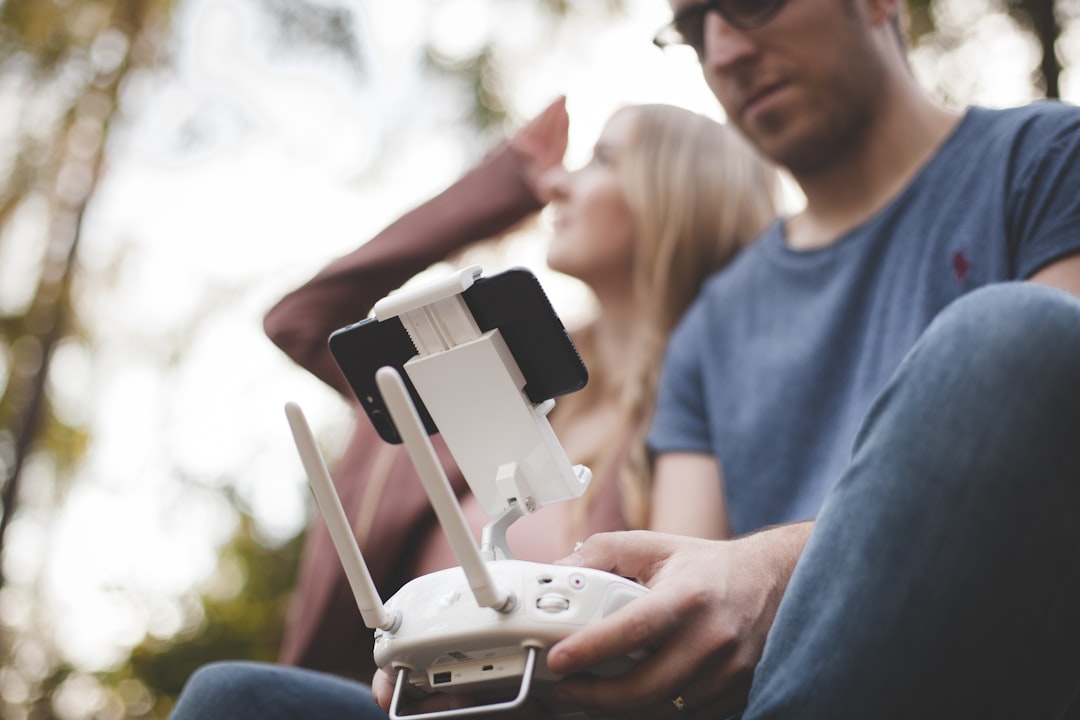
FAA drone rules split into two paths: recreational flying under 44 USC 44809 and commercial operations under 14 CFR Part 107. Both require registration, Remote ID, visual line of sight, and a 400-foot ceiling in uncontrolled airspace.
If you fly a drone in the United States for any reason, FAA drone rules apply to you. There is no hobby loophole that exempts you from federal regulation. The rules you follow depend on why you are flying, not what you are flying. Fly for fun and you operate under the recreational exception. Fly for anything that touches a business, a paycheck, or a deliverable and you fall under Part 107.
That single distinction trips up more pilots than any technical requirement. A real estate photographer who "just posts the shots to their listing" is operating commercially. So is the roofer who flies their own drone to inspect a job. Get the category wrong and every rule downstream changes: your certification, your registration type, even how a violation gets enforced.
This guide covers the actual rules as they stand in mid-2026, the edge cases most articles skip, and the part almost nobody writes about: how you keep an entire team and fleet compliant instead of just one pilot on one flight.
The two sets of FAA drone rules
FAA drone rules divide into recreational operations under 44 USC 44809 and commercial operations under 14 CFR Part 107, and the two carry different certification, testing, and operational requirements. Everything else follows from which one you fall under.
Recreational flying means flying strictly for personal enjoyment. The moment your flight furthers any business purpose, even indirectly, you leave the recreational exception behind and must operate under Part 107. There is no dollar threshold and no "small business" carve-out.
The core operational limits overlap heavily, but the entry requirements do not. Here is the practical comparison.
| Requirement | Recreational (44809) | Commercial (Part 107) |
|---|---|---|
| Certification | Pass TRUST (free, online) | Remote Pilot Certificate |
| Knowledge test | TRUST, unlimited free retakes | Aeronautical knowledge exam, $175 |
| Minimum age | No minimum to fly, 13+ to register | 16 years old |
| Registration | $5 covers all your drones | $5 per aircraft |
| Altitude ceiling | 400 ft in Class G | 400 ft AGL, higher near structures |
| Controlled airspace | LAANC or authorization required | LAANC or authorization required |
| Fly over people | Not permitted | Permitted by category |
| Night flying | Permitted with lighting | Permitted with lighting |
| Waivers available | No | Yes, via Part 107 |
The recreational path is simpler and cheaper, but it is also a dead end for anyone who wants to earn money. It offers no waivers, no operations over people, and no path to advanced operations. For that reason, most professionals skip it entirely and go straight for the Part 107 remote pilot certificate. If you are weighing which credential you actually need, our guide on what drone license do I need walks through the decision.
To fly recreationally you must pass The Recreational UAS Safety Test, known as TRUST, and carry proof of passage. It is free, takes about 30 minutes, and cannot be failed permanently because you can retake any missed section immediately. The FAA's Recreational Flyers page is the authoritative source.
Registration rules
Every drone that weighs more than 0.55 pounds (250 grams) must be registered with the FAA before its first outdoor flight, and every drone flown under Part 107 must be registered regardless of weight. Registration costs $5 and is valid for three years.
Here is the distinction that costs commercial operators real money. Recreational flyers pay $5 once and that single registration number covers every drone they own. Part 107 operators register each aircraft individually, paying $5 per drone, and each aircraft receives its own registration number. Run a fleet of twenty aircraft commercially and that is twenty separate registrations to file and twenty separate expiration dates to track.
The sub-250-gram exemption is recreational only. If you fly a 249-gram drone like a DJI Mini for any commercial purpose, you must register it. The weight break does not save you once money enters the picture. We cover this trap in more depth in the FAA drone registration guide.
Registration happens through the FAA DroneZone portal. Your registration number must be marked on the exterior of the aircraft so it is readable without tools. You must also carry proof of registration, digital or paper, during every flight. The official process lives on the FAA's register your drone page.
One point of confusion worth clearing up: small drones registering under Part 48 receive a number starting with "FA," and these are not publicly searchable. If you ever need to verify a registration, our FAA drone registration lookup post explains why the public N-number registry will not find your drone.
Remote ID rules
Remote ID is mandatory for every drone that requires registration, and enforcement has been active since March 16, 2024. Think of it as a digital license plate that broadcasts your drone's location, its controller's location, and an identifier while it flies.
You have three ways to comply. Fly a Standard Remote ID drone with the capability built in, which covers almost every drone sold new today. Attach an FAA-approved broadcast module to an older aircraft to retrofit it. Or fly at an FAA-Recognized Identification Area, a pre-approved fixed site where Remote ID is not required, typically a club field.
For commercial operators, only the first two options are practical. You cannot run inspection or mapping jobs from a fixed club field, so your aircraft need built-in or module-based Remote ID. Before you buy hardware, confirm it appears on the FAA's approved list. The FAA's Remote ID page maintains the official declaration of compliance database, and our Remote ID explainer breaks down how the broadcast actually works.
Remote ID is not a suggestion. The FAA has treated it as a hard compliance line, and flying a registered drone without it is a violation in its own right, separate from any airspace or registration issue.
Where and how high you can fly
The default altitude ceiling is 400 feet above ground level, and drones must yield right of way to all manned aircraft at all times. Recreational flyers are capped at 400 feet in Class G (uncontrolled) airspace with no exceptions.
Part 107 offers one useful bit of flexibility here. You may fly higher than 400 feet AGL when operating within 400 feet of a structure, measured from the structure's uppermost limit. That is what makes tall tower and building inspections legal without a waiver. We get into the details in how high can a drone fly.
Airspace class dictates whether you need permission before you launch. Most of the country below 400 feet is Class G, where you can fly without authorization. Controlled airspace, meaning Class B, C, D, and the surface areas of Class E around airports, requires authorization first. The fastest way to get it is LAANC, the automated system that returns approvals in near real time through apps like B4UFLY. If you do not understand which airspace you are standing in, start with our primer on the types of airspace and the specifics of Class G airspace.
Beyond airspace class, temporary flight restrictions and permanent no-fly zones override everything. Stadiums during games, wildfire zones, and security-sensitive sites can be off limits with little notice. Our no-fly zones and restricted airspace field guide covers how to check before every flight. You must also maintain visual line of sight with the aircraft at all times, keep groundspeed under 100 mph, and stay clear of clouds with at least 3 statute miles of visibility.
Planning around all of these constraints for a single flight is manageable with an app. Planning them across dozens of jobs a week is where a dedicated airspace and flight planning workflow starts to earn its keep.
Operations over people and at night
Part 107 permits flying over people and flying at night without a waiver, provided you meet specific conditions. This is one of the most misunderstood corners of FAA drone rules because the old rules required waivers for both, and plenty of outdated articles still say so.
Night operations are legal under Part 107 as long as your aircraft has anti-collision lighting visible for at least 3 statute miles with a flash rate sufficient to avoid a collision, and your remote pilot completed the updated knowledge training. The lighting is the part operators forget. The stock LEDs on most drones do not meet the 3-statute-mile standard, so you likely need an add-on strobe.
Flying over people is governed by four categories defined by the risk the aircraft poses on impact, per the FAA's operations over people rule:
- Category 1: Drones weighing 0.55 pounds or less with no exposed parts that could lacerate skin. Permitted over people with no further restriction.
- Category 2: Heavier drones that cannot cause more than a defined severe-injury threshold on impact, verified by the manufacturer and labeled accordingly.
- Category 3: Same injury standard as Category 2 but limited to closed or restricted sites, or where people are under cover.
- Category 4: Aircraft with an airworthiness certificate that meet operating requirements in their approval.
The catch is that your specific drone must be declared eligible by its manufacturer for Categories 2, 3, and 4. You cannot self-certify. Check your model's documentation before you plan any job that involves flying above crowds or over moving vehicles. When your operation cannot fit inside these categories, the fallback is a Part 107 waiver, which requires you to demonstrate an equivalent level of safety to the FAA.
The recreational vs commercial gray area
Any flight that furthers a business interest is commercial and requires Part 107, even if no money changes hands for that specific flight. This is the single most litigated distinction in FAA drone rules, and competitors' guides tend to state the categories cleanly without warning you where the line actually blurs.
Consider these flights that people routinely assume are recreational but are not:
- A real estate agent photographing their own listing.
- A farmer flying over their own fields to check crop health.
- A YouTuber capturing footage for a monetized channel.
- A contractor inspecting a roof before quoting a repair.
- A volunteer flying for a nonprofit's fundraising video.
None of these involve selling drone services directly, yet all of them further a business or organizational purpose, which puts them under Part 107. The FAA's own guidance is that the intent behind the flight determines the category. If you would not have flown but for the business benefit, it is commercial.
Why this matters: operating a commercial flight under the recreational exception means you are flying without a required certificate, which is an enforcement action waiting to happen. When in doubt, get the remote pilot certificate. It is a $175 exam and a background check, and it removes the ambiguity permanently. The cost of an FAA drone license is trivial compared to a single violation.
State and local laws stack on top of FAA rules
The FAA controls the airspace, but states and municipalities regulate takeoff, landing, privacy, and trespass, and both layers apply at once. Following federal rules perfectly does not exempt you from a local ordinance, and this is where most compliance guides go silent.
The division of authority works like this. The FAA has exclusive jurisdiction over the navigable airspace, so a city cannot set its own altitude ceiling or ban flight outright in the air column. But states and cities can and do regulate where you launch and land, harassment and voyeurism, drone use in state parks, and operations near critical infrastructure or correctional facilities. Many of these laws carry their own penalties independent of the FAA.
The practical result is that a legal flight under Part 107 can still violate a state privacy statute or a park's no-launch rule. Before you fly somewhere new, check both the airspace and the local ordinance. Our roundup of drone regulations news tracks the moving pieces, and for the airspace half of the equation the FAA's central UAS hub is the starting point. Operators who cross borders should note that this stacking gets more complex internationally, as our European drone regulations guide shows.
Enforcement and penalties
FAA drone violations carry civil penalties, and registration and Remote ID failures can reach tens of thousands of dollars, with criminal exposure in serious cases. Most articles about FAA drone rules stop before this section, but it is the part that determines how seriously you should treat the rest.
Failure to register an aircraft that requires registration can bring civil penalties up to $27,500 and, in serious cases, criminal penalties up to $250,000 and up to three years of imprisonment. Operating in controlled airspace without authorization, flying above 400 feet, losing visual line of sight, or ignoring a temporary flight restriction can each draw separate civil penalties. The FAA assesses these per violation, so a single careless flight can generate multiple stacked findings.
Enforcement has also become more data-driven. Remote ID means your drone is broadcasting its identity and location during every flight, which makes after-the-fact enforcement far easier than it was a few years ago. The days of assuming nobody would notice a technical violation are over.
The takeaway is not fear. It is documentation. Operators who keep clean flight records, current registrations, and provable authorizations rarely have enforcement problems, and when a complaint does surface they can answer it in minutes. This is exactly what a drone compliance system is for. Structured incident reporting and airtight records turn a potential penalty into a non-event.
Staying compliant across a fleet and team
For a single pilot flying one drone, FAA compliance is a checklist. For a company running multiple pilots and aircraft, it becomes a tracking problem, and that is where operations quietly fall out of compliance. This is the gap almost every FAA drone rules article ignores, and it is the most expensive one to get wrong.
Think about what has to stay current across even a modest operation:
- Every aircraft's registration and its individual three-year expiration date.
- Every pilot's remote pilot certificate and their recurrent training cycle.
- Remote ID hardware confirmed and functional on every airframe.
- Airspace authorizations and LAANC approvals matched to the right jobs.
- Active waivers and their specific operating conditions.
- Flight logs that prove who flew what, where, and under what authorization.
Miss one registration renewal and you have grounded an aircraft or, worse, flown it illegally without noticing. Let a pilot's currency lapse and every commercial flight they run is a violation. Spreadsheets handle this poorly because nobody remembers to check them, which is exactly why we wrote drone operations software vs spreadsheets.
This is the operational reality DroneBundle was built for. The platform tracks pilot certifications and recurrent training with automated expiry alerts, keeps equipment and registration records for every airframe in one place, and logs flight hours against each pilot and aircraft.
Instead of hoping someone remembers a renewal date, upload the certificate and DroneBundle reads the expiry date from it. Reminders arrive 30 days before, 7 days before, and on the day.
For teams scaling past a handful of aircraft, our fleet management guide covers the full workflow, and the safety and compliance features page shows how it fits together.
Public safety and inspection operators, who face the tightest documentation scrutiny, tend to feel this first. Our public safety industry page walks through how agencies keep audit-ready records without adding headcount.
What is changing in 2026 and beyond
The biggest pending change to FAA drone rules is Part 108, a proposed rule that would normalize beyond visual line of sight operations. It is not law yet. The FAA published the proposed rule in August 2025 and took public comment. No final rule has been published. The draft final rule has been under White House (OIRA) review since July 10, 2026, and no official source gives a publication or effective date.
Until a final rule takes effect, civil BVLOS operations need a Part 107 waiver, a Section 44807 exemption, or a Section 927 waiver. Public agencies can also fly under a certificate of waiver or authorization (COA). If finalized as proposed, Part 108 would replace case-by-case BVLOS approvals with a standardized framework, which would be the most significant expansion of commercial drone operations since Part 107 itself.
Our Part 108 overview and the Part 108 vs Part 107 comparison track where things stand.
The steady direction of travel is toward more capability paired with more accountability. Remote ID, tighter enforcement, and the proposed BVLOS framework all point the same way: operators who keep disciplined records and current credentials will have room to grow, while those who treat compliance as an afterthought will find the airspace harder to work in. Building good habits now is the cheapest form of future-proofing available.
Frequently asked questions
Do I need a license to fly a drone for fun?
No, you do not need a remote pilot license to fly recreationally, but you must pass the free TRUST test, register any drone over 0.55 pounds, and comply with Remote ID. The recreational exception only applies if you fly strictly for personal enjoyment. Any business-related purpose requires a Part 107 certificate.
How high can I legally fly a drone under FAA rules?
You may fly up to 400 feet above ground level in most situations. Recreational flyers are capped at 400 feet in Class G airspace. Part 107 pilots may exceed 400 feet AGL when operating within 400 feet of a structure. Controlled airspace requires LAANC authorization before you launch regardless of altitude.
Is Remote ID required for all drones?
Remote ID is required for every drone that must be registered, which means any drone over 0.55 pounds and all drones flown under Part 107. You comply by using a Standard Remote ID drone, attaching an approved broadcast module, or flying at an FAA-Recognized Identification Area. Enforcement has been active since March 2024. The Remote ID section above covers the details.
What happens if I break FAA drone rules?
The FAA can impose civil penalties per violation, and failure to register can reach $27,500 in civil penalties with criminal exposure up to $250,000 and imprisonment in serious cases. Because Remote ID broadcasts your drone's identity during flight, after-the-fact enforcement is far easier than it used to be. Keeping clean compliance records is the best protection.
Fly by the rules without the paperwork headache
FAA drone rules are not the hard part. Remembering every registration date, certificate renewal, and airspace authorization across a growing operation is. That is where operators actually slip out of compliance, and it is exactly what DroneBundle handles automatically.
DroneBundle tracks pilot certifications, aircraft registrations, Remote ID status, flight logs, and airspace approvals in one place, with automated alerts before anything expires. Instead of hoping a spreadsheet catches a lapse, you get flagged in advance and stay audit-ready by default.
Start a free trial and see how much compliance overhead disappears, or book a live demo to walk through your specific operation with our team. Explore the full feature set to see how planning, compliance, and fleet management fit together in a single platform.