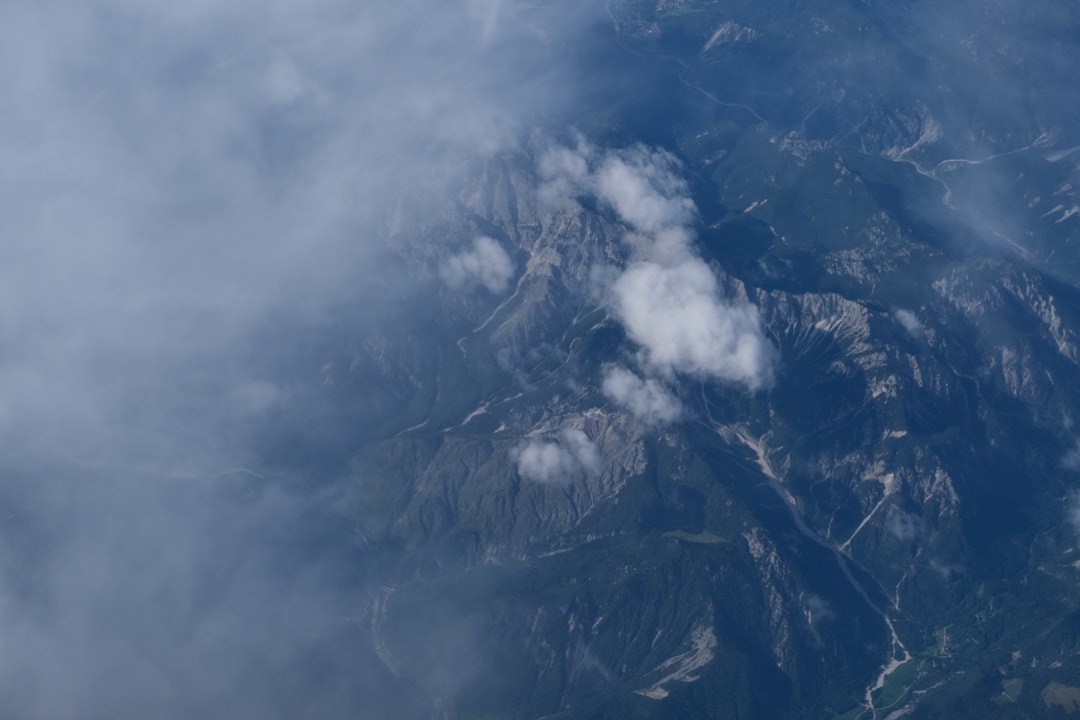
How high can a drone fly? In the United States, the legal altitude limit is 400 feet above ground level (AGL) for both recreational and Part 107 commercial pilots. In Europe, EASA sets the ceiling at 120 meters (394 feet). Most consumer drones are technically capable of flying much higher, but exceeding these limits without authorization carries serious consequences, from FAA fines up to $75,000 to voided insurance policies.
That is the short answer. The full picture involves exceptions, waivers, airspace classifications, and a few practical realities that most altitude guides skip entirely.
Table of Contents
- The 400-Foot Rule: What It Actually Means
- EASA Altitude Limits in Europe
- How High Can Drones Fly Technically?
- What Happens to Drone Performance at High Altitude
- Flying Above 400 Feet Legally: The Waiver Process
- Altitude and Visual Line of Sight: The Overlooked Connection
- What Happens If You Fly Too High
- Practical Altitude Management for Commercial Operations
- Global Altitude Limits at a Glance
- FAQ
The 400-Foot Rule: What It Actually Means
The FAA restricts all drone flights to 400 feet above ground level under 14 CFR Part 107 for commercial operators and Section 44809 for recreational flyers. This applies in uncontrolled (Class G) airspace, which covers the majority of the country.
Two words matter here: "above ground level." The limit is not 400 feet above your takeoff point. If you launch from a hilltop that sits 200 feet above a nearby valley, your drone's legal ceiling over that valley is 400 feet above the valley floor, not 600 feet. This distinction catches people off guard, especially when flying in hilly or mountainous terrain.
The FAA chose 400 feet because manned aircraft generally operate at 500 feet AGL or higher. That 100-foot buffer keeps drones and piloted aircraft separated. According to FAA data, the vast majority of dangerous drone-aircraft encounters occur when drones are flying above 400 feet.
The Structure Exception
There is one important exception. Under Part 107, you can fly higher than 400 feet if your drone stays within a 400-foot radius of a structure and does not exceed 400 feet above that structure's highest point. So if you are inspecting a 300-foot cell tower, your legal ceiling is 700 feet AGL while you remain within 400 feet of the tower.
This exception exists specifically for inspection work. Cell tower inspections, wind turbine surveys, and tall building assessments all rely on it. Recreational pilots do not get this exception.
One detail the FAA has clarified: even when using the structure exception, you still need LAANC authorization or further coordination if you are operating in controlled airspace. The structure exception does not override airspace classification requirements. Operators should also be aware of any no-fly zones or restricted areas near the structure.
EASA Altitude Limits in Europe
EASA limits drone flights to 120 meters (approximately 394 feet) above the closest point on the earth's surface. This applies across all EU member states under the Open Category.
Operations above 120 meters fall into EASA's Specific Category, which requires a risk assessment (typically a SORA, or Specific Operations Risk Assessment) and authorization from your national aviation authority. For a deeper look at the EU framework, see our European drone regulations guide. This process is more involved than the FAA waiver system, but it is achievable for legitimate commercial operations.
EASA also allows flying above 120 meters when inspecting structures, similar to the FAA rule, provided you stay within 15 meters of the obstacle and do not operate a C0 class drone.
One key difference: while the FAA measures from ground level, EASA measures from the "closest point of the earth's surface." In practice this works similarly, but the wording matters when flying near cliffs or steep terrain.
How High Can Drones Fly Technically?
Legal limits and technical capabilities are very different things.
Most consumer DJI drones ship with a firmware-enforced altitude limit of 500 meters (1,640 feet). The DJI Mavic 3, Air 3, and Mini 4 Pro all share this ceiling. Users can adjust the limit within the app, but the firmware will not allow flight above 500 meters regardless of settings.
Note: in January 2025, DJI shifted its geofencing system from hard enforcement to advisory-only warnings. This means pilots bear more personal responsibility for staying within legal limits, since the drone will no longer automatically prevent flights in restricted zones. Compliance with Remote ID requirements also applies regardless of altitude.
Here is how different drone categories compare on raw altitude capability:
| Drone Category | Typical Max Altitude | Examples |
|---|---|---|
| Toy/mini drones | 30-50 meters (100-165 ft) | Holy Stone HS110D, Ryze Tello |
| Consumer drones | 500 meters (1,640 ft) | DJI Mini 4 Pro, DJI Air 3 |
| Prosumer drones | 500-6,000 meters (1,640-19,685 ft) | DJI Mavic 3, DJI Inspire 3 |
| Commercial/industrial drones | 5,000-7,000 meters (16,400-23,000 ft) | DJI Matrice 350 RTK, Freefly Astro |
| Fixed-wing VTOL | 5,000-7,000 meters | senseFly eBee X, WingtraOne |
| Military drones | 15,000+ meters (50,000+ ft) | MQ-9 Reaper, RQ-4 Global Hawk |
These numbers represent what the hardware can handle, not what you should (or legally can) do. A DJI Inspire 3 rated for 22,965 feet does not mean anyone should fly it there.
What Happens to Drone Performance at High Altitude
Air density drops as altitude increases, and that affects everything about how a drone flies. This matters even below 400 feet if you are operating in locations that are already at high elevation, like mountain towns or high-altitude construction sites.
Reduced lift. Propellers generate less lift in thinner air. A drone that hovers comfortably at sea level may struggle or consume significantly more battery at 8,000 feet MSL. DJI recommends reducing payload weight when operating at high elevations.
Shorter flight times. Motors work harder to compensate for reduced air density, draining the battery faster. Expect 10-15% reduction in flight time for every 3,000 feet of elevation gain above sea level.
Weaker GPS signal. This is less about altitude itself and more about exposure. Higher altitude means less terrain shielding from multipath GPS interference, but also fewer obstructions between the drone and satellites. In practice, GPS accuracy tends to remain stable until very high altitudes.
Wind exposure. Wind speeds increase with altitude. A calm day at ground level can have 20+ mph winds at 300-400 feet. Always check wind forecasts at altitude, not just surface conditions. Weather planning tools that show wind at multiple altitude layers are essential for commercial operations. Building altitude considerations into your flight planning workflow prevents surprises in the field.
Flying Above 400 Feet Legally: The Waiver Process
The FAA allows Part 107 operators to request a waiver under Section 107.51(b) to exceed the 400-foot altitude limit. Here is what that process actually looks like.
You submit the application through the FAA DroneZone portal. The FAA targets a 90-day review window, though complex applications take longer. Your application must demonstrate specific risk mitigations: how you will detect and avoid manned aircraft, what altitude you actually need and why, and what safety procedures you will follow. A thorough operation risk assessment is the foundation of any successful waiver application.
Altitude waivers are among the harder waivers to obtain. The FAA is understandably cautious about putting drones into airspace shared with manned aircraft. Most approved altitude waivers are tied to specific operations at specific locations, not blanket permissions to fly high anywhere. BVLOS operations often require altitude waivers as part of a broader waiver package.
If you need temporary higher-altitude access in controlled airspace, LAANC authorization provides near-real-time approvals up to the FAA's pre-approved ceiling for each grid cell. Some grid cells in controlled airspace authorize 0 feet (no drone operations), while others may allow up to 400 feet. LAANC does not grant above-400-foot access on its own; that requires the waiver process.
Altitude and Visual Line of Sight: The Overlooked Connection
Here is something most altitude guides ignore completely. Even if you are legally allowed to fly at 400 feet, maintaining visual line of sight (VLOS) at that altitude is genuinely difficult.
A typical consumer drone is roughly 30-40 centimeters across. At 400 feet away, that is a tiny speck. Now add distance. If your drone is 400 feet up and 500 feet out horizontally, it is nearly 650 feet away from you in actual distance. On a hazy day or against a bright sky, you may lose visual contact well before reaching the legal altitude ceiling.
Part 107 requires that pilots maintain VLOS with the aircraft at all times, without the aid of onboard cameras or first-person-view displays (those can supplement but not replace direct visual contact). In practice, this means your effective altitude limit in many conditions is lower than 400 feet, simply because you cannot see the drone clearly enough to satisfy VLOS requirements.
Visual observers can extend your operational capability, but they must maintain unaided visual contact with the aircraft and be in direct communication with the pilot in command.
What Happens If You Fly Too High
Enforcement is real. The FAA can impose civil penalties up to $75,000 per violation for commercial operators. Recreational flyers face fines starting at around $1,000, with the potential for criminal prosecution in extreme cases.
But the financial risk goes beyond FAA fines.
Insurance. Most drone insurance policies explicitly require compliance with all applicable aviation regulations. Flying above 400 feet without a waiver is a regulatory violation. If you crash at an illegal altitude and damage property or injure someone, your insurer has grounds to deny the claim entirely. That means you are personally liable for all damages. For commercial operators, this can be business-ending.
Criminal exposure. In 2024, a drone operator in Trinidad and Tobago flew at 3,500 feet and came within 20 feet of a commercial aircraft. Incidents like this can result in criminal charges, not just fines. An Embry-Riddle Aeronautical University study in 2023 found that 573 out of 6,037 analyzed flights exceeded 400 feet, suggesting the problem is widespread.
Client contracts. Commercial operators working under contract often have compliance clauses. An altitude violation during a client job can trigger contract termination and damage your professional reputation across the industry.
Practical Altitude Management for Commercial Operations
For solo hobbyists, altitude compliance is straightforward: watch your telemetry and stay under 400 feet. For commercial operators managing multiple pilots across multiple job sites, it gets complicated fast.
Every drone displays altitude on its controller or app. But that reading shows altitude above takeoff point, not above ground level. If your pilot launches from a rooftop or hilltop, the displayed altitude will be wrong relative to the legal limit. Training your team to understand and account for this difference is essential.
Pre-flight checklists should include altitude ceiling calculations based on the specific launch site elevation and surrounding terrain. When your operation spans multiple sites with different elevations, documenting the planned maximum altitude for each location prevents mistakes in the field.
For teams managing operations across multiple sites and pilots, a centralized platform that logs flight data, including altitude telemetry, creates an audit trail that demonstrates consistent compliance. DroneBundle's flight logging and compliance tracking captures this data automatically, giving operations managers visibility into altitude adherence across every flight in their fleet. Live tracking adds another layer, letting supervisors monitor altitude in real time across the entire fleet.
Altitude discipline is especially important in industries where drones operate near tall structures. Construction and infrastructure teams routinely fly near buildings and cranes, while utilities and energy operators inspect power lines and transmission towers at varying heights. In both cases, documenting altitude compliance protects the operator and satisfies client audit requirements.
Global Altitude Limits at a Glance
| Country/Region | Max Altitude | Governing Authority |
|---|---|---|
| United States | 400 ft (122 m) AGL | FAA |
| European Union | 120 m (394 ft) AGL | EASA |
| United Kingdom | 120 m (400 ft) AGL | CAA |
| Canada | 122 m (400 ft) AGL | Transport Canada |
| Australia | 120 m (400 ft) AGL | CASA |
| Japan | 150 m (492 ft) AGL | MLIT |
| India | 120 m (400 ft) AGL | DGCA |
| China | 120 m (400 ft) in most areas | CAAC |
Japan stands out as one of the few countries with a higher standard limit at 150 meters. Most of the world has converged on 120 meters or 400 feet as the standard drone ceiling.
Regardless of where you operate, the pattern is the same: stay below the limit unless you have specific authorization to go higher.
FAQ
Does the 400-foot limit apply to recreational drone pilots too?
Yes. Under Section 44809 (the Exception for Limited Recreational Operations), recreational pilots must also stay below 400 feet AGL. The only difference is that recreational pilots do not qualify for the structure exception that allows Part 107 operators to fly above 400 feet near tall structures.
Can I fly a drone above 400 feet if I get LAANC authorization?
No. LAANC authorizes flights in controlled airspace up to the FAA's pre-approved ceiling for each grid cell, but it does not grant permission to exceed 400 feet AGL. To fly above 400 feet, you need a separate Part 107 waiver under Section 107.51(b), which requires a dedicated application through the FAA DroneZone portal.
How does altitude affect how far a drone can fly?
Higher altitude increases wind exposure and battery drain, both of which reduce your drone's effective range. Motors work harder in thinner air, so a drone at 8,000 feet MSL will have roughly 10-15% less flight time than the same drone at sea level. Signal range is generally not affected by altitude alone, but wind-induced drift means the drone covers more ground maintaining position.
What altitude do manned aircraft fly at?
Most manned aircraft in visual flight rules (VFR) traffic fly at or above 500 feet AGL. The 400-foot drone ceiling exists specifically to maintain a 100-foot buffer below manned traffic. Helicopters can legally fly lower than 500 feet in certain conditions, which is why altitude compliance is critical even well below the 400-foot limit.
Ready to keep your fleet within legal altitude limits?
Altitude compliance across multiple pilots and job sites requires more than good intentions. DroneBundle logs altitude telemetry automatically for every flight, flags exceedances, and generates compliance reports your clients and insurers can trust.
Start your free trial today, no credit card required.
Or try the live demo to see altitude monitoring and compliance tracking in action.