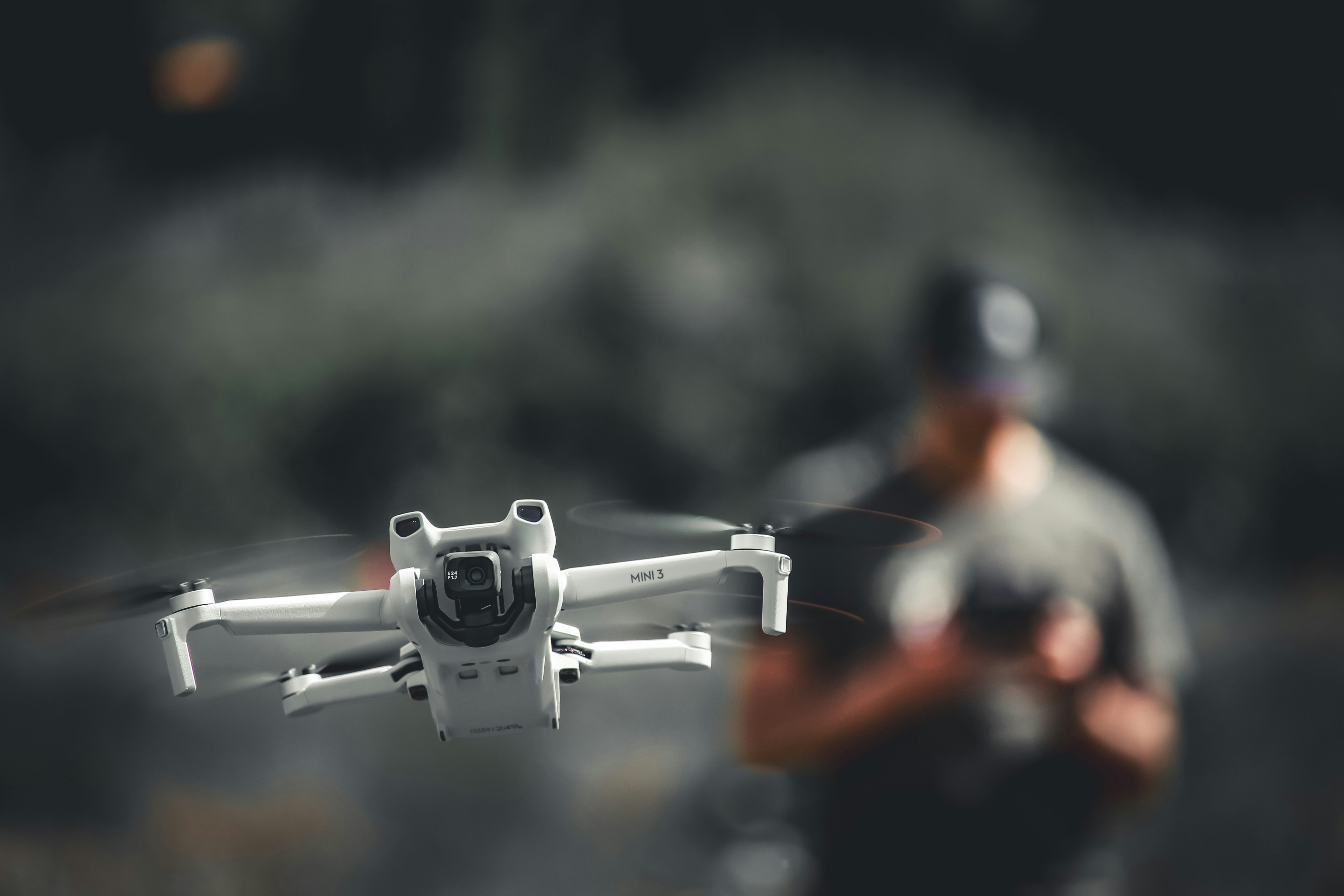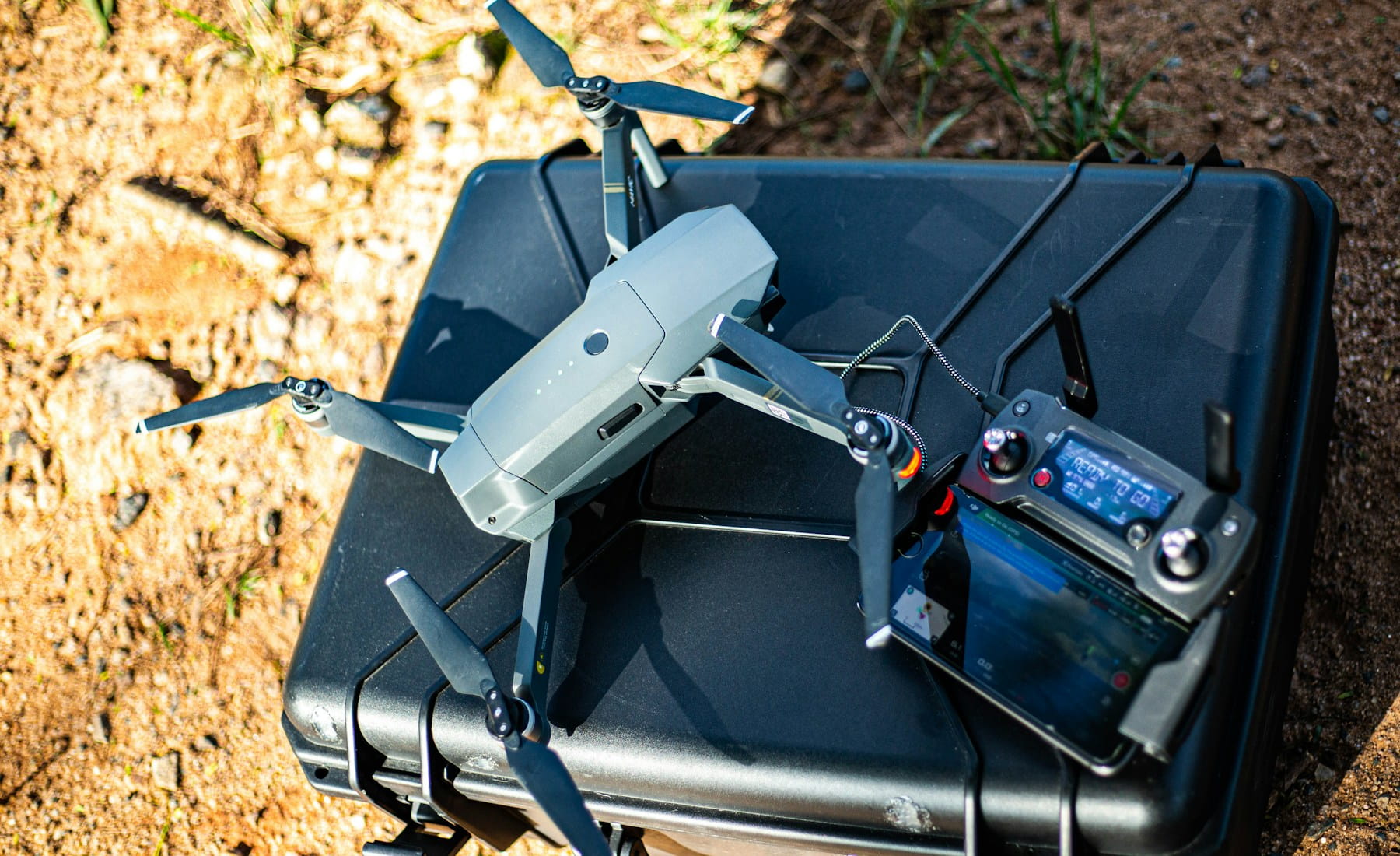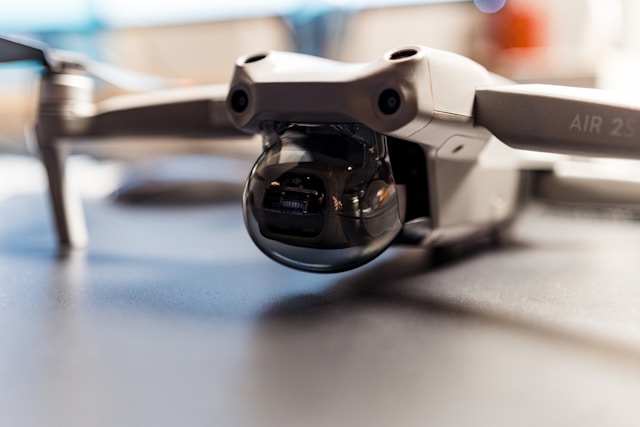
The global drone maintenance market hit $2 billion in 2025 and is projected to reach $6.8 billion by 2035 at a 13% compound annual growth rate. That growth translates directly into drone maintenance jobs across construction, energy, agriculture, defense, and a new category that barely existed three years ago: drone delivery fleets.
Quick answer: Drone maintenance technicians earn an average of $52,700 per year in civilian roles, but that number nearly doubles to $99,000 in defense and government positions. Most positions require a technical diploma and an FAA Part 107 certificate. There is no FAA-mandated maintenance certification for small UAS yet, which means early movers who stack credentials now will be the industry's first credentialed professionals when regulations catch up.
The FAA reports over 400,000 commercial drone registrations in the U.S., with more than 100,000 added in 2025 alone according to FAA UAS data. Every one of those aircraft needs someone who can keep it airworthy. Yet most career guides focus entirely on piloting, while a grounded fleet costs operators thousands per day in missed contracts.
What drone maintenance jobs involve
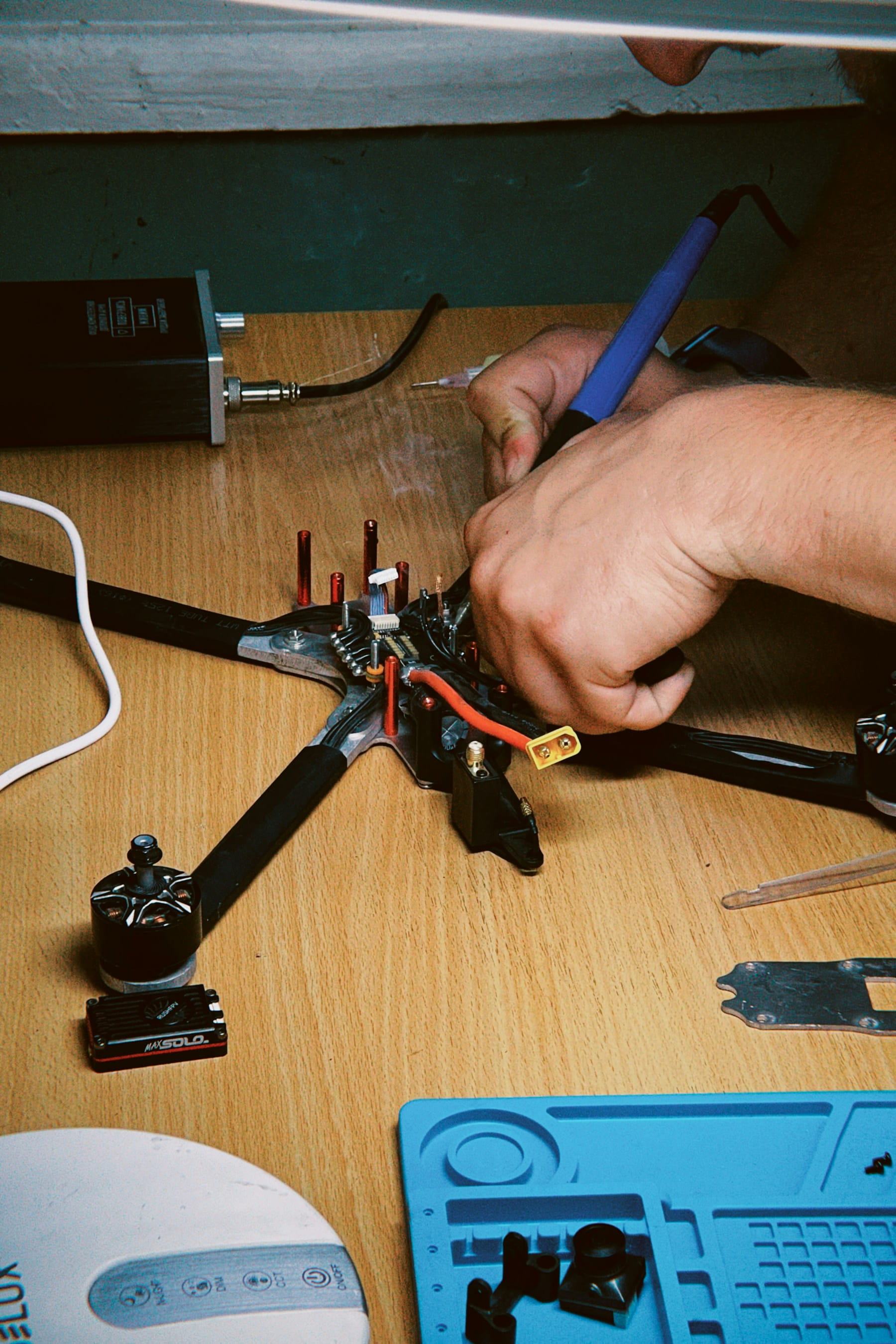
Drone maintenance jobs require technicians to perform scheduled inspections, diagnose faults, replace components, update firmware, and document every action for compliance records. The work is hands-on. You are dealing with motors, ESCs, flight controllers, GPS modules, gimbal assemblies, batteries, and airframe structures, sometimes in a workshop, sometimes in the field between flights.
A typical cycle: pre-flight checks before each mission, post-flight inspections after landing, scheduled maintenance intervals based on flight hours, and unscheduled repairs when something breaks.
The critical difference between hobby tinkering and professional drone maintenance is documentation. Commercial operators must maintain detailed logs for every aircraft. Regulatory bodies and insurance providers require proof of manufacturer-spec maintenance. A technician who can fix a drone but cannot document the repair is a liability.
Types of drone maintenance positions
Drone maintenance positions fall into five categories, each with different work environments, skill requirements, and pay bands.
In-house fleet technicians work directly for drone service companies. These are the most common drone maintenance jobs. You maintain a fleet of 10 to 50 aircraft on the company's mission planning calendar. Companies running inspection services, construction monitoring, or surveying operations need dedicated maintenance staff once their fleet exceeds five or six aircraft.
Manufacturer service center technicians work for OEMs at authorized repair facilities, handling warranty repairs, refurbishment, and quality control testing. Pay tends to be stable, and the work is workshop-based.
Third-party repair shop technicians service multiple drone brands through independent businesses. This path suits technicians with broad hardware knowledge across platforms.
Delivery fleet maintenance technicians are the fastest-growing category. Autonomous delivery operations run hundreds of flights daily, and each aircraft needs pre-flight checks, battery cycling, component swaps, and software updates at automotive-assembly pace. These roles come with structured shifts, standardized procedures, and benefits typical of large logistics operations.
Field maintenance specialists travel to job sites for large-scale operations. Solar panel inspections, power line surveys, and wind turbine assessments run multi-day campaigns in remote locations. These roles pay a premium for the travel demands and the expectation that you can solve problems with limited parts and no workshop.
Drone maintenance technician salary breakdown
Drone maintenance technician salaries average $52,701 for civilian roles and $99,317 for defense positions, per 2026 ZipRecruiter and Glassdoor data. That gap is the most important thing to understand about compensation in this field.
| Experience Level | Civilian Salary | Defense/Gov Salary | Hourly Range |
|---|---|---|---|
| Entry-level (0-1 years) | $35,000 - $50,000 | $55,000 - $70,000 | $17 - $34 |
| Mid-level (2-4 years) | $50,000 - $68,000 | $70,000 - $100,000 | $24 - $48 |
| Senior / specialist (5+ years) | $68,000 - $90,000 | $100,000 - $130,000 | $33 - $63 |
| Field / deployed roles | $60,000 - $90,000 | $125,000 - $150,000 | $29 - $72 |
| Fleet ops manager | $100,000 - $150,000 | $150,000 - $243,000 | $48 - $117 |
Geography matters. Technicians in the Bay Area, Denver, and Houston earn 15-25% above the national average. Alaska pays the highest premium (24% above) due to remote operations and limited local talent.
Specialization drives pay upward. Technicians working on LiDAR systems, thermal imaging, or RTK positioning hardware command higher rates because fewer people have those skills. A general technician earns $50K. One who can recalibrate a LiDAR sensor and verify accuracy against ground truth earns $75K or more.
The title arbitrage most technicians miss
Here is a data point that changes how you should think about your career in drone maintenance. The average salary for a "Drone Technician" on Glassdoor is $55,785. The average for a "UAV Technician" is $99,317. That is an 88% pay difference for roles that often require the same core skills.
Civilian companies post "drone technician" jobs. Defense contractors post "UAV technician" roles. The naming convention means technicians who only search "drone" never see the higher-paying listings.
If you are qualified for civilian drone maintenance, you are likely qualified for entry-level defense UAV positions. The MOS 15W (Unmanned Aircraft Systems Repairer) pipeline from military service into defense contracting is established, but civilian technicians with A&P certificates also get hired. Search both titles on every job board.
Required certifications and training
Here is something most career guides miss entirely: there is no FAA-mandated maintenance certification for small UAS in the United States. FAA Part 43, which governs all manned aircraft maintenance, does not apply to most drones operating under Part 107. The FAA's ASSURE research alliance has recommended creating UAS-specific ratings under Part 145 repair station standards, but those recommendations have not been codified into regulation.
This regulatory vacuum is likely to narrow as drone delivery scales, and the proposed Part 108 rule would require maintenance records for BVLOS fleets if it is finalized. Technicians who stack credentials now will be ahead when federal standards arrive.
FAA Part 107 Remote Pilot Certificate. Most employers expect it. You need to test-fly aircraft after repairs, and doing so commercially without Part 107 violates federal law.
FAA Airframe and Powerplant (A&P) Certificate. Traditional aviation maintenance credentials carry weight for larger UAS operations and defense contracts. The A&P requires 18-30 months of training or equivalent work experience, followed by written, oral, and practical exams. Opens doors to the $90K+ tier.
Manufacturer training programs. OEMs offer 3-5 day certification courses covering platform-specific disassembly, diagnostics, and repair. Employers value these because they reduce warranty liability.
AUVSI Trusted Operator Program (TOP). The Association for Unmanned Vehicle Systems International offers three certification levels covering Part 107 operations through safety-critical complex operations. Valid for two years.
Technical diplomas in avionics, electronics, or mechatronics from community colleges run 12-24 months and cost a fraction of a four-year degree.
Skills employers screen for
Technical skills get you in the door. Practical problem-solving keeps you employed.
Electronics troubleshooting is the baseline. You need to read circuit schematics, use multimeters and oscilloscopes, solder surface-mount components, and diagnose board-level issues. Most drone failures trace back to electrical problems: corroded connectors, failing ESCs, intermittent GPS signals, or degraded battery cells.
Firmware and software proficiency. Technicians update firmware, configure flight controllers, adjust PID tuning, and troubleshoot software issues. Familiarity with manufacturer diagnostic tools, Mission Planner, and QGroundControl is expected.
Mechanical aptitude. Airframe inspection, propeller balancing, gimbal alignment, and motor bearing assessment. You should be comfortable with small fasteners, carbon fiber structures, and precision assemblies.
Documentation and compliance. Every repair and part replacement must be logged. Employers need technicians who maintain accurate maintenance records using fleet management platforms. Sloppy documentation creates audit risk and insurance liability.
Battery management. LiPo batteries are the most common failure point and biggest safety concern. Charge cycles, internal resistance testing, storage protocols, cell balancing, disposal procedures. Mishandled batteries cause fires.
Data literacy. The emerging differentiator. Technicians who interpret predictive maintenance dashboards, work with CMMS platforms, and understand anomaly detection outputs are commanding premium salaries. The pure wrench-turner role is shrinking. The technician-analyst hybrid is growing.
Where to find drone maintenance jobs
Drone maintenance jobs are not always listed under that exact title. Employers use variations: UAV technician, UAS maintenance specialist, drone repair technician, unmanned systems mechanic, and field service engineer. Search all of these.
Industry job boards. AUVSI's job board and Commercial UAV News careers section list maintenance-specific positions that get buried on larger platforms.
Drone service companies. Companies running commercial drone inspection businesses with growing fleets often post maintenance roles on their own websites first. Check careers pages of the largest operators in your region.
Defense contractors. Major defense companies regularly hire UAS maintenance technicians. Roles appear on ClearanceJobs and contractor career pages. Security clearance eligibility is usually required, but some companies sponsor the process.
Delivery operations. Autonomous delivery companies are building maintenance teams at distribution hubs. These roles use logistics-adjacent titles like "fleet maintenance technician" or "aircraft service technician" rather than "drone technician."
Manufacturer service networks. Authorized repair networks hire technicians and provide factory training as part of onboarding.
Industry events. AUVSI XPONENTIAL and Commercial UAV Expo connect you with hiring managers. Many drone maintenance jobs are filled through referrals because the talent pool is small.
Career progression
Drone maintenance is not a dead-end role. It is an entry point into a technical career with a ceiling above $200K for the right path.
Junior technician to senior technician (1-3 years). Start with routine inspections and basic repairs. Expand into complex diagnostics and equipment management independently.
Maintenance lead (3-5 years). Oversee a technician team, manage spare parts, set maintenance schedules, and make airworthiness decisions.
Fleet maintenance manager (5-8 years). Design maintenance programs for entire fleets, manage budgets, and ensure regulatory compliance. Salaries: $100K to $150K civilian, higher in defense.
Director of fleet operations (8+ years). Own maintenance strategy, vendor relationships, and the data infrastructure behind predictive maintenance. Compensation: $150K to $243K depending on fleet size and sector.
Lateral moves. Some technicians shift into drone data processing, flight test engineering, regulatory consulting, or sales engineering. Hands-on knowledge of how drones break and get fixed is context that pure software or sales professionals lack.
How fleet software is changing maintenance roles
The shift from reactive to predictive maintenance is the single biggest change in what drone maintenance technicians do day-to-day. It is also creating the widest pay gap between technicians who adapt and those who do not.
Modern fleet management platforms like DroneBundle automate maintenance scheduling, track component flight hours, flag aircraft approaching service intervals, and generate compliance reports. But the real shift is in what happens before something breaks.
Platforms that integrate flight data monitoring identify abnormal vibration patterns, battery degradation trends, and motor performance drops before they cause failures. Sensor data feeds into anomaly detection models that generate prioritized work orders. Instead of discovering a problem during a scheduled inspection, the system tells the technician exactly what to check, on which aircraft, and why.
Organizations investing in predictive maintenance see roughly 40% better operational efficiency (PwC). Less experienced technicians acclimate faster with pre-diagnosed, step-by-step task cards. Work gets scheduled during optimal windows rather than crisis-driven.
The career implication: technicians who develop software and data literacy alongside hardware skills will sit in the highest salary band. CMMS platforms, digital twin models, and AI-powered diagnostics are no longer optional for anyone who wants to stay competitive.
Frequently asked questions
Do I need a degree to get a drone maintenance job?
No. Most drone maintenance jobs require a technical diploma or hands-on experience rather than a four-year degree. Community college programs in electronics, avionics, or mechatronics provide sufficient training. Formal credentials improve competitiveness for positions above $60K.
What is the difference between civilian and defense drone maintenance pay?
Civilian drone technicians average $52,700 per year. Defense UAV technicians average $99,300, an 88% premium. Defense roles involve larger aircraft systems (optical payloads, RF systems, avionics, guidance), require security clearances, and sometimes involve deployment where contractors earn $125,000 to $150,000.
Is there a federal maintenance certification for drones?
Not yet. Unlike manned aviation (Part 43 and Part 65), there is no FAA mandate for small UAS maintenance. The ASSURE research alliance has recommended UAS-specific ratings under Part 145, but those have not become regulation. Technicians who build credentials now will be ahead when standards arrive.
Is drone maintenance a growing career field?
Yes. The drone maintenance market is valued at $2 billion (2025) and projected to reach $6.8 billion by 2035 at 13% annual growth. Inspection and maintenance is expected to surpass agriculture as the leading commercial drone revenue segment by 2030.
Ready to manage drone maintenance across your fleet?
Track aircraft service intervals, log repairs with full audit trails, and flag maintenance due dates before they ground your operations.
Start your free trial today, no credit card required.
Or try the live demo to see maintenance tracking and fleet management in action.