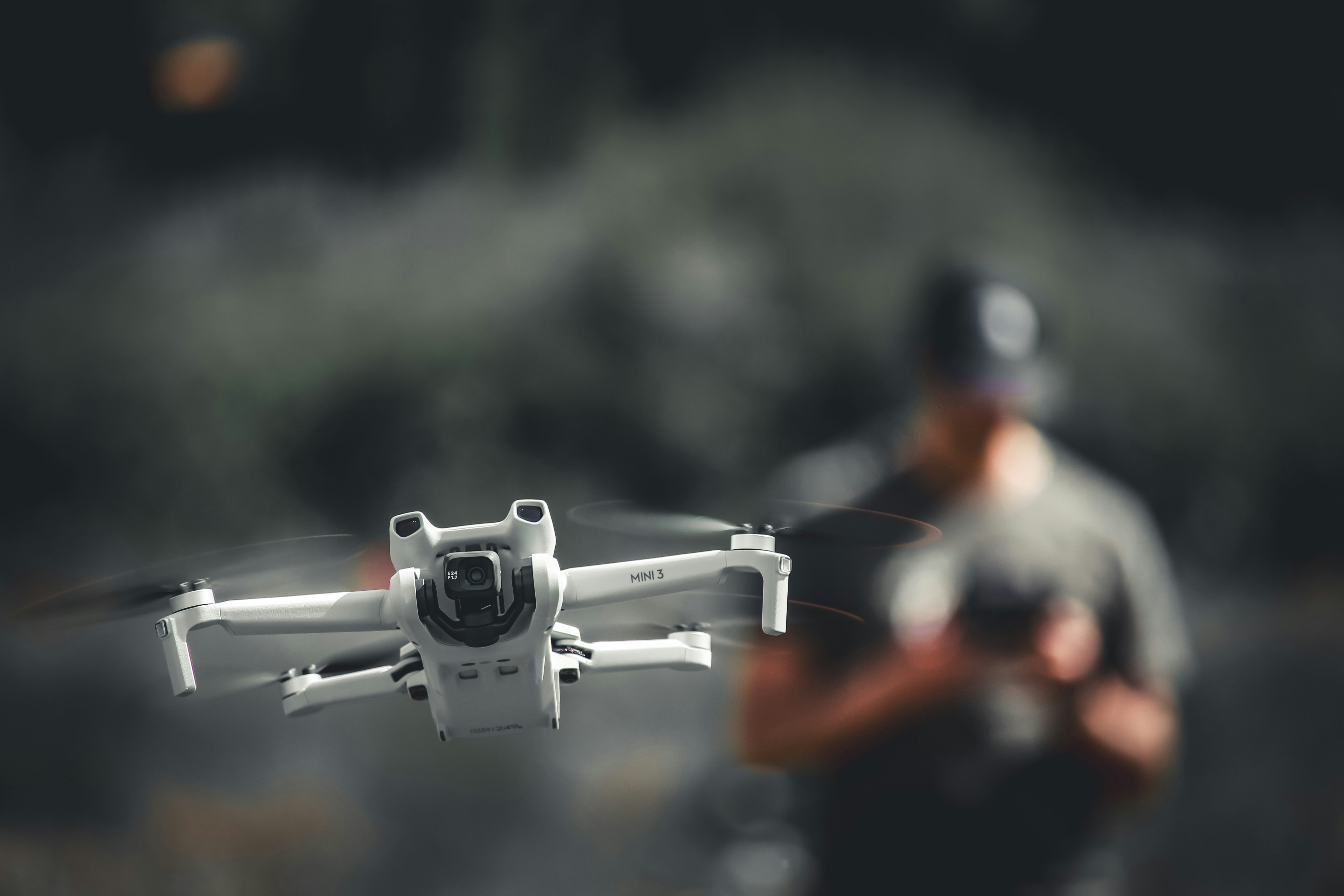

What are Drone Jobs?
Drone jobs encompass all career opportunities within the unmanned aircraft systems (UAS) industry, including pilot positions, engineering roles, software development, data analysis, sales, training, and operations management. The drone industry employs professionals across manufacturing, services, and enterprise applications, with over 427,000 FAA-certified remote pilots in the United States alone.
The drone jobs market has expanded far beyond flying aircraft. While drone pilot positions remain the most visible career path, the industry now demands engineers, software developers, data analysts, sales professionals, and operations managers. Understanding the full landscape of drone jobs helps professionals identify opportunities matching their skills and interests.
The FAA reports continued growth in commercial drone operations, with industries from construction to public safety integrating UAS into daily workflows. This expansion creates diverse employment opportunities for both technical specialists and business professionals seeking careers in aviation technology.
Overview of drone jobs in 2026
The drone industry offers career paths across multiple disciplines. According to the National Business Aviation Association, drone careers provide viable, lucrative, and exciting opportunities for professionals entering aviation technology.
Industry growth projections indicate the global drone market will reach $54.6 billion by 2030, creating sustained demand for skilled workers across all job categories. The United States leads commercial drone adoption, with enterprises integrating UAS for inspection operations, mapping, delivery, and security applications.
Job categories overview
| Category | Example Roles | Salary Range | Growth Outlook |
|---|---|---|---|
| Pilot/Operator | Commercial pilot, inspection specialist | $50,000-$100,000+ | High |
| Engineering | Hardware engineer, systems engineer | $83,000-$155,000 | Very High |
| Software | Autonomy developer, flight systems programmer | $85,000-$150,000 | Very High |
| Data/GIS | Photogrammetrist, GIS analyst | $55,000-$90,000 | High |
| Sales/Business | Account manager, business development | $60,000-$120,000+ | Moderate |
| Training | Instructor, curriculum developer | $50,000-$80,000 | Moderate |
Understanding which category aligns with your background helps focus job search efforts and professional development investments.
Drone pilot careers
Pilot positions represent the most accessible entry point for many professionals. Commercial drone pilots operate aircraft for business purposes including aerial photography, inspections, mapping, and surveillance.
Certification requirements
All commercial drone pilots must obtain FAA Part 107 certification under 14 CFR Part 107 regulations. The certification process requires:
- Minimum age of 16 years
- English language proficiency
- Passing the aeronautical knowledge exam (70% minimum score)
- TSA background check clearance
- Recurrent training every 24 months
The Part 107 exam covers airspace classifications, weather interpretation, drone regulations, and emergency procedures. Most candidates complete preparation within two to four weeks using study materials and practice tests.
Pilot specializations
Commercial pilots often specialize in specific applications that command premium rates:
Inspection pilots survey power lines, cell towers, buildings, and infrastructure. These roles require understanding structural defects, thermal signatures, and systematic coverage patterns. Inspection work provides steady employment with utilities and engineering firms.
Mapping and survey pilots capture georeferenced imagery for surveying operations, construction monitoring, and land management. These positions require familiarity with ground control points, photogrammetry principles, and coordinate systems.
Thermal imaging specialists operate infrared cameras for building diagnostics, solar panel inspections, and search operations. The thermal imaging business offers strong margins for pilots with proper training and equipment.
Pilot salary expectations
Entry-level pilots typically earn $35,000-$50,000 annually in staff positions. Experienced operators with specializations command $70,000-$100,000 or more. Factors affecting compensation include:
- Geographic location and cost of living
- Industry sector and application complexity
- Equipment proficiency and certifications held
- Flight hours and documented experience
Pilots who track flight hours systematically demonstrate professionalism that employers value during hiring decisions.
Engineering and technical roles
Engineering positions support drone development, manufacturing, and integration. These roles require formal education in engineering disciplines combined with aviation or robotics experience.
Hardware engineering
Hardware engineers design physical drone components including airframes, propulsion systems, flight controllers, and sensor payloads. According to the Bureau of Labor Statistics, aerospace and related engineering fields show steady employment growth. Employers prefer candidates with degrees in mechanical, aerospace, or electrical engineering.
Key responsibilities include:
- Flight dynamics analysis and optimization
- Propulsion system design and testing
- Structural analysis for payload capacity
- Component selection and integration
- Production engineering and quality control
Hardware engineers at drone manufacturers earn $83,000-$155,000 annually depending on experience and specialization.
Systems engineering
Systems engineers integrate multiple subsystems into functional drone platforms. They ensure avionics, sensors, communications, and flight controls work together reliably. This role bridges hardware and software teams while managing technical requirements.
Systems engineers often work on equipment management platforms, fleet integration projects, and enterprise deployment programs.
Field service engineering
Field service engineers deploy, maintain, and troubleshoot drone systems at customer sites. These positions combine technical knowledge with customer interaction skills. Field engineers travel frequently to support enterprise customers in surveying and inspection sectors.
Software development positions
Software development represents one of the fastest-growing drone job categories. Developers create applications controlling flight operations, processing sensor data, and managing drone fleets.
Flight systems development
Flight systems developers write code running on drone autopilots and ground control stations. They work with real-time operating systems, control algorithms, and communication protocols.
Required skills include:
- Embedded systems programming (C, C++)
- Real-time control systems (PID controllers, Kalman filters)
- Communication protocols (MAVLink, ROS)
- Flight stack experience (PX4, ArduPilot)
Application development
Application developers build software that drone operators use for flight planning, mission management, and data processing. These positions focus on user experience, cloud integration, and workflow automation.
Drone operations software companies hire developers proficient in web technologies, mobile development, and cloud infrastructure. Platforms with comprehensive features for fleet management and compliance tracking need skilled developers. Full-stack developers with aviation domain knowledge command premium compensation.
Autonomy and AI development
Autonomy specialists develop artificial intelligence systems enabling drones to navigate, detect obstacles, and make decisions independently. These cutting-edge positions require machine learning expertise combined with robotics knowledge.
Companies like Skydio and research institutions lead autonomy development, offering salaries from $120,000 to $200,000 for experienced AI engineers.
Data analysis and GIS careers
Drones generate massive datasets requiring specialized analysis. Data professionals extract actionable insights from aerial imagery, LiDAR point clouds, and sensor measurements.
Photogrammetry specialists
Photogrammetrists process drone imagery into accurate maps, 3D models, and orthomosaics. They understand camera calibration, georeferencing, and accuracy assessment. Construction and infrastructure companies employ photogrammetrists for progress monitoring and volumetric analysis.
GIS analysts
GIS analysts integrate drone data with geographic information systems. They create maps, perform spatial analysis, and maintain geospatial databases. Agriculture, forestry, and environmental organizations hire GIS professionals to analyze drone-collected data.
Remote sensing specialists
Remote sensing specialists interpret multispectral, thermal, and LiDAR data captured by drone sensors. Agricultural applications rely on remote sensing to assess crop health, irrigation needs, and yield predictions.
Sales and business development
The commercial drone industry needs professionals who can articulate technical value to enterprise customers. Sales roles bridge technology capabilities with business requirements.
Enterprise sales
Enterprise sales professionals sell drone hardware, software, and services to large organizations. They manage complex procurement processes involving multiple stakeholders. Successful representatives understand both technology specifications and customer business drivers.
Enterprise drone sales positions typically include base salaries of $60,000-$80,000 plus commissions that can double total compensation.
Business development
Business development managers identify new market opportunities, forge partnerships, and develop go-to-market strategies. These strategic roles shape company direction and require industry knowledge combined with business acumen.
Channel management
Channel managers work with resellers, integrators, and distributors who sell drone products. They provide training, support, and incentives to drive partner sales performance.
Training and education roles
As the drone industry grows, demand for qualified instructors increases. Training roles help new pilots and operators develop skills safely.
Flight instructors
Flight instructors teach practical drone operation skills. They design curricula, conduct hands-on training, and evaluate student performance. Many instructors work for FAA-approved drone schools preparing candidates for Part 107 certification.
Curriculum developers
Curriculum developers create training materials, online courses, and certification programs. They translate complex regulations and technical concepts into accessible learning experiences.
Corporate trainers
Large organizations deploying drone programs need internal trainers to onboard employees. Corporate trainers develop organization-specific procedures, ensure compliance with regulations, and maintain training records.
Industry sectors hiring drone professionals
Different industries emphasize different drone job categories based on their operational needs.
Construction and infrastructure
Construction firms hire pilots for progress monitoring, volumetric measurements, and site documentation. They also employ data analysts who process imagery into actionable reports for project managers.
Utilities and energy
Utility companies maintain large pilot teams for transmission line, substation, and pipeline inspections. They invest heavily in data analysis to identify maintenance priorities across vast asset networks.
Public safety
Public safety agencies employ pilots for search and rescue, accident reconstruction, and tactical operations. These positions often require law enforcement or firefighting backgrounds combined with aviation skills.
Agriculture
Agricultural drone operations combine piloting with agronomy knowledge. Pilots who understand crop science command premium rates for precision agriculture services.
Surveying and mapping
Professional surveying firms integrate drones into traditional workflows. They hire pilots with survey knowledge and photogrammetrists who produce deliverables meeting professional standards.
Frequently asked questions
What qualifications do I need for drone jobs?
Qualifications vary by role. Pilot positions require Part 107 certification at minimum, with specialized training for inspection or mapping work. Engineering roles typically require bachelor's or master's degrees in relevant disciplines. Software development positions emphasize programming skills and portfolio projects over formal degrees. Sales and business roles value industry knowledge and customer relationship experience.
How much do drone jobs pay in 2026?
Compensation spans a wide range depending on role and experience. Entry-level pilots earn $35,000-$50,000 annually, while specialized operators and supervisors reach $70,000-$100,000. Engineering and software positions range from $83,000-$155,000. Sales professionals with strong performance can exceed $150,000 through base salary plus commissions.
Can I start a drone career without experience?
Yes, though entry paths differ by role. Aspiring pilots can obtain Part 107 certification independently and build experience through freelance work or entry-level positions. Technical roles typically require relevant education or demonstrated skills through personal projects. Consider starting a drone business to gain experience while building a client base.
Which drone jobs have the best growth outlook?
Software development and autonomy engineering show the strongest growth as companies invest in automated systems. Pilot positions remain steady with particular demand for inspection specialists. Data analysis roles grow alongside enterprise drone adoption. Engineering positions fluctuate with hardware development cycles and manufacturing investments.
Implementation considerations
Entering the drone job market requires strategic planning based on your background and target role. Technical professionals should build portfolios demonstrating relevant skills through personal projects, open-source contributions, or freelance work.
Aspiring pilots benefit from obtaining Part 107 certification before job searching, as this demonstrates commitment and eliminates training time for employers. Documenting flight hours and building proficiency with industry-standard equipment strengthens applications.
Consider geographic factors when planning your career. Major drone employers concentrate in technology hubs, though field positions exist nationwide. Remote ID requirements and evolving regulations create compliance-focused roles across all regions.
Networking within the drone community accelerates job discovery. Industry associations, trade shows, and online communities connect professionals with opportunities before public posting. Many positions fill through referrals rather than job board applications.
In summary
Drone jobs extend far beyond flying aircraft. The industry employs pilots, engineers, software developers, data analysts, sales professionals, and trainers across diverse sectors. Understanding the full landscape helps professionals identify opportunities matching their skills and career goals.
Growth projections remain strong across most job categories, with software development and autonomy engineering leading expansion. Pilot positions provide accessible entry points while technical roles offer premium compensation for qualified candidates.
Success in drone careers requires continuous learning as technology and regulations evolve. Professionals who maintain current certifications, build specialized expertise, and adapt to industry changes position themselves for long-term career growth in this dynamic field.
Ready to advance your drone career?
Professional drone operations require systematic approaches to flight documentation, equipment tracking, and compliance management. Whether you're building experience as a pilot or managing teams of operators, organized workflows demonstrate the professionalism employers and clients expect.
Start your free trial today - no credit card required.
Or book a demo to see how DroneBundle helps drone professionals manage operations with flight logging and insurance documentation.