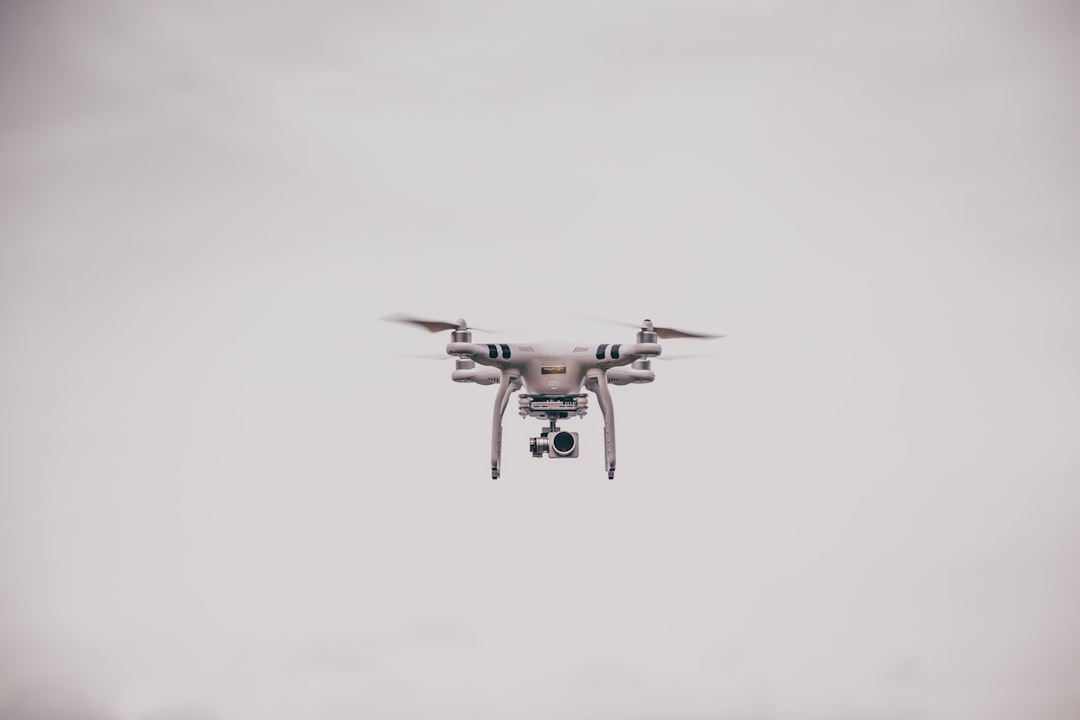
Drone delivery companies are transforming last-mile logistics by using autonomous aircraft to move packages, medical supplies, and food directly to consumers. Companies like Zipline, Wing, and Amazon Prime Air have moved from pilot programs to commercial-scale operations across multiple U.S. metro areas.
In January 2026, Zipline announced it had surpassed 2 million commercial deliveries and 125 million autonomous miles flown without a serious injury. Wing completes thousands of deliveries weekly in Dallas-Fort Worth alone, with average door-to-door times under 20 minutes. Amazon Prime Air now operates in eight U.S. metro areas and is targeting 500 million packages annually by 2030.
This is not a future industry. It is a present one.
But the public-facing story of a drone dropping a package on your doorstep hides enormous operational complexity. Behind every successful delivery sits a web of FAA certifications, fleet management systems, airspace coordination, and real-time logistics that most articles about drone delivery companies never touch. This guide covers the major players, the regulatory framework that governs them, the technology that makes it work, the economics that determine viability, and the operational realities that separate the companies that will survive from those that will burn through their funding.
Major drone delivery companies operating today
Six companies hold FAA Part 135 air carrier certificates for drone delivery, making them the only operators authorized to carry packages for compensation beyond visual line of sight in U.S. airspace. Several more are expanding internationally or pursuing U.S. certification. Here is how the major players compare.
| Company | Payload Capacity | Key Focus | Regulatory Status |
|---|---|---|---|
| Zipline | 3.9 lbs | Medical, retail, food | FAA Part 135 (2022) |
| Wing (Alphabet) | 2.5 lbs | Consumer parcels, food | FAA Part 135 (2019) |
| Amazon Prime Air | 5 lbs | E-commerce packages | FAA Part 135 (2020) |
| DroneUp | 10 lbs | Retail, healthcare | FAA Part 135 (2024) |
| Drone Delivery Canada | 180 kg (Condor) | Industrial, remote | Canadian certified |
| Manna | 4.4 lbs | Food, pharmacy | Expanding to U.S. |
| Wingcopter | 13.2 lbs | International, medical | Operating in 8 countries |
Zipline is the largest drone delivery company in the world by volume. With over 2 million completed deliveries across multiple continents, the company has completed more deliveries than all other drone delivery companies combined. Originally focused on blood and vaccine delivery in Rwanda, where its operations save more than 10,000 lives per year, Zipline now serves restaurants, grocery stores, and healthcare facilities in the U.S. In January 2026, the company raised $600 million at a $7.6 billion valuation and announced expansion into Houston and Phoenix, with plans to enter at least four new states during the year. Zipline's newer sites reach 100 deliveries per day within just two days of launching, compared to ten weeks for earlier locations.
Wing, Alphabet's drone delivery subsidiary, was the first company to receive FAA Part 135 certification in 2019. Wing has integrated its platform with major retailers like Walmart and Walgreens and recently expanded its DoorDash partnership to metro Atlanta. Their delivery fleet can fly up to 65 mph, carry about 2.5 pounds, and travel up to 12 miles round-trip. Deliveries tripled between the first and second halves of 2025, and Wing has since announced plans to add 150 more Walmart stores to its network.
Amazon Prime Air operates its MK30 drone, which is 40% quieter than previous models, across eight U.S. metro areas: Phoenix, Dallas-Fort Worth, Waco, San Antonio, Tampa, Detroit, Kansas City, and the Chicago suburbs. With a 7.5-mile delivery radius and speeds up to 50 mph, Amazon targets sub-60-minute delivery for packages under 5 pounds. The MK30 descends to about 13 feet above the ground before releasing the package, scanning the area to confirm it is clear of pets, vehicles, or people. Amazon's stated goal is 500 million drone deliveries per year by 2030.
DroneUp, based in Virginia Beach, takes a different approach by maintaining a network of over 22,000 drone pilots across the country. Their Part 135 certification, secured in late 2024, expanded their delivery radius to five miles per hub, a 300% increase in serviceable households. DroneUp is targeting costs below $7 per delivery, down from roughly $30 in earlier operations.
Manna raised $50 million in Series B funding in early 2026, backed by ARK Invest and others, and plans to open up to 40 new operational bases in the U.S. Originally from Ireland, Manna has completed over 250,000 regulated commercial UAV flights to date and plans to grow its workforce from 170 to over 570 employees.
Wingcopter, based in Germany, focuses on international operations and has deployed delivery drones in eight countries. Their aircraft can carry up to 13.2 lbs, giving them an edge in medical supply logistics where heavier payloads are common.
Two companies worth watching in adjacent spaces are Elroy Air, developing a heavy-lift hybrid eVTOL capable of carrying 300 lbs over 300 miles, and Matternet, which focuses exclusively on medical supply delivery across multiple continents.
How drone delivery actually works
A drone delivery operation is not a single drone flying a single route. It is an orchestrated system involving order management, flight planning, weather assessment, airspace authorization, real-time monitoring, and last-mile navigation, all happening simultaneously across dozens of aircraft.
The workflow starts at a micro-fulfillment center or retail hub. When an order qualifies for drone delivery based on weight, distance, and destination type, the system assigns it to an available aircraft. The drone's flight path is planned automatically, factoring in airspace restrictions, active weather conditions, and other drones already in the air. Weather integration is critical here because wind speed, precipitation, and visibility thresholds determine whether a flight can launch at all.
During flight, operators monitor telemetry in real time. Live tracking systems feed GPS coordinates, altitude, battery status, and motor temperatures back to a central operations dashboard. If anything deviates from expected parameters, a remote pilot can intervene or trigger an automated return-to-base sequence. Most companies maintain a ratio of one remote pilot monitoring multiple aircraft simultaneously, with automated systems handling routine flight while humans manage exceptions.
The final step is the delivery itself. Most companies use a lowering mechanism, a cable or winch that drops the package from a hover point, rather than landing the drone. Amazon's MK30, for example, hovers at 13 feet and lowers the package after scanning the drop zone for obstructions. This approach avoids ground-level obstacles and reduces the footprint needed for a delivery zone to roughly 7 feet of clear space.
What makes this complex at scale is coordination. A single hub might have 10 to 20 drones operating simultaneously, each on different routes, at different altitudes, with different battery states. Unmanned traffic management systems prevent conflicts, but the orchestration layer, the software that decides which drone flies which route and when, is where delivery companies invest most heavily. Zipline's operational improvement from ten weeks to reach 100 daily deliveries down to just two days reflects how much this orchestration software has matured.
The technology stack behind autonomous delivery
Autonomous drone delivery depends on three interlocking technology layers: sense-and-avoid systems, navigation and flight control, and airspace management. Each layer has to work independently and in concert with the others.
Detect-and-avoid (DAA) systems are the electronic equivalent of a pilot's eyes. Using a combination of radar, LiDAR, optical cameras, acoustic sensors, and ADS-B receivers, DAA systems continuously scan surrounding airspace for manned aircraft, other drones, birds, and physical obstacles like cranes or power lines. When a potential conflict is detected, the system calculates time-to-impact, assesses collision probability, and either alerts the remote operator or executes an autonomous avoidance maneuver. The FAA's proposed Part 108 rule, published in August 2025, would set performance-based requirements for avoiding other aircraft without mandating specific technologies. The aircraft would need to be designed to yield to crewed aircraft as the rule requires (§108.825), and safe distance would be set by "a method acceptable to the Administrator" (§108.195(b)) rather than a fixed number in the rule.
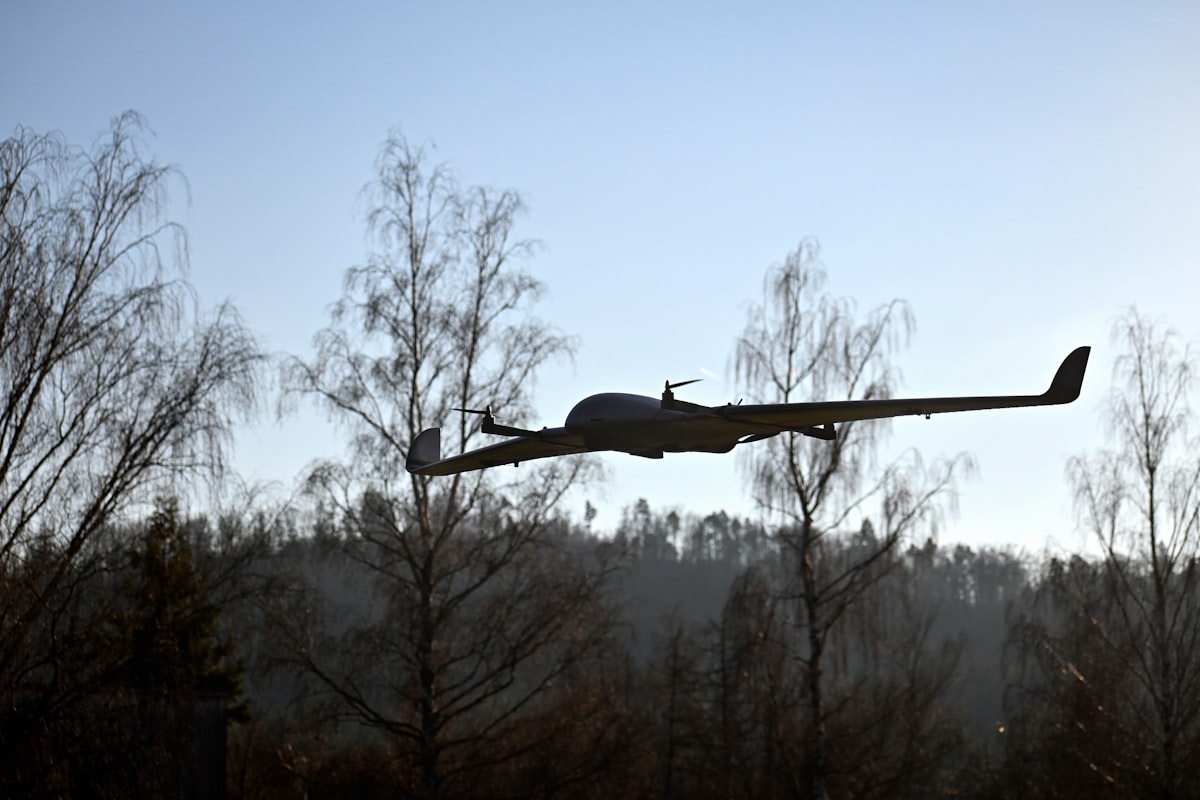
Navigation and flight control systems go beyond simple GPS waypoint following. Delivery drones operate at low altitudes (typically 100-200 feet) in environments filled with structures, vegetation, and terrain variations that GPS alone cannot account for. Companies layer visual odometry, inertial measurement units, barometric altimeters, and terrain-following radar to maintain precise positioning. Zipline's fixed-wing drones use a different navigation approach than the multirotor aircraft used by Wing or Amazon, with launch catapults and parachute delivery mechanisms instead of vertical landing.
Airspace management at scale requires integration with both FAA systems (LAANC for low-altitude authorization) and emerging UTM (unmanned traffic management) frameworks. Amazon is building what it describes as "air traffic control for drones," a system that coordinates flight paths across its entire fleet while deconflicting with other operators in shared airspace. As delivery volumes grow and multiple companies operate in overlapping areas, standardized UTM protocols become essential to prevent conflicts. The GAO has specifically called out the need for better FAA planning around how drones will communicate with and avoid other aircraft.
FAA Part 135 certification and the regulatory landscape
Part 135 air carrier certification is the regulatory gateway for commercial drone delivery in the United States. Without it, a company cannot legally carry the property of another person for compensation beyond visual line of sight.
The FAA adapted Part 135, originally written for manned air carriers, to accommodate drone operations. The certification process involves five phases: pre-application, formal application, design assessment, performance assessment, and administrative functions. Companies typically spend 12 to 24 months navigating the certification pipeline.
There are four certificate types, each with different operational scopes:
- Single Pilot: One named pilot only
- Single Pilot in Command: One PIC plus up to three additional pilots
- Basic: Up to five pilots and five aircraft
- Standard: No limits on pilots or aircraft; the most operationally flexible certificate
As of April 2026, six companies hold Part 135 certificates for drone delivery: Wing Aviation (2019), UPS Flight Forward (2019), Amazon Prime Air (2020), Zipline (2022), Causey Aviation Unmanned (2023), and DroneUp (2024).
Beyond Part 135, delivery operators must also comply with Part 107 regulations for their non-delivery operations, maintain FAA registration for every aircraft, and secure airspace authorizations for each delivery zone. BVLOS authority adds another layer. Delivery operators get it through Section 44807 exemptions paired with their Part 135 certificates, because a Part 107 BVLOS waiver cannot cover carrying other people's property for pay. The proposed Part 108 rule for routine BVLOS operations could simplify the regulatory path significantly, but until it is finalized, Part 135 remains the primary pathway for delivery at scale. The regulatory burden is one reason why only a handful of companies have reached commercial-scale delivery operations despite hundreds of startups entering the space.
Unit economics and the path to profitability
The financial viability of drone delivery hinges on one number: cost per delivery. Right now, the gap between current costs and sustainable margins is the industry's defining challenge.
Estimates for current cost per drone delivery range from $15 to $30 depending on the operator, market density, and route characteristics. DroneUp has publicly stated its target is below $7 per delivery, down from roughly $30 in early operations. For comparison, traditional last-mile ground delivery costs $8 to $12 per package in most U.S. markets. PwC projects that costs could eventually reach $2 per parcel once automation fully matures.
The consensus among major e-commerce operators is that drone delivery needs to cost between $8 and $12 per delivery to generate margin at scale. Closing the gap from $15-30 down to that range requires a 40 to 60 percent reduction in unit costs.
Several factors drive cost reduction:
Delivery density is the single biggest lever. A hub completing 200+ deliveries per day amortizes its fixed costs (facility, staff, equipment, certifications) across enough volume to approach viability. The current average across operating networks sits at 3 to 8 deliveries per drone per day. Zipline's newer hubs reaching 100 daily deliveries within days of launching suggests the density problem is solvable, at least in the right markets.
Aircraft utilization matters enormously. Each drone sitting on the ground between flights represents idle capital. Battery swap times, maintenance windows, weather holds, and airspace delays all eat into utilization rates. Companies optimizing for throughput can squeeze 12 to 15 flights per drone per day.
Automation of ground operations reduces the labor cost per delivery. Loading packages, swapping batteries, and performing pre-flight checks still require human involvement at most operations. Zipline's catapult-launched fixed-wing approach automates more of the ground handling than multirotor systems, which contributes to their volume advantage.
Regulatory efficiency plays a role too. Each airspace authorization, pilot certification, and compliance audit has a cost. Companies operating under a single Part 135 Standard certificate with broad BVLOS authorization face lower per-flight regulatory overhead than those piecing together separate approvals for each new delivery zone.
Fleet management challenges delivery companies face
The biggest operational bottleneck for drone delivery companies is not the technology. It is fleet management at scale.
Consider a mid-sized delivery hub running 15 drones across an 8-hour delivery window. That is potentially 200+ flights per day. Each flight needs a charged battery, a maintained aircraft, a qualified pilot (remote or on-site), proper airspace authorization, and acceptable weather conditions. One variable going wrong cascades through the entire schedule.
Battery logistics alone are staggering. If each drone flies 12 to 15 missions per day with a 20-minute turnaround for battery swaps and charging, a single hub needs 40 to 60 batteries in active rotation. Tracking charge cycles, degradation curves, and swap schedules manually is not viable at this volume.
Maintenance scheduling becomes predictive rather than reactive. When you are flying hundreds of sorties daily, waiting for something to break is not an option. Motor hour tracking, vibration analysis, and component lifecycle management all feed into automated maintenance scheduling systems that flag issues before they ground aircraft.
Pilot management adds complexity even in highly automated operations. Most delivery companies still require remote pilots to monitor flights and intervene when needed. Managing pilot certifications, flight hour limits, and shift scheduling across multiple hubs requires dedicated operations software.
Compliance tracking at this scale means hundreds of airspace authorizations, dozens of aircraft registrations, multiple pilot certificates, insurance renewals, and maintenance records, all needing to stay current simultaneously. A single lapse can shut down an entire hub. Compliance management platforms automate expiration alerts and documentation, but integrating these systems with the delivery workflow remains a challenge most companies underestimate.
This is where purpose-built fleet management software becomes non-negotiable. Spreadsheets cannot handle the volume. General aviation tools do not understand drone-specific workflows. The companies scaling successfully are those that invested in operational infrastructure as aggressively as they invested in aircraft development.
The BVLOS factor
Beyond Visual Line of Sight operations are the technical and regulatory unlock that makes drone delivery economically viable. Without BVLOS capability, delivery drones are limited to short-range operations within a pilot's direct line of sight, typically under 1,500 feet.
Part 135 certification does not by itself authorize BVLOS flight. Delivery operators get BVLOS authority through Section 44807 exemptions, then fly those operations for hire under their Part 135 certificate. A Part 107 BVLOS waiver is not an alternative path for delivery: the FAA will not issue a visual line of sight waiver that allows carrying another person's property for compensation or hire (§107.205(c)). Since April 2026, the FAA also runs a Section 927 waiver process, which it describes as a complement to the exemption process, not a replacement. Either way, the FAA expects a written safety case, which is where a solid risk assessment earns its keep. The proposed Part 108 rule could create a standardized pathway for routine BVLOS operations, reducing the need for individual exemptions.
The operational difference is dramatic. A BVLOS-capable delivery hub with a 5-mile radius can service roughly 78 square miles, covering tens of thousands of households from a single location. A visual-line-of-sight operation from the same hub might only reach a few city blocks.
DroneUp's Part 135 certification expanded their per-hub coverage by 300% specifically because of BVLOS authorization. Zipline's entire delivery model, launching fixed-wing drones from a central hub to serve dozens of miles in every direction, depends entirely on BVLOS capability.
For operators evaluating whether to enter the delivery space, understanding the BVLOS compliance landscape is essential before investing in aircraft or infrastructure.
Environmental and community impact
Drone delivery produces significantly lower carbon emissions than traditional ground delivery vehicles, particularly for last-mile logistics. Electric-powered delivery drones consume a fraction of the energy a diesel van uses to cover the same distance, making them attractive for companies with sustainability commitments.
But the environmental picture is not entirely one-sided. Battery manufacturing has its own environmental footprint. And the net benefit depends heavily on whether drones replace van deliveries (high benefit) or supplement them (lower benefit). The strongest case for drones is in suburban and rural settings where a delivery van might drive several miles between stops.
Community acceptance is the sleeper issue that competitors consistently underestimate. Noise is a real concern. While Amazon's MK30 is 40% quieter than its predecessor, residents in early delivery zones have pushed back against the persistent buzzing of drones over their neighborhoods. Several municipalities have introduced or proposed local ordinances restricting drone delivery hours or flight paths.
Privacy is another friction point. Cameras on delivery drones, while necessary for navigation and obstacle avoidance, raise concerns about surveillance. Companies operating in residential areas need clear policies on data retention and camera usage that go beyond what FAA regulations require.
The companies that scale successfully will be those that invest in community relations alongside technology. This means noise abatement flight paths, restricted delivery hours, transparent data policies, and genuine engagement with neighborhoods before launching service, not after complaints start.
Drone delivery use cases beyond retail
Healthcare delivery represents the highest-impact application for drone delivery technology. Zipline's origin story, delivering blood products to remote Rwandan hospitals, demonstrated that drones could save lives when ground transportation was too slow or unreliable. In the U.S., hospital networks are now partnering with Zipline to move lab samples, medications, and supplies between facilities, reducing transport times from hours to minutes.
Agricultural operations are another growing use case. Delivering seeds, soil samples, and small equipment to remote farm locations eliminates trips that can take hours on unpaved roads. Utilities and energy companies use delivery drones to bring replacement parts to remote power line and wind turbine inspection sites.
Public safety and emergency response agencies are piloting drone delivery for medical supplies, AED devices, and survival equipment. Getting a defibrillator to a cardiac arrest victim three minutes faster than an ambulance could arrive fundamentally changes survival rates.
Industrial logistics in construction and mining use delivery drones to move small parts and tools across large job sites, avoiding the delays of ground transport in muddy, congested, or restricted areas.
What it takes to start a drone delivery operation
Starting a drone delivery company requires more capital and regulatory patience than most drone business ideas. The barrier to entry is high by design; the FAA wants to ensure that companies carrying packages over populated areas have strong safety systems.
At minimum, you need:
- Part 135 certification (12-24 months, significant legal and consulting costs)
- Type-certificated or exempted aircraft suitable for delivery operations
- BVLOS authorization, today through a Section 44807 exemption paired with Part 135 (a Part 107 waiver cannot cover delivery for pay)
- Comprehensive insurance covering hull, liability, and cargo (drone insurance costs scale with delivery volume)
- Fleet management infrastructure for scheduling, maintenance, compliance, and real-time tracking
- Detect-and-avoid systems the FAA accepts for your exemption, with an eye on the proposed Part 108 requirements
- Micro-fulfillment partnerships or your own package handling facilities
The capital requirements are substantial. Early-stage delivery companies typically raise $10-50 million before reaching commercial operations. Manna's $50 million Series B, Zipline's $600 million raise at a $7.6 billion valuation, and the investment levels at Wing illustrate the scale of funding required.
For operators already running commercial drone services like inspections or surveying, adding delivery capabilities means navigating a completely different regulatory pathway. Your existing Part 107 experience is valuable but not sufficient. The operational, insurance, and compliance requirements for carrying third-party property are fundamentally different from flying your own equipment for data collection.
A platform like DroneBundle can help operators manage the fleet, compliance, and pilot coordination aspects of delivery operations within a single system. From flight planning and weather integration to maintenance scheduling and compliance tracking, having an integrated operations platform reduces the administrative overhead that kills margins in high-volume delivery operations. Start a free trial or book a live demo to see how it fits your workflow.
FAQ
Which drone delivery company has the most deliveries?
Zipline leads with over 2 million completed deliveries and more than 125 million autonomous commercial miles flown as of January 2026. The company has completed more deliveries than all other drone delivery companies combined. Their operations span multiple countries, including the United States, Rwanda, Ghana, Nigeria, and Kenya, serving healthcare facilities, restaurants, and retail partners.
Do you need FAA Part 135 to start a drone delivery business?
Yes, for commercial drone delivery in the United States where you carry another party's property for compensation beyond visual line of sight. Part 135 air carrier certification is required. The process typically takes 12 to 24 months and involves five phases of FAA review. As of April 2026, six companies hold this certification. The proposed Part 108 rule would change this: it would amend §119.1 so air carrier certification does not apply to aircraft operated under Part 108, making a Part 108 package delivery permit or certificate an alternative to Part 135 (90 FR 38319). Until a final rule takes effect, Part 135 remains required.
How far can a delivery drone fly?
Most consumer delivery drones operate within a 5 to 7.5 mile radius of their hub, limited by battery life and regulatory constraints. Amazon Prime Air's MK30 has a 7.5-mile delivery radius at speeds up to 50 mph. Zipline's fixed-wing aircraft can cover significantly longer distances using a catapult launch and parachute delivery system. Industrial delivery drones like Drone Delivery Canada's Condor and Elroy Air's Chaparral can fly 200 to 300 miles with heavier payloads.
How much does drone delivery cost per package?
Current costs range from $15 to $30 per delivery depending on the operator and market. DroneUp has publicly targeted costs below $7. The industry consensus is that $8 to $12 per delivery is needed for sustainable margins, comparable to traditional last-mile ground delivery costs. PwC projects that costs could eventually reach $2 per parcel once automation fully matures, but achieving that requires 200+ deliveries per drone per day, far above current averages.
What are the biggest challenges facing drone delivery companies?
The primary challenges are regulatory complexity (Part 135 certification timelines), unit economics (bridging the gap from $15-30 per delivery down to $8-12), weather limitations (wind, rain, and visibility constraints reduce flyable hours), community acceptance (noise complaints and privacy concerns), battery technology (limiting range and turnaround times), and fleet management at scale (coordinating dozens of aircraft, pilots, and maintenance schedules simultaneously). Urban airspace congestion and the lack of standardized unmanned traffic management infrastructure also remain significant hurdles.
What technology do delivery drones use to avoid collisions?
Delivery drones use detect-and-avoid (DAA) systems that combine multiple sensor types including radar, LiDAR, optical cameras, acoustic sensors, and ADS-B receivers. These systems continuously scan surrounding airspace, calculate collision probability, and either alert remote operators or execute autonomous avoidance maneuvers. The FAA's proposed Part 108 rule would set performance-based requirements for avoiding other aircraft without mandating specific technologies. Companies would show compliance through a method the FAA accepts, not by meeting a fixed number written into the rule.