What is Drone Mapping Software for Construction?
Drone mapping software processes aerial imagery captured by drones into actionable construction deliverables including orthomosaic maps, 3D models, volumetric calculations, and progress tracking reports. These platforms reduce data collection from 3 days to 30 minutes while delivering centimeter-level accuracy for site surveys, earthwork verification, and design-to-as-built comparison.
Why construction companies need mapping software
Manual site surveys requiring three days now complete in 30-minute drone flights, reducing project costs by 25% on average. Industry data shows 92% of construction firms achieve ROI within one year through faster decision-making, comprehensive documentation, and eliminated safety risks from manual inspections.
The construction drone mapping market validates adoption, growing from $5.1 billion (2024) to projected $9.86 billion (2033). Mapping and surveying generate 66% of construction drone revenue, reflecting how critical accurate site data has become.
Drone use in construction extends beyond surveys to progress monitoring, quality assurance, and stakeholder communication. Real-time visual documentation enables verification without site visits, fundamentally changing project management.
Competitive advantages compound over time. Faster surveys enable more bids, superior documentation reduces rework, and enhanced safety records improve insurance rates. These benefits drive 30%+ annual adoption growth since 2021.
Platform comparison for construction needs
| Platform | Best For | Starting Price | Key Strength | Integration Level |
|---|---|---|---|---|
| DroneDeploy | Ease of use & collaboration | $349/month (billed annually) | Real-time cloud mapping, LiveMap offline | Excellent (Procore, Autodesk) |
| Pix4D | Accuracy & comprehensive outputs | $1,290/yr cloud, $3,990/yr desktop | Industry-standard precision, full 3D deliverables | Good (CAD, GIS export) |
| Propeller | Construction-specific workflows | $250/map | Specialized earthwork tools, integrated GCPs | Moderate (standard exports) |
| Skycatch | Enterprise automation | Custom pricing | AI-powered processing, long flight times | Excellent (enterprise systems) |
DroneDeploy dominates through usability and cloud collaboration. The Individual plan costs $4,188 a year (about $349 a month), with processing capped by a yearly gigapixel allowance rather than unlimited; our DroneDeploy pricing breakdown shows what that allowance covers. LiveMap enables offline field mapping.
Pix4D delivers industry-standard accuracy. PIX4Dmatic Standard ($3,990 a year) makes orthomosaics, point clouds, 3D meshes and DSMs; DTMs and contours need PIX4Dmatic Pro ($4,990 a year). See our Pix4D pricing guide for every plan. Steeper learning curve rewards teams with maximum flexibility.
Propeller specializes in earthwork through pay-per-map ($250) pricing. Integrated AeroPoints deliver 3cm accuracy. Construction-specific tools include elevation tracking, cut/fill analysis, and design comparison.
Skycatch targets enterprise operations with automated workflows and 55-minute flights. Blueprint overlay enables instant design verification for fast-moving schedules.
Choosing drone fleet management software becomes essential as operations scale to comprehensive fleet coordination.
Construction-specific use cases
Progress monitoring: Time-stamped orthomosaics create visual timelines from groundbreaking to completion. Mirvac saves 32 hours monthly through automated documentation replacing manual site walks.
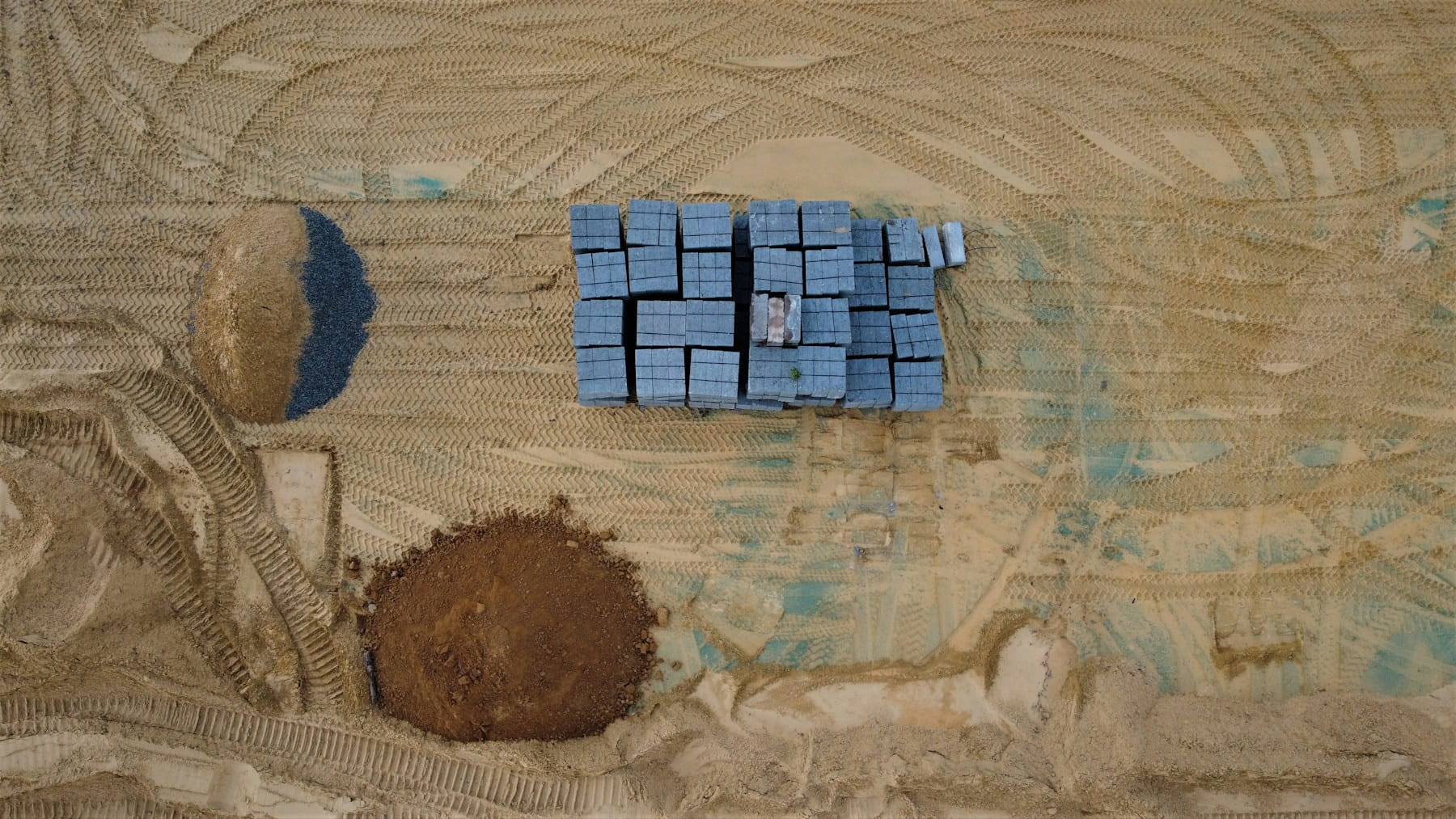
Volumetric calculations: Cut-fill analysis compares design versus actual with 1-2% accuracy. Stockpile measurements track inventory and billing. Calculations complete near-instantly versus hours of manual surveying.
Quality assurance: Design overlay identifies deviations before escalation. One contractor reduced inspections from 5 man-hours to 15-minute flights.
Site analysis: Pre-construction topography evaluation informs design, supports cut-fill optimization, and enables accurate bidding.
Safety inspections: Using drones for construction inspections eliminates dangerous manual checks of unstable slopes and elevated structures.
Stakeholder communication: Visual documentation proves more compelling than reports. Aerial footage supports marketing while reducing misunderstandings.
Essential features for construction teams
Volumetric tools: Engineering-grade cut-fill analysis, stockpile measurements, and progress tracking. Propeller includes elevation tracking, road grade analysis, and surface area calculations.
Progress tracking: Waypoint automation maintains consistent flight paths. Slider tools enable before-after comparison. Time-stamped archival preserves multi-year history.
Design integration: Blueprint and CAD overlay identifies deviations and verifies compliance. Export formats match standards—GeoTIFF, LAS, DXF.
Collaboration: Cloud portals enable stakeholder access without software installation. Annotation tools mark issues directly on maps.
Processing: Cloud eliminates workstation costs but requires connectivity. Desktop provides offline capability and unlimited capacity.
Measurement: Distance, area, and volume calculations with clear accuracy specs. Centimeter precision requires proper ground control point placement and survey-grade GNSS.
Understanding deliverable types
| Deliverable Type | Description | Primary Use Cases | Best Software |
|---|---|---|---|
| Orthomosaic Maps | Georeferenced 2D maps | Measurements, change detection, documentation | DroneDeploy, Pix4D |
| Point Clouds | Dense 3D data points | Volumetric analysis, as-built modeling | Pix4D, Skycatch |
| 3D Mesh Models | Textured 3D surfaces | Visualization, stakeholder communication | Pix4D, DroneDeploy |
| Volumetric Reports | Cut-fill calculations | Earthwork verification, billing | Propeller, Pix4D |
Orthomosaics: Georeferenced 2D maps enabling centimeter-accurate measurements. Drone mapping workflows use orthomosaics for documentation, progress tracking, and change detection.
Point clouds: Millions of 3D data points for volumetric calculations, as-built verification, and BIM integration. Support millimeter-level measurements but require robust processing.
3D meshes: Texture-mapped photorealistic visualizations for stakeholder presentations and marketing. Less precise than point clouds but accessible to non-technical audiences.
DEMs/DSMs: Terrain data for grading analysis. DEMs show bare earth, DSMs include features. Generate contours, cross-sections, and slope analysis.
Volumetric reports: Quantify cut-fill volumes and stockpile quantities. 1-2% accuracy meets contractual requirements while dramatically reducing survey time.
Accuracy requirements and best practices
| Application | Required Accuracy | RTK/PPK Needed | GCPs Required |
|---|---|---|---|
| Marketing & Documentation | 5-10cm | No | Optional |
| Site Analysis & Planning | 3-5cm | Recommended | Yes (4-10) |
| Engineering & Earthwork | 1-3cm | Yes | Yes (5-20) |
| Legal-Grade Surveys | <1cm | Yes | Yes (10+) |
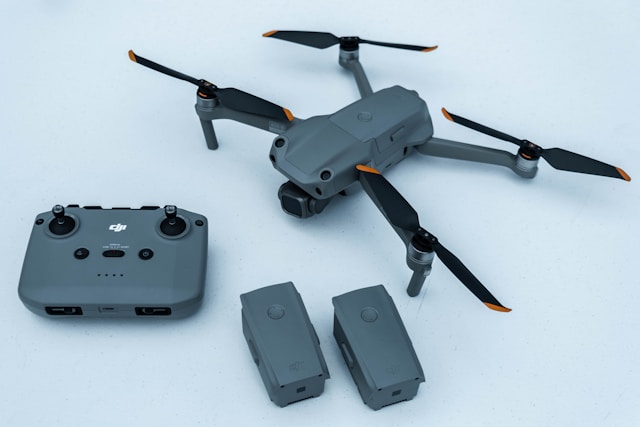
Engineering applications require 3cm accuracy. DJI Phantom 4 RTK ($6,500-$7,000) delivers 3cm horizontal and 5cm vertical precision through RTK/PPK corrections.
GCP placement: Distribute 5-20 points at varied elevations. Emphasize perimeter placement. Survey-grade GNSS measurement provides sub-centimeter coordinates.
Flight planning: Maintain 75-85% front overlap, 65-75% side overlap. Define boundaries with KML/KMZ files, which you can check on a map in our free KML and KMZ viewer before you fly. Drone flight planning principles apply universally.
RTK vs PPK: RTK provides real-time corrections for speed. PPK processes post-flight without connectivity for slightly better accuracy.
Verification: Independent checkpoints validate processing. Compare processed coordinates against checkpoint measurements for contractual documentation.
Software pricing models
Subscription: Monthly/annual fees with processing allowances. DroneDeploy about $349/month on annual billing, Pix4D $1,290 to $4,990 a year depending on product, with perpetual licenses by quote only.
Pay-per-map: Propeller $250 per map suits occasional surveys. Provides cost predictability without monthly commitments.
Enterprise: Custom pricing for large contractors based on users, volumes, and integrations. Volume discounts economical for 50+ annual surveys.
Hidden costs: Data storage limits, per-user licensing, export restrictions, training fees. Commercial drone software business planning should budget 15-25% for implementation and training.
Integration with project management tools
DroneDeploy's January 2025 Procore integration auto-syncs project media, imports design overlays, and syncs field notes with observations. Automatic drawing updates eliminate version control issues.
Autodesk Build integration streamlines BIM workflows. Drawings import to DroneDeploy, media auto-syncs to Construction Cloud, eliminating duplicate entry.
Integration value extends beyond convenience. Automated transfer ensures stakeholder access without requests. Design overlay enables field compliance verification. Issue documentation accelerates resolution through exact locations.
Verify integration depth during evaluation. Basic integrations export to common formats. Advanced enable bi-directional sync and automation. APIs support custom organization requirements.
Frequently asked questions
What's the difference between cloud and desktop processing software?
Cloud processing uploads captured imagery to vendor servers for automatic processing, requiring internet connectivity but minimal local hardware. Desktop software processes data locally, demanding powerful workstations with strong GPUs and 16GB+ RAM but enabling offline operation. Cloud platforms suit teams prioritizing ease of use and remote collaboration, while desktop processing benefits organizations with poor connectivity, unlimited processing needs, or sensitive data requiring on-premise control. Hybrid platforms like Pix4D offer both options, allowing teams to choose based on project requirements.
Do I need RTK/PPK drones for construction mapping?
RTK or PPK capability becomes essential for engineering-grade work requiring 3cm accuracy. Marketing documentation and general site monitoring work adequately with standard drones supported by properly surveyed ground control points. However, RTK/PPK drones reduce GCP requirements from 10-20 to just 1-2 points while delivering consistent accuracy across varying terrain. The $6,500-$7,000 DJI Phantom 4 RTK investment typically pays back within one season for contractors running frequent surveys. Organizations should evaluate accuracy requirements against GCP survey costs when deciding.
How does drone mapping integrate with BIM workflows?
Point clouds and 3D mesh exports from mapping software import directly into BIM platforms including Revit, Navisworks, and AutoCAD. This integration enables as-built verification by comparing design models against actual site conditions. Deviation analysis identifies construction variances requiring attention. Progressive scan integration tracks construction progress within BIM timelines. Export formats matter—ensure platforms support E57 or LAS point cloud formats and common 3D model formats your BIM tools accept.
Can one platform handle both mapping and fleet management?
Most mapping platforms focus on data processing rather than comprehensive drone fleet management. Organizations operating multiple drones benefit from dedicated fleet management systems tracking maintenance, pilot certifications, and compliance alongside mapping software handling data processing. DroneDeploy includes basic fleet features, while specialized operations require purpose-built fleet platforms. Larger contractors often deploy both systems, using APIs to integrate mapping data with fleet management workflows for complete operational visibility.
Implementation considerations
Successful platform deployment begins with pilot projects demonstrating value before organization-wide rollout. Select a current active project where mapping provides clear benefits—progress tracking, volumetric verification, or stakeholder communication. This focused approach allows teams to develop expertise while proving ROI before expanding usage.
Training investment significantly impacts value realization. Platform vendors typically provide 4-8 hours of initial training covering flight planning, processing workflows, and deliverable generation. Organizations should supplement vendor training with hands-on practice and peer knowledge sharing. How to scale a drone business requires systematic capability development across growing teams.
Workflow standardization ensures consistent output quality across projects and operators. Document flight parameters, GCP placement protocols, and processing settings as standard operating procedures. Template creation for common project types accelerates deployment while maintaining quality. Regular output validation against checkpoints verifies accuracy remains within specifications.
Hardware investment extends beyond software licensing to drones, batteries, control points, and survey equipment. RTK-capable drones range from $6,500 for Phantom 4 RTK to $30,000+ for enterprise systems. Survey-grade GNSS receivers cost $5,000-$15,000 for GCP positioning. Budget 20-30% above software costs for complete system deployment.
Regulatory compliance requires Part 107 certification for commercial operations. Remote pilot certificates mandate aeronautical knowledge testing and recurrent training every 24 months. Operations in controlled airspace require LAANC approvals. Organizations should verify pilot certifications and establish compliance protocols before deployment.
In summary
Drone mapping software transforms construction operations through dramatic efficiency improvements and cost reductions. The 30-minute versus 3-day data collection advantage creates immediate value while centimeter-level accuracy enables confident decision-making. Industry adoption rates exceeding 30% annually validate the competitive necessity of aerial mapping capability.
Platform selection should align with specific operational requirements rather than pursuing lowest cost. DroneDeploy excels for ease of use and collaboration. Pix4D delivers maximum accuracy and deliverable completeness. Propeller specializes in construction-specific earthwork workflows. Enterprise operations benefit from Skycatch's automation. Each platform serves distinct needs requiring careful evaluation against actual project requirements.
The 92% first-year ROI achievement rate demonstrates mapping software's financial viability across construction operations. Value stems from time savings, accuracy improvements, safety enhancements, and superior stakeholder communication. These benefits compound as organizations develop expertise and expand applications beyond initial use cases.
Integration with existing construction management platforms amplifies software value through automated workflows and centralized documentation. Procore and Autodesk Build integrations eliminate duplicate data entry while ensuring stakeholders access current site conditions. This workflow integration transforms mapping from standalone activity into core project management capability.
Ready to revolutionize your construction site documentation?
Modern construction demands the speed, accuracy, and visual communication drone mapping provides. Whether documenting daily progress, verifying earthwork quantities, or communicating with stakeholders, the right mapping platform transforms site management effectiveness.
Start your free trial today — no credit card required.
Or book a demo to see how DroneBundle integrates drone mapping workflows with comprehensive fleet management and compliance tracking.